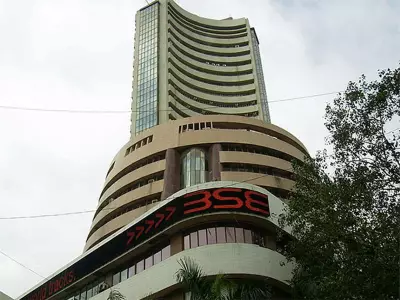
Indian Equity Markets Begin 2026 with Cautious Tone Amid Global Uncertainties
Dr. Ravi Singh from Master Capital Services observes that Indian equity markets have started the year 2026 on a careful note. Rising geopolitical risks, increasing uncertainty around trade policies, and mixed expectations for the third quarter are contributing to this cautious sentiment. He highlights that the upcoming Union Budget will serve as a key event likely to influence market movements. The focus, he anticipates, will center on capital expenditure-led growth. Dr. Singh further shares his detailed Budget expectations, outlines an ideal portfolio strategy, and provides his outlook for the rest of 2026.
Strong Macro Fundamentals Fail to Boost Equity Markets: What's the Reason?
The Indian macroeconomic picture remains robust, but this strength has not translated into gains for equity markets. Dr. Singh explains that an earlier strong rally in Indian equities already pushed market valuations to expensive levels. Some moderation in quarterly earnings, combined with added pressure from tariff-related uncertainty, naturally triggered a period of correction and consolidation for Indian equities during 2025. However, with supportive government policies, a sustained focus on demand, and easing domestic financial conditions, the market's positioning has meaningfully improved.
Outlook for Main Index and Broader Market in 2026
Indian equity markets entered 2026 cautiously after correcting more than 500 points from the all-time high zone around 26,370 on the Nifty. Recent declines stem from expectations of mixed Q3 earnings, global uncertainty surrounding trade policies, and a risk-off sentiment following renewed tariff concerns from the United States.

From a technical perspective, the Nifty has broken below its medium-term uptrend line. It currently trades below the 50-day Exponential Moving Average, which previously acted as a key support level.
If the index sustains below the 50-day EMA, downside levels of 25,550 to 25,400 could be tested in the near term. However, a decisive reversal and close back above the 50-day EMA would indicate strength returning. This move would open the path toward the previous all-time high zone.
At this stage, the market appears to be in a transition phase. A clear trend will emerge only after the next directional move.
Looking ahead, key events such as the Union Budget, expectations of capex-led growth, and sectoral tailwinds in areas like defence, railways, infrastructure, banking, and manufacturing could support the broader market. While short-term volatility is likely, India's structural growth story remains intact. The market is expected to end 2026 with positive returns, continuing the long-term bullish trend observed over the past decade.
Ideal Capital Allocation Strategy for a ₹1 Lakh Portfolio in 2026
If an investor starts a ₹1 lakh portfolio for 2026, the key at this stage is to be well diversified and patient, not aggressive. Markets have corrected from highs and still deal with global uncertainties like trade tensions, interest-rate outlooks, and mixed corporate earnings. Deploying all the money at one go may not be the best idea. A staggered approach over the next few months can help manage volatility better.
In terms of allocation:
- Around 40–45% can be kept in large-cap stocks, especially banking and financials. These sectors continue to benefit from steady credit growth and strong balance sheets.
- Another 30–35% can be allocated to sectors linked to government spending and policy support. Defence, railways, infrastructure, and manufacturing fit here, where order visibility remains strong.
- Around 15% can be selectively invested in quality mid-cap stocks with clear earnings visibility. Investors should avoid speculative names.
- Keeping 10% in cash is important. This provides flexibility to buy during market dips.
This kind of allocation helps investors stay invested in growth themes while protecting capital during short-term market swings in 2026.

Expectations from the Union Budget 2026: Big-Bang Reforms?
The Union Budget 2026 is expected to prioritize continuity in capex-led growth and a PLI-led domestic investment push. The focus will likely be on adjusting and enhancing existing frameworks to stimulate private investment. The Budget is likely to focus on the PLI scheme to foster domestic manufacturing and provide incentives for certain areas to maintain growth traction.
Most big reforms have already been taken by the government in recent times. Overall, the budget framework is expected to aim at building a resilient domestic economy and capabilities amid persistent global and trade-related uncertainties.
Top Sectoral Bets for 2026 and Sectors to Avoid
From an investment perspective, the focus should be wide-ranging and distinctly bottom-up. It should center on segments that benefit from strong policy support and visible demand expansion. Instead of following broad index themes, investors would be better served by spotting areas where fresh capacity, improving business trends, and long-term demand drivers are coming together.
Renewable energy and its ecosystem, consumer discretionary, telecom, and infrastructure-linked businesses appear particularly well placed. Priority should go to companies with predominantly domestic revenue streams, scalable business models, and sound balance sheets. Investors must maintain discipline on valuations.
Do Equities Still Offer Better Risk-Adjusted Returns Compared to Bonds, Gold, or Cash?
Indian equities underperformed all major global markets in 2025. They now seem positioned for a comeback, driven by domestic tailwinds and strong GDP-led earnings growth. Strong domestic factors are creating a cushion against recent external uncertainties, including tariff-related risks and geopolitical tensions.
On the other hand, the RBI's rate-cutting cycle has diminished the appeal of the fixed income asset class. Meanwhile, the commodity's massive rally is ongoing. However, commodities tend to move in cycles and can be highly volatile. Allocating a large portion of a long-term portfolio to them rarely makes practical sense.
Equities over a longer time horizon beat all asset classes with their risk-adjusted returns and alpha generation capability. Only investing in businesses provides the opportunity to participate in sustainable economic growth. However, global uncertainties, particularly around tariffs, have emerged as a key overhang, restraining market momentum.
Disclaimer: This story is for educational purposes only. The views and recommendations expressed are those of individual analysts or broking firms, not Mint. We advise investors to consult with certified experts before making any investment decisions, as market conditions can change rapidly and circumstances may vary.