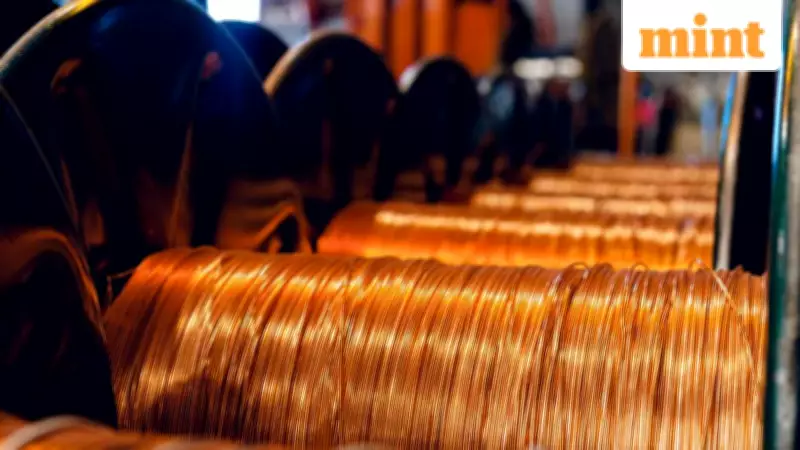
Hindustan Copper Shares Tumble 6% Amid Dual Market Pressures
State-owned Hindustan Copper faced significant selling pressure during Thursday's trading session, with its stock price declining by 6% to reach an intraday low of ₹577.60 per share. This downward movement represents a deepening sell-off in the counter, driven primarily by two major factors: declining copper prices on global markets and a strengthening US dollar that has made dollar-denominated commodities less attractive to international investors.
Copper Market Faces Supply Glut Concerns
Copper prices experienced substantial volatility this week, joining a broader rout across various asset classes including precious metals. The benchmark three-month copper contract on the London Metal Exchange (LME) dropped another 1% to $12,925 per ton amid growing concerns about rising supplies originating from China. This decline comes just days after copper surged nearly 4.55% on Tuesday, marking its best single-day gain since November 2022, driven by a broad rebound in metals following a historic drop.
The red metal, which finds extensive applications in construction and electrification projects worldwide, now faces testing demand conditions as inventories continue to build up across major trading hubs. Inventories in London Metal Exchange warehouses located in Asia have been steadily increasing, with a significant 12,750-tonne inflow into LME's Asian warehouses in Taiwan and South Korea. This addition brought on-warrant copper stocks registered with the exchange to 155,725 tonnes, representing the highest inventory level since March of this year.

Chinese Production Forecasts Add to Supply Concerns
Further compounding the supply situation, copper inventories in Shanghai Futures Exchange (SHFE) warehouses have been rising consistently since December. According to Reuters reports citing the exchange's weekly stock report, these inventories totaled 133,004 tonnes on Friday, reaching their highest level since April. The inventory buildup coincides with Beijing's Nonferrous Metals Industry Association forecasting that China's refined copper output is likely to increase by approximately 5% this year, following a substantial 10% surge in production during the previous year.
Market dynamics have been further influenced by seasonal factors, with purchases from Chinese fabricators and manufacturers slowing for a second consecutive day on Wednesday as businesses prepare for the upcoming Lunar New Year holidays. This temporary reduction in industrial activity typically affects commodity demand patterns during this period.
US Dollar Strength Compounds Commodity Weakness
Beyond supply-side pressures, the strengthening US dollar has created additional headwinds for copper and other greenback-denominated commodities. The dollar index strengthened above 97.5 on Thursday, scaling to a near two-week high as financial markets adjusted their expectations regarding potential Federal Reserve rate cuts. A stronger dollar makes commodities priced in US dollars more expensive for investors using other currencies, thereby reducing international demand.
Market participants are also closely monitoring developments related to US strategic initiatives concerning critical minerals. The latest step announced on Wednesday involves marshaling allies into a preferential trade bloc and proposing coordinated price floors, part of broader efforts to counter China's dominance in critical mineral markets.
Hindustan Copper's Dramatic Price Correction
Hindustan Copper shares have retreated sharply from recent highs, falling 24% over just seven trading sessions. This correction comes after the stock experienced an extraordinary rally between September and January, during which it gained an impressive 200%. The remarkable performance helped the company close 2025 with a 110% gain, marking its biggest yearly increase since 2023.
The recent selling pressure reflects profit-taking by investors seeking to lock in gains following the relentless rally, combined with deteriorating sentiment due to falling copper prices. As market conditions evolve, investors continue to monitor inventory levels, Chinese production forecasts, and currency movements that collectively influence copper pricing and related equity performance.