A severe cold wave tightened its grip on Delhi and the National Capital Region (NCR) on Monday, 12th January 2026, turning it into the coldest January day the capital has witnessed in three years. Minimum temperatures plunged to a bone-chilling 3 degrees Celsius in several areas, accompanied by persistently poor air quality, creating a double whammy for residents.
Mercury Plummets Below Seasonal Average
Data from the India Meteorological Department (IMD) recorded at 8:30 AM painted a stark picture. The Safdarjung Observatory, which serves as the city's primary weather station, registered a minimum temperature of 3.2 degrees Celsius. This reading was a significant 4.2 degrees below the seasonal average for this time of year. The chill was widespread across the capital.
Other key locations reported similarly low readings:

- Lodhi Road: 3.0°C
- Palam: 3.3°C
- Ayanagar: 3.2°C
- Ridge Station: 4.2°C
The IMD confirmed that this made 12th January the coldest day of the month since January 2023, when temperatures had fallen to 1.4 degrees Celsius on the 16th. Sunday had already marked the season's first official cold wave, with readings dipping below 3.0°C in some places.
Poor Air Quality Adds to Woes
As residents bundled up against the cold, they also grappled with unhealthy air. The overall Air Quality Index (AQI) for Delhi was recorded at 298, falling in the 'poor' category according to Central Pollution Control Board (CPCB) data. The situation was more alarming in specific neighbourhoods.
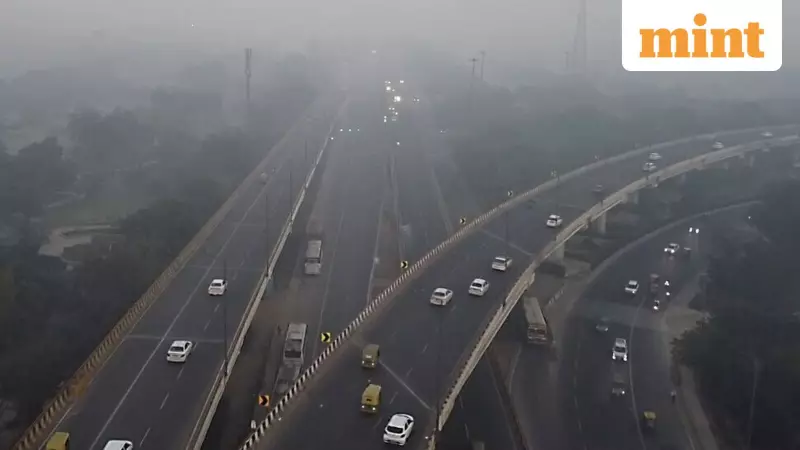
Twenty monitoring stations reported 'very poor' air quality, with Nehru Nagar recording the worst AQI in the city at 344. As per CPCB guidelines, an AQI above 300 is classified as 'very poor', while levels exceeding 400 are considered 'severe'. The combination of dense, cold air and pollutants created a visible haze over the region.
IMD Forecast and Wider North India Chill
The weather office has forecast a maximum temperature of around 19 degrees Celsius for the day. More importantly, it has stated that the cold wave conditions are likely to persist for the next 48 hours. In light of this, the IMD has issued a yellow alert for the region, advising people to take necessary precautions.
The biting cold was not confined to Delhi-NCR. A large swathe of North India experienced intense winter conditions on Monday. Several areas in Rajasthan recorded sub-zero temperatures, with Pratapgarh at minus 2 degrees Celsius and Barmer at minus 1 degree Celsius. Dense fog disrupted visibility in parts of the state.
Sub-zero temperatures were also reported from parts of Jammu and Kashmir, Himachal Pradesh, and Uttarakhand. Punjab and Haryana saw temperatures hovering near the freezing point. The IMD has indicated that this severe cold spell is expected to continue across northern India for several more days.
With the twin challenges of extreme cold and polluted air, authorities are urging vulnerable groups—including the elderly, children, and those with respiratory conditions—to limit outdoor exposure and take adequate protective measures until conditions improve.