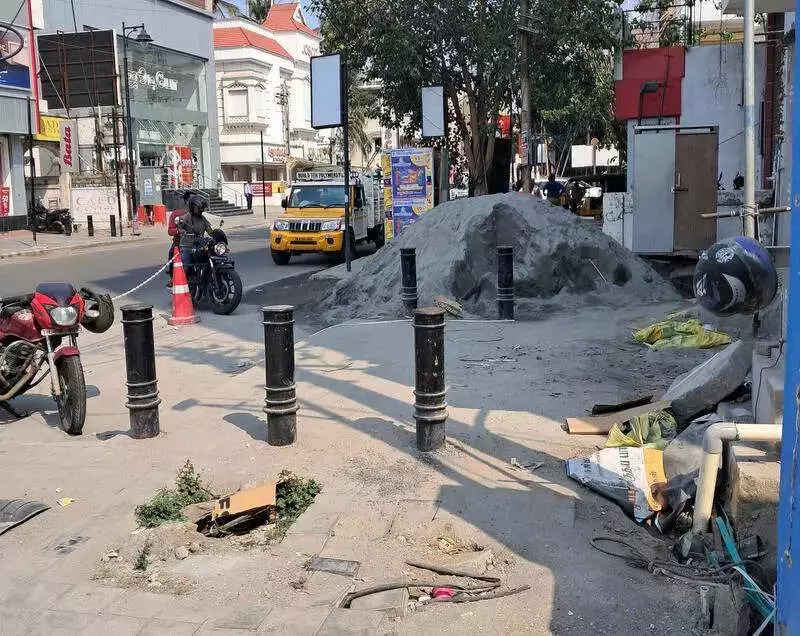
Coimbatore Corporation Unveils Major Non-Motorised Transport Plan
The Coimbatore Corporation has taken a significant step toward improving urban mobility. Officials have identified a total of 300 kilometers of potential non-motorised transport routes throughout the city. This ambitious network will focus on walking and cycling infrastructure.
Massive Investment and Long-Term Implementation
Implementing this comprehensive NMT system will require substantial resources. The corporation estimates the total cost at Rs 9,895 crore. They plan to complete the project over a fifteen-year period, allowing for phased development and careful execution.
Commissioner M Sivaguru Prabakaran provided details about the initial phase. The corporation will first establish a pilot NMT corridor covering 31 kilometers. This initial stretch will run through Gandhipuram, Avinashi Road, and Trichy Road.

Feasibility Study and Project Planning Underway
To ensure proper planning, the corporation has engaged a private consultancy firm. This team will conduct a thorough feasibility study. They will also prepare a detailed project report that outlines specific implementation strategies.
Commissioner Prabakaran explained how this new initiative connects with previous efforts. "Safe streets that were proposed in the last corporation's budget for a total stretch of 2km on Kamarajar Road and Trichy Road will be brought under the NMT corridor," he stated. "We plan to extend it to at least 31km across major locations."
The commissioner noted that final cost estimates for the pilot corridor remain undetermined. These figures will depend on specific requirements like footpath construction and drainage system installation along the routes.
Existing Infrastructure Challenges
Current NMT corridors in Coimbatore face serious problems. Four existing corridors on Cross Cut and near Town Hall have essentially lost their intended purpose. Hawkers frequently encroach on pavements, while damaged paver blocks create hazardous walking conditions.
Local residents and visitors have voiced strong opinions about these infrastructure issues. Prakash Patel, a vendor operating on Bazaar Street, expressed practical concerns. "The corporation should repair the existing roads," he suggested. "Many passengers waiting to board buses stand on roads because the footpaths are either encroached or damaged. It is better that they improve the existing infrastructure."
Shobitha, a visitor from Salem, shared her family's experience navigating crowded commercial areas. "This commercial street is often crowded," she observed. "My youngest son, who is nearly 4 years old, finds it hard to walk along the footpath because it is mostly damaged." She proposed a potential solution: "The local body authorities can allocate a separate place on the street for vendors and hawkers."
Resident Skepticism and Calls for Practical Solutions
Some long-term residents expressed skepticism about new projects while existing problems persist. L Rangasamy, who lives in Tatabad, criticized the corporation's approach. "The NMT corridors are just in documents, but in practicality, there is not one," he claimed. "If a corporation is proposing such projects, there must be concrete models that show and serve its purpose."
Rangasamy highlighted safety concerns for vulnerable groups. "Here, the footpaths are not safe for children, the elderly and differently abled," he emphasized. He questioned the logic behind expanding the network without addressing current failures. "When the existing NMT corridors are facing challenges, why go for new ones without addressing the problems?"
Current Transportation Patterns in Coimbatore
Understanding why NMT improvements matter requires examining how people move around the city currently. Walking represents fourteen percent of all transportation modes in Coimbatore. Cycling accounts for just one percent of trips.
Public transportation serves a much larger segment of the population. Approximately forty-three percent of city residents regularly use public transport options. Meanwhile, private motor vehicles remain popular, with thirty-three percent of people relying on personal cars and motorcycles for daily travel.

The corporation's new NMT plan represents a substantial commitment to alternative transportation. However, successful implementation will require addressing both new construction and existing maintenance challenges simultaneously.