

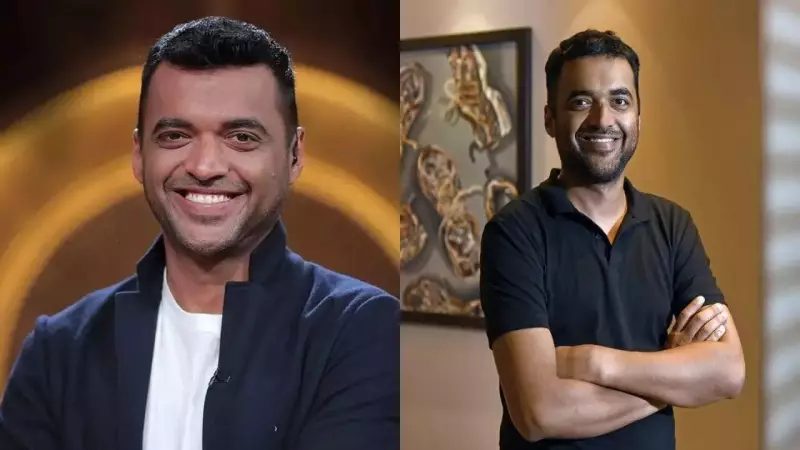
Deepinder Goyal, the founder of food delivery giant Zomato and a judge on Shark Tank India, has never been one to shy away from expressing his strong views on business and leadership. In a recent, candid podcast appearance, Goyal delved deep into the mindset required to build a successful startup, outlining clear expectations for his leadership team and challenging conventional notions of work culture.
Goyal's Blueprint for Startup Leadership: Ownership Over Employment
Speaking on entrepreneur Raj Shamani's podcast, Deepinder Goyal laid out a fundamental requirement for his senior executives: a sense of obsessive, personal ownership. He stated that he expects his top leaders to be deeply invested in building the company as if it were their own creation. "You have to be obsessive about building something. That's the kind of obsession I want from my senior team," Goyal emphasized.
He made his position unequivocally clear, adding a stark warning: "I don't want them to think of this as a job. If the senior team thinks of this as a job, I'm out. They have to think about this as their own baby." According to Goyal, startups cannot be constructed by individuals who merely clock in and out mentally. He believes true leadership in a high-growth environment carries a responsibility that far exceeds a standard job description.

The 9-to-5 Attitude vs. The 9-to-5 Clock: A Critical Distinction
Goyal elaborated on why a traditional corporate mindset fails in the startup world, using a practical example. He described a scenario where a critical system bug emerges late on a Friday evening. In such a case, waiting until Monday morning is simply not an option for him. "I would not go home on Friday, 6 pm. I would stay back and do the job," he asserted.
He stressed a crucial difference that many misunderstand. "Startups don't get built on a 9-to-5 attitude. They can be built on 9-to-5 hour clocks. But they can't be built on a 9-to-5 attitude. They are different things," Goyal explained. He clarified that his teams already enjoy flexibility, with members free to take time off as needed. However, he insists that a sense of urgency must prevail when customer experience is at stake, regardless of the time or day.
Addressing the 'Toxic Boss' Label and Defending Collective Responsibility
When podcast host Raj Shamani pointed out that such high-pressure expectations are often labeled as 'toxic' in modern workplace discussions, Goyal pushed back strongly. "I don't think people say that about me," he responded. "I don't think that's the way people who work with me think about it."
He dismissed online criticism, particularly referencing older Reddit posts, calling them outdated. To illustrate his point on collective responsibility, he said, "If there is a bug that would delay customer orders by 15 minutes, I would put a night out and solve it. The whole company should put a night out." Goyal also countered the argument that founders and employees cannot be held to the same standard, noting that Zomato compensates its people well with significant salary and equity packages.
He linked professional growth directly to this driven mindset. "If they show this kind of attitude, they grow faster as well. If they don't, they stay where they are." Simultaneously, he maintained that the choice is ultimately personal. "I don't judge people. It's your choice… if you can manage your family, work-life balance, your peace, and also obsess."
Goyal concluded by describing the ideal leader as one who balances calmness with fierce commitment. "Obsession can happen with peace. And those kinds of people who can manage and balance everything and still drive the right kind of outcomes still happen. They're able to push for solving things overnight when they need to," he said.
Shark Tank India Season 5 Update
In related news, Shark Tank India Season 5 premiered on January 5, 2026. The new season introduces four fresh faces as judges: Shaily Mehrotra, Kanika Tekriwal, Hardik Kothiya, and Pratham Mittal. They join the popular panel of existing sharks, including Aman Gupta, Namita Thapar, Peyush Bansal, Vineeta Singh, Ritesh Agarwal, and Anupam Mittal, promising new dynamics and perspectives in the entrepreneurial tank.






