

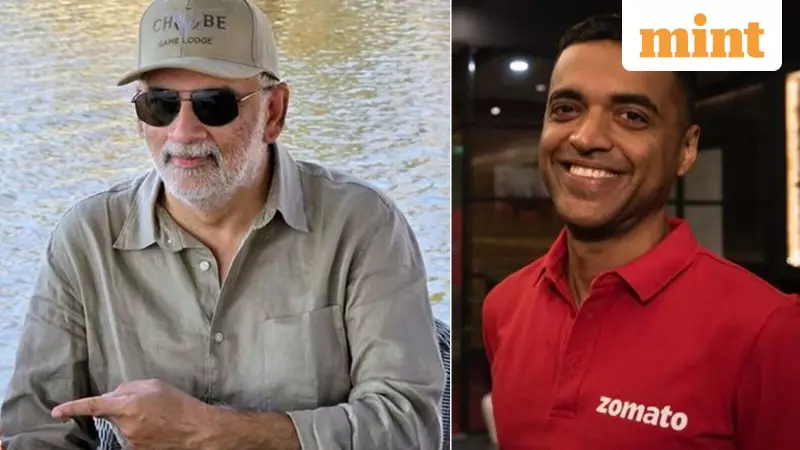
Former Jet Airways CEO Sanjiv Kapoor has publicly questioned the very premise of ultra-fast delivery services in India, directing his query at Zomato and Blinkit founder Deepinder Goyal. This comes at a time when thousands of gig economy workers are on a nationwide strike, protesting against low pay, difficult working conditions, and a lack of social security benefits.
The Core Debate: Necessity vs. Convenience
Kapoor sparked the discussion out of sheer curiosity, asking Goyal on social media if 10-minute deliveries are truly essential in India's often chaotic urban landscapes, except for medical emergencies. He pondered whether extending delivery times to 30 minutes or an hour would be catastrophic, suggesting it could reduce pressure on delivery partners and allow for safer, more environmentally friendly practices like pooled deliveries.
"Would 30 minutes or 1 hour delivery (without so much pressure and need for speed) be the end of the world?" Kapoor added, clarifying he was not outraged but simply raising a fundamental question about balancing consumer demand with safety and sustainability.

Deepinder Goyal's Defense of the 10-Minute Promise
In response, Deepinder Goyal took to a series of tweets to explain the mechanics behind Blinkit's 10-minute delivery model. He emphasized that the promise is made possible by the high density of dark stores, not by forcing delivery partners to drive recklessly.
Goyal broke down the timeline: after an order is placed, it is picked and packed within approximately 2.5 minutes. The delivery partner then travels an average distance of under 2 kilometres, which takes about 8 minutes at an average speed of 15 kmph. He strongly asserted that delivery partners are not penalized for late deliveries and do not even have a timer on their app indicating the original promised time to the customer.
Public Reaction and Social Media Divide
The debate ignited a flurry of responses online. Some netizens defended the model, with one explaining that orders are routed from the nearest available store and the 10-minute timeframe is not strictly enforced if a store is busy. Others argued that modern consumers value time over money, creating a perfect ecosystem for instant delivery.
"People have money, they don’t have time, and these two make a perfect ecosystem for 10-minute delivery models across all platforms," one social media user stated. Another commented on the declining patience of consumers, predicting they would pay a premium for such speed in the future.
However, Kapoor reiterated his point, asking if offering a choice of delivery slots or a standard 30-minute window would be a better compromise to mitigate safety and environmental risks. This exchange highlights a growing tension between the aggressive growth targets of tech platforms and the welfare of the gig workforce that powers them, all set against the backdrop of a major strike demanding better working conditions.






