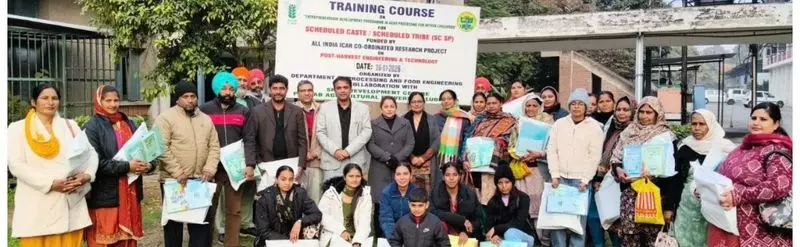
In a significant move to diversify rural income and promote self-reliance, the Punjab Agricultural University (PAU) in Ludhiana has successfully equipped a new batch of 25 farmers with crucial entrepreneurship skills. This specialized training program, designed to shift the paradigm from mere cultivation to agri-business management, marks a proactive step towards building a more resilient and profitable agricultural sector in the region.
Bridging the Gap Between Farming and Business
The seven-day training course, titled ‘Entrepreneurship Development for Farmers’, was meticulously organized by the Department of Extension Education at PAU. The program, which concluded recently, was not just a theoretical exercise but a hands-on immersion into the world of agri-enterprise. Its core objective was to empower farmers with the knowledge to create and manage their own small-scale businesses, thereby adding value to their primary produce and capturing a larger share of the consumer rupee.
Dr. R.K. Dhaliwal, the Dean of the College of Agriculture, emphasized the urgent need for such skill development. He highlighted that modern agriculture must evolve beyond traditional practices to ensure economic viability. “The future lies in entrepreneurship and value addition,” Dr. Dhaliwal stated, encouraging participants to leverage PAU's expertise and technologies to become job creators in their own communities.

Core Modules and Practical Insights
The curriculum was comprehensive, covering every essential aspect of starting and running a business. Expert faculty and resource persons guided the farmers through critical topics. A major focus was on idea generation and opportunity identification, helping farmers pinpoint viable business ventures suited to their resources and local market demands.
Financial literacy formed another pillar of the training. Participants received instruction on project report preparation, loan proposal drafting, and effective communication with banking institutions. This knowledge is vital for accessing credit and government schemes designed to support micro-enterprises. Furthermore, the program delved into the practicalities of marketing management, brand building, and the nuances of the Food Safety and Standards Authority of India (FSSAI) regulations.
To ground the theory in reality, the organizing team, led by Dr. Rupinder Kaur and Dr. Ritu, arranged an exposure visit to a successful agro-processing unit. This visit allowed farmers to witness firsthand the operational aspects of a running enterprise, from raw material handling to packaging and sales. The interactive sessions also addressed record-keeping, cost-benefit analysis, and risk management, providing a holistic toolkit for business sustainability.
Paving the Way for Sustainable Rural Economies
The immediate outcome of this initiative is the creation of 25 potential rural entrepreneurs who are now better prepared to launch ventures in areas like food processing, beekeeping, mushroom cultivation, or dairy products. By moving up the value chain, these farmers can significantly increase their income from the same base of agricultural produce.
Dr. M.S. Bhullar, the Director of Extension Education at PAU, underscored the university's commitment to this transformative mission. He pointed out that such training programs are integral to PAU's mandate of improving the socio-economic status of the farming community. The goal is to reduce dependency on cyclical crop incomes and build a more diversified and shock-proof rural economy.
The positive feedback from the participants signals a strong demand for such knowledge. As these trained farmers return to their villages, they carry the potential to become role models and mentors, inspiring a wider wave of entrepreneurial thinking. This initiative by PAU Ludhiana is more than just a training program; it is a strategic investment in building local capacity, fostering innovation, and ensuring the long-term prosperity of Punjab's agriculture by turning cultivators into confident business owners.