The Greater Visakhapatnam Municipal Corporation (GVMC) has greenlit an ambitious project to create a dedicated heritage walking track in the city's historic One Town area. This initiative aims to preserve and showcase the rich colonial and civic history of Visakhapatnam for residents and tourists alike.
Connecting the Dots of Vizag's Colonial Past
The proposed track will span 1.6 kilometres in length and be approximately six feet wide, designed exclusively for pedestrian use. To ensure safety and preserve the heritage experience, the pathway will be protected from vehicle entry through the installation of studs on both sides. The route is strategically planned to run along the stretch between Poorna Market and the Old Post Office, a corridor dense with historical significance.
GVMC Commissioner Ketan Garg stated that the walking track will seamlessly connect all major heritage points between these two landmarks. He added, "Informational signboards containing complete details about each heritage point will be installed throughout the length of the heritage walking track." The project has already received the necessary approval from the GVMC standing council.

A Walk Through Time: Key Landmarks on the Route
The area is a treasure trove of structures that narrate the story of Visakhapatnam's growth before and during the British period. Among the most prominent landmarks is the Queen Victoria Pavilion. The bronze statue of Queen Victoria was a gift presented to Akitam Venkata Jagga Row, the zamindar of Share Mohamud Puram and Yambrum Estates, during his 1900 visit to England. It was unveiled at its present site in 1904 by R H Campbell, the then collector and governor's agent.
Other significant sites in the vicinity include:
- St John's Church and St Aloysius School, reflecting the influence of early Christian missionaries.
- Queen Mary's School, an excellent example of adaptive reuse of former colonial administrative buildings.
- The European Cemetery, with graves dating from the late 17th to early 19th centuries, offering insights into the lives of early European settlers.
- The Hindu Reading Room, a symbol of early public learning and intellectual life during the colonial era.
Architectural Gems and Civic History
Beyond these major points, several other buildings illustrate the everyday civic life of the old town. Turner's choultry near Jagadamba Junction, built in the 1890s, provided affordable lodging for visitors. The old municipal office, constructed in the 1930s, served the city for decades and was among the first buildings in Visakhapatnam to feature a concrete ceiling supported by steel beams, with its staircase imported from England.
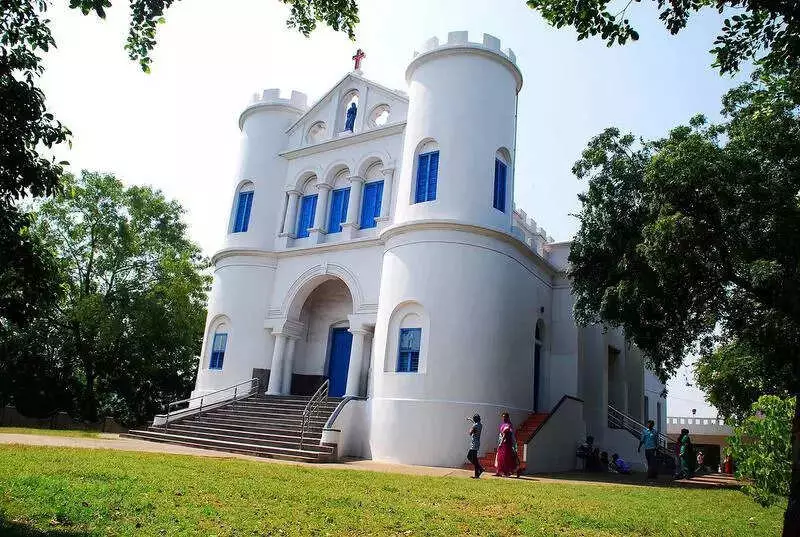
The area also uniquely showcases the city's interfaith harmony through three closely located hillocks: the Sringamani hillock with the Sri Venkateswara Swamy temple, Ross Hill with Our Lady of the Sacred Hearts church, and Dargah Konda with the Baba Ishaq Madina dargah. The remnants of the Kurupam market recall the city's past as a bustling trading centre.
This heritage walking track project promises to be a significant step in urban conservation, transforming a historic precinct into a living museum where people can literally walk through the layers of Visakhapatnam's fascinating history.