Patna Metro's Final Elevated Stations Approach Operational Readiness
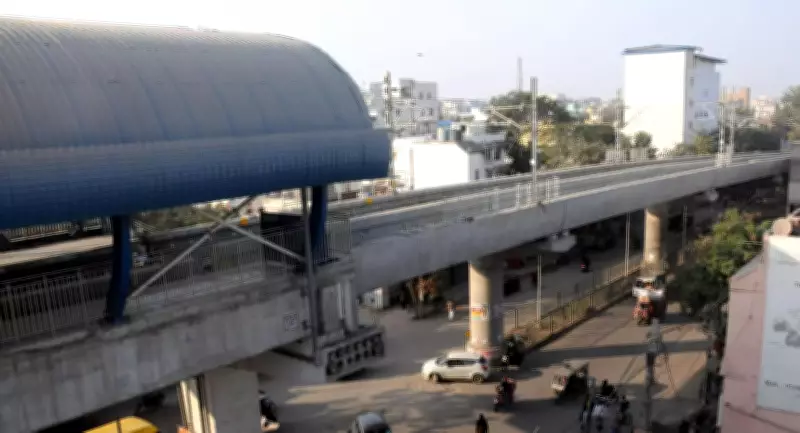
The Patna Metro Rail Corporation (PMRC) is on the verge of completing the final two elevated stations on its priority corridor, marking a significant expansion of the city's urban transit network. The Malahi Pakri and Khemnichak stations have entered their concluding phase of development, with passenger services expected to commence by the end of this month.
Expanding the Operational Network
This development builds upon the existing metro services that have been functional since October of last year. Currently, the metro operates along a 3.6-kilometer elevated segment of the Blue Line, commonly referred to as the priority corridor. This stretch connects Patliputra ISBT (New ISBT) via Zero Mile to Bhootnath, serving an average daily ridership of between 6,000 and 10,000 commuters.
The newly integrated section extends from Bhootnath towards Malahi Pakri and Khemnichak, adding approximately 2.7 kilometers to the route. With the track-laying work now finalized, the total operational length of the priority corridor will reach around 6.5 kilometers once fully activated. However, while the track infrastructure is complete, some technical finishing tasks and station-specific preparations at Khemnichak are still in progress, due to earlier delays related to land acquisition and construction timelines.

Critical Electrical Works Underway
A PMRC official provided insights into the ongoing efforts, stating, "The finishing touches are underway at the remaining two stations of the priority corridor. At Malahi Pakri metro station, the transformer in the Auxiliary Substation (ASS) room was successfully charged about two days back. The ASS room manages the station's power supply, with the transformer reducing high-voltage electricity to the lower levels required for lighting, fans, escalators, and other station facilities."
The official emphasized the importance of this step, noting, "Charging the transformer is a crucial milestone, indicating that the station is nearing full operational readiness with a reliable power supply for daily functions. These behind-the-scenes electrical works are essential to ensure the metro operates safely, smoothly, and without power-related disruptions once it opens to the public."
Inspections and Strategic Reviews
Prior to this, an inspection led by Chief Electrical Inspector Jagdish Kumar, involving teams from PMRC and the Delhi Metro Rail Corporation (DMRC), was completed. This assessment covered the auxiliary substation and overhead equipment along the stretch from Khemnichak to Malahi Pakri.
Sandeep Kumar R Pudkalkatti, Secretary of the Urban Development and Housing Department and Managing Director of PMRC, recently chaired a review meeting with key stakeholders to evaluate the project's current status. He detailed, "Each section of the metro corridor was examined minutely, with a detailed assessment of plan versus achievement. Progress milestones, on-ground realities, and operational challenges were discussed threadbare, and constraints were addressed with utmost seriousness."
He further stressed the urgency of accelerating works and prioritized the early opening of the remaining two metro stations on the priority corridor for public use.
Future Connectivity and Coordination
The priority corridor is a component of Corridor II (North–South), which aims to provide connectivity between ISBT and Patna Junction. The underground section of Corridor II is projected to be operational by the end of 2026, linking Rajendra Nagar to Patna Junction via key locations such as Min-ul-Haq Stadium, Patna University, PMCH, Gandhi Maidan, and Akashvani.
In a recent coordination meeting held on Thursday, PMRC officials and representatives from concerned agencies reviewed the progress of ongoing construction works. Discussions focused on inter-agency coordination, site-specific challenges, and timely solutions to ensure smooth project execution. Officials underscored the necessity of adhering to approved plans, maintaining quality standards, and meeting deadlines, while directing all stakeholders to foster strong coordination for faster and safer project delivery.