Mumbai's H-West Ward Grapples with Severe Public Open Space Deficit
Mumbai: The H-West ward of the Brihanmumbai Municipal Corporation (BMC), encompassing the upscale neighborhoods of Bandra (West), Khar (West), and Santacruz (West), is renowned as suburban Mumbai's most expensive property market. This area is dotted with luxury towers, fine-dining restaurants, pubs, and cafes at virtually every corner, creating a vibrant urban landscape. However, a new study by the Bombay Greenway Foundation exposes a critical issue: this hip and cosmopolitan ward, with an estimated population of 3.2 lakh, offers just 0.81 square meters (less than 9 square feet) of public open space per person.
Alarming Disparity with Global Standards
The study, which includes only freely accessible spaces such as parks, promenades, beaches, and public playgrounds, reveals a stark contrast to international benchmarks. The World Health Organization recommends a minimum of 9 square meters of open space per person. Major global cities like Paris, New York, and London typically boast figures in the range of 15 to 30 square meters per person. H-West ward's 0.81 square meters per capita falls drastically short, highlighting a significant urban planning challenge.
Exhibition to Reimagine Urban Spaces
In response to these findings, the Bandra-based Bombay Greenway Foundation, led by architect Alan Abraham, is hosting a three-day exhibition titled 'The Everyday City: H/W Ward Reimagined' at the Bombay Art Society in Bandra Reclamation. The exhibition will be inaugurated by Bandra MLA Ashish Shelar. Abraham explained the choice of H-West ward, stating, "We selected H-West ward because it's a microcosm of the city and a very cosmopolitan area." He emphasized that open space is not a luxury but basic urban infrastructure, akin to water or transport, and the issue extends beyond land availability to include access, management, and equity.

Rapid Redevelopment and Access Issues
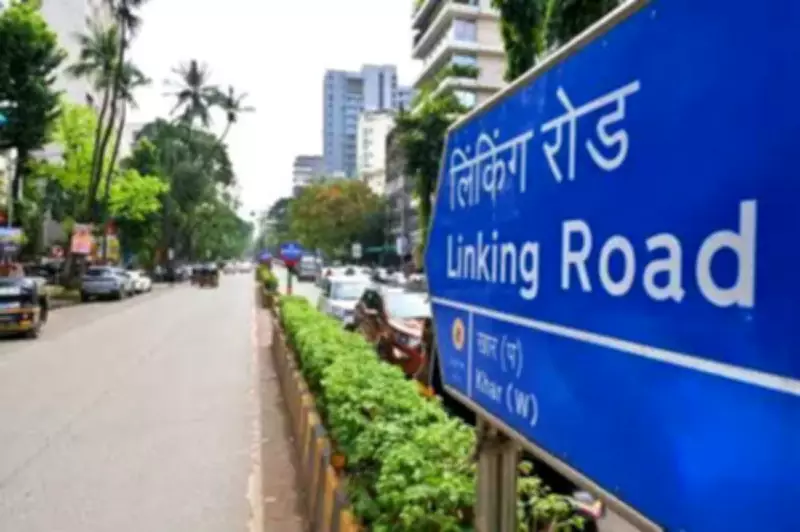
One of the key pain points identified is the rampant redevelopment across the ward. Low-rise, ground-plus three- and four-storey buildings are being demolished and replaced by 18- to 20-storey towers on narrow roads. Hotspots like Turner Road, Linking Road, and Pali Hill in Bandra are witnessing unabated construction activity. Despite having notable public open spaces such as the Carter Road and Bandstand seafront promenades (totaling 4.2 kilometers), Joggers' Park, and Patwardhan Park, the study found that 30% of open space in H-West ward is restricted or private. For every 1 square meter of public playground, there are 2.1 square meters of private and inaccessible space, with many public areas locked for large parts of the day.
Historical Context and Future Potential
Incidentally, H-West ward's average of 0.81 square meters of public open spaces per person is virtually identical to a survey conducted over a decade ago by an MMRDA-funded project. That survey found that Greater Mumbai has 30 square kilometers of open spaces, of which only 10.5 square kilometers are freely accessible to the public, resulting in an actual open space in use of 0.88 square meters per person. Architect Samir D' Monte highlighted the potential for transformation, citing examples like the Carter Road Promenade, improvements at Bandra station, and work in Ranwar Village. He noted, "Work done by architects in Bandra has shown that ideas can transform from being on paper to being executed in real life. So, ideas can transform from being in the mind to making a big difference in the city."
This study underscores the urgent need for strategic urban planning in Mumbai's western suburbs to address the public open space crisis, ensuring sustainable development for its residents.