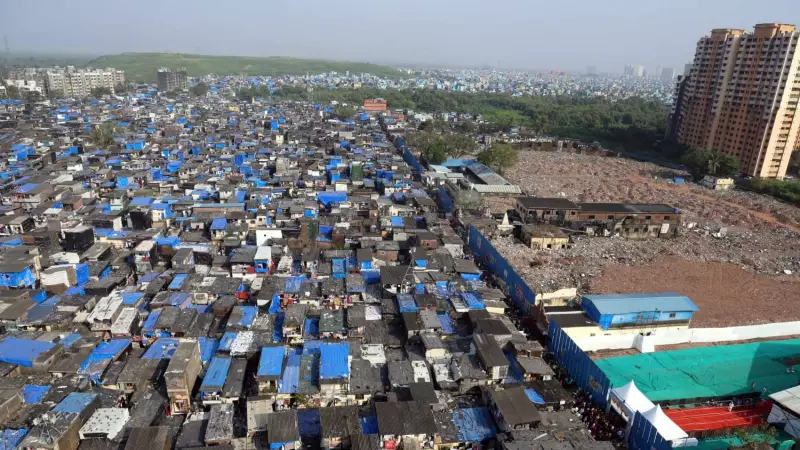
In a significant push towards redevelopment, Mumbai's Slum Rehabilitation Authority (SRA) has completed a massive survey of informal settlements across the city. The authority has successfully documented 8,84,368 homes spread across 2,599 distinct slum clusters as of December 2025. This extensive exercise forms the bedrock for future rehabilitation projects aimed at transforming the city's landscape.
Biometric Verification and Resident Participation
A critical component of the survey involves biometric data collection. Out of the total homes surveyed, residents from 6,10,382 households have submitted their biometric details, including fingerprints and necessary documents. Each surveyed home is assigned a unique identification number to streamline the process. However, officials note a persistent challenge: a gap exists between the number of homes surveyed and those completing full biometric verification due to resident reluctance.
"Survey teams often face resistance from slum dwellers who are hesitant to submit documents," explained an SRA official. This lack of cooperation has contributed to the discrepancy and slowed the overall pace of the initiative.

Extended Timeline and Total Estimates
The scale of the task has led to a revision of the original deadline. While the goal was to finish by the end of 2025, the survey will now continue into 2026. This extension is necessary to cover remaining slum pockets and improve biometric submission rates. The total number of slum homes in Mumbai is estimated to be much higher. A comprehensive drone survey conducted in 2021 identified approximately 13 lakh (1.3 million) slum structures in the city.
This aerial mapping marked a strategic shift. Initially, the SRA conducted biometric surveys first, followed by Geographic Information System (GIS) mapping. Post-2021, the drone survey provided a city-wide overview, revealing the true magnitude of the task. At that point, over 3 lakh homes had been surveyed, leaving around 10 lakh remaining.
Land Ownership and Survey Scope
The survey's scope is defined by land ownership. It specifically excludes slums located on central government, railway, defence, and forest land. The massive Dharavi area is also not part of this particular SRA survey. The focus is primarily on slums situated on state government, Brihanmumbai Municipal Corporation (BMC), Maharashtra Housing and Area Development Authority (MHADA), and private lands.
Of the 4.53 lakh homes surveyed after the 2021 drone exercise, a vast majority—4.26 lakh—are on state government or private land. Another 15,000 are on BMC land, and 11,700 are on MHADA land. For slums on private land, the collected data is submitted to the deputy collector of the respective area, who acts as the competent authority.
The survey data is pivotal for the next steps. "Once the SRA's contracted agencies conduct the survey, details of the residents are handed over to the agency which is the authority on that land," the official stated. "The authority decides eligibility. When a redevelopment project is initiated for a slum, this survey becomes the foundational document." The initiative, ongoing since 2016, involves several appointed agencies including Pioneer Foundation Engineers Pvt Ltd, SAAR IT Capital Pvt Ltd, and CE Infosystems Ltd, among others.