As Mumbai gears up for the crucial Brihanmumbai Municipal Corporation (BMC) elections, the persistent and complex issue of affordable housing has emerged as a central battleground. Political parties are rolling out ambitious manifestos, promising to tackle the city's chronic shortage of homes, the redevelopment of dilapidated structures, and the sensitive rehabilitation of original inhabitants.
Manifesto Promises: A Lakh Homes and Community Rights
The scale of Mumbai's housing challenge is immense. For decades, the lack of affordable options has fueled the haphazard expansion of slums. Simultaneously, thousands of old, crumbling pagdi buildings and dilapidated structures await redevelopment, while communities in koliwadas, gaothans, and adivasi padas resist being classified as slums.
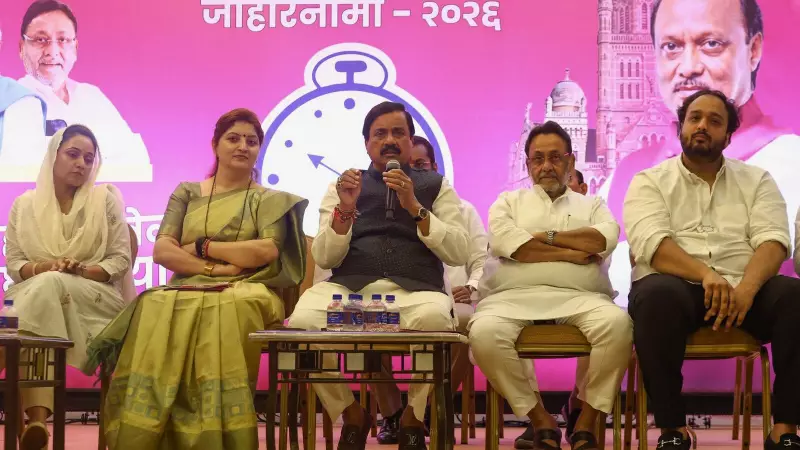
In response, the Shiv Sena (UBT)-MNS alliance has pledged to establish a housing authority under the BMC, with a target of making one lakh affordable homes available within five years. Their manifesto opposes state government control over Greater Mumbai's development, threatening to make the BMC the sole planning authority. They promise to house government, municipal, BEST, police staff, and mill workers on civic land instead of handing it to private builders.

Both the Thackeray faction and the Congress have addressed the concerns of koliwadas and gaothans. They propose a separate, community-based self-redevelopment policy to grant land rights for homes, livelihood, and environment, moving away from the slum classification.
The Congress manifesto also includes specific measures like promising higher FSI for old and pagdi buildings, reducing the minimum area for cluster redevelopment from 4,000 sqm to 3,000 sqm, and ensuring homes for Marathi families in planned city housing.
Skepticism from Communities and the Ruling Alliance's Edge
However, these promises are met with skepticism from community leaders. Devendra Tandel, president of the Akhil Maharashtra Machimaar Kriti Samiti, dismissed the pledges as "political jumla." He highlighted that the core issue rests with the state government, particularly concerning the demarcation of their areas. Tandel stated that the koli community is now focusing on supporting koli candidates directly rather than backing any major party.
In this political contest, the ruling Mahayuti alliance appears to hold a significant advantage due to its control of the state government. Just before the election announcement, Deputy Chief Minister Eknath Shinde unveiled a regulatory framework to resolve tenant-landlord disputes, aiming to fast-track the redevelopment of approximately 19,000 pre-1960s pagdi buildings. He also announced a regularization scheme for 20,000 buildings lacking occupation certificates.
Ameet Satam, the BJP's Mumbai president, cited the government's track record, including clearing legal hurdles in slum redevelopment and the ongoing revamp of BDD chawls and Dharavi. He also mentioned the process to relocate transmission towers in Juhu and Dahisar, which currently impose height restrictions, and the easier processes for society redevelopment.
The Road Ahead: From Promises to Concrete Action
While tenants of pagdi buildings see hope in the government's announcements, they remain cautiously optimistic. Mukesh Pendse, president of the Pagdi Ekta Sangh, expressed that while the Deputy CM's words are promising, the community hopes they are not merely election promises that will be forgotten post-polls.
The manifestos have successfully placed Mumbai's multifaceted housing crisis at the forefront of the civic election discourse. The real test, however, will lie in translating these ambitious pledges into tangible, on-ground results for the millions of Mumbaikars yearning for secure and affordable homes.