Motilal Oswal Group Charts Bold Course with Office Tower Expansion
In a strategic move that defies prevailing industry trends, the Motilal Oswal Group, a prominent diversified financial services conglomerate in India, is significantly ramping up its focus on physical infrastructure development. At a time when flexible co-working spaces and asset-light office models are gaining widespread popularity, the group is making substantial investments in constructing and acquiring owned office towers across major metropolitan centers.
Building a Tangible Legacy
The group's conviction in physical assets first materialized in 2009 with the development of Motilal Oswal Towers. Today, the portfolio includes three fully operational towers, with a fourth property in Delhi already acquired and scheduled to become operational by the end of this calendar year. The expansion journey commenced in Mumbai and has since extended to Bengaluru and Ahmedabad, with Delhi poised as the next key location.
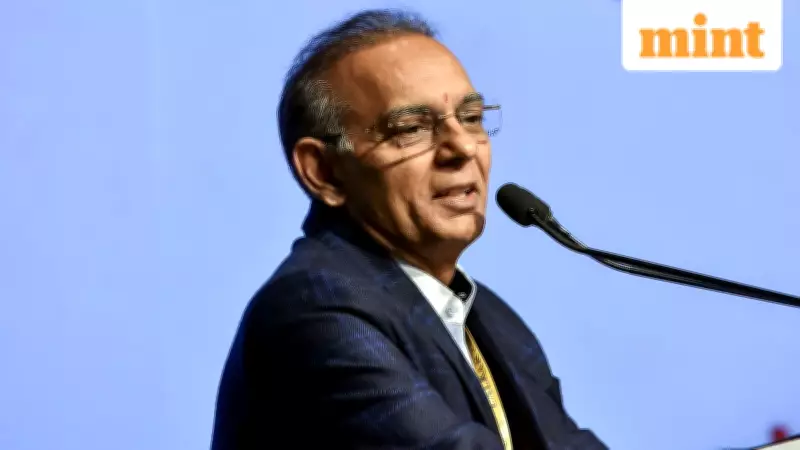
"The Connaught Place in Delhi is a heritage building we have already purchased, and it provides a very distinct identity," stated Motilal Oswal, chairman and managing director of Motilal Oswal Financial Services, in an exclusive discussion. This initiative represents a deliberate effort to translate the group's market success, fueled by the investment boom and the steady ascent of the Nifty index, into a lasting physical infrastructure legacy.

The Foundation and Evolution of the Group
Motilal Oswal Financial Services was established in 1987 by chartered accountants Motilal Oswal and Raamdeo Agrawal. Originating as a modest broking setup in Mumbai, the firm grew steadily through a client-centric approach anchored in a robust research-first culture. Over the decades, it has evolved into a comprehensive diversified financial services group, with asset management and private wealth management emerging as primary growth engines.
The company currently boasts a market capitalization of approximately ₹47,000 crore. The founding promoters remain deeply involved in operations and retain significant ownership stakes, ensuring continuity of vision and strategy.
The Strategic 3Ts Playbook
The business philosophy, as articulated by Oswal, rests firmly on three interconnected pillars: talent, towers, and technology. Talent constitutes the intellectual backbone of the organization. Towers provide the physical environment designed to nurture and retain this talent. Technology serves as the critical enabler, driving operational scale, efficiency, and future growth trajectories.
"The decision to develop owned offices was culture-first rather than purely business-driven," Oswal emphasized, highlighting the strategic intent behind the capital-intensive move.
Ambitious Expansion Blueprint
The group's ambitions extend far beyond the current four towers. "Our larger ambition is to construct at least 10 towers across major Indian cities by 2028, fully built and operational, and then plan the subsequent phase of expansion," Oswal revealed.
Potential locations have already been scouted in Pune, Kolkata, Hyderabad, and Chennai, with specific sites identified in several of these urban centers. Concurrently, teams are actively evaluating three to four additional cities to secure the pipeline for the next growth phase.
Navigating Market Trends and Challenges
This strategy unfolds against a backdrop where co-working spaces are proliferating, and many corporations prioritize cost efficiency and convenience, with employees often preferring to work closer to home or from flexible shared offices.
"We already operate around 180 branches nationwide. In Mumbai alone, we have 10 offices. While the core hub remains in Prabhadevi, the plan includes adding another tower in the suburbs and creating satellite extensions where employees can work nearer to their residences while maintaining connectivity to the main center," Oswal explained, addressing the logistical challenges.
He readily acknowledged that owning office spaces is capital-intensive and may not present an immediately attractive return on equity on paper. However, he underscored the intangible benefits: "It instills pride in our employees and builds trust amongst our clientele."

A Contrarian Approach in the Real Estate Landscape
Anuj Puri, chairman of Anarock Group, commented on the boldness of this approach: "Owning office spaces in an era when the global trend is toward managed offices to reduce capital expenditure and enhance flexibility is indeed a bold move that defies the larger trend."
Puri noted that companies with the capability to develop and operate from their own assets can potentially benefit from improved valuations as markets expand. He pointed out that rental values are rising across most cities, with lease renewals typically occurring at approximately 5% annually, aligning with industry standards.
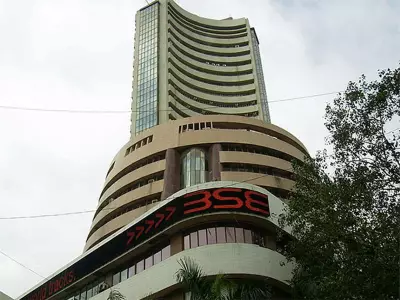
"The reality is that legacy Indian companies own significant assets. Major Indian industrial houses have historically owned and operated from their commercial properties for decades," Puri added, citing examples like the Tata Group's iconic Bombay House in Mumbai and the Bombay Stock Exchange's Phiroze Jeejeebhoy Towers.
Financials and Capital Expenditure Framework
The capital expenditure for each tower varies by city and location. According to Oswal, the cost for each tower, including interiors, is likely to range between ₹100 crore and ₹150 crore. For instance, the Bengaluru tower involved an expenditure of around ₹110 crore, while Ahmedabad was closer to ₹120 crore. Mumbai represents an outlier, with the office acquired in 2009-10 costing approximately ₹225 crore.
"These are indicative estimates, and our focus has been exclusively on securing premium locations," Oswal clarified.
Remarkably, the group plans to fully fund this tower-related capital expenditure through internal accruals, supported by a formidable balance sheet. The group's net worth has surged nearly tenfold from March 2015 to December 2025, reaching ₹13,632 crore. This growth was sustained by an average return on equity of 26% and an average payout ratio of 20%, achieved without raising external capital and even after executing three share buybacks.
Motilal Oswal Financial Services reported its highest-ever operating profit after tax (PAT) of ₹7,611 crore in the third quarter of FY26, marking a 16% year-on-year and 10% quarter-on-quarter increase. Between March 2015 and March 2025, the company's revenue compounded at a robust 27% CAGR, escalating from ₹773 crore to ₹8,417 crore.
Addressing Fixed Cost Concerns and Future Options
A common apprehension regarding such investments is the potential fixed-cost burden during economic or market downturns. Oswal counters this perspective, arguing that ownership provides a hedge. "You eliminate recurring rental payments and avoid the significant disruption and costs associated with relocating offices every five to seven years, which is a genuine inconvenience for staff," he stated.
Regarding potential future financial structures, such as Real Estate Investment Trusts (REITs), Infrastructure Investment Trusts (InvITs), or a separate real estate subsidiary, Oswal indicated these are not currently under active consideration. "There is no immediate necessity. If capital monetization or fund recycling becomes an objective later, it could be evaluated, but for now, it remains an occasional discussion point rather than a defined strategy," he said, while acknowledging it remains a potential future option if strategically justified.
Anuj Puri noted that market conditions offer several potential exit avenues depending on asset quality. "REITs can be a potential exit option at an appropriate valuation. Other possibilities that could be explored, if required, include strata-sales, fractional ownership models, or long-term lease arrangements."
This comprehensive office tower strategy underscores the Motilal Oswal Group's long-term vision, blending financial prudence with a commitment to creating enduring physical assets that support its corporate culture and growth ambitions in a dynamic market environment.