Mumbai's Lokhandwala Complex Enters Major Redevelopment Phase
Mumbai's western suburbs are witnessing a significant transformation. The once-emerald green mangroves and marshland of Andheri West gave way to a posh housing colony back in 1984-85. Today, after forty-one years, Lokhandwala Complex is experiencing a powerful wave of redevelopment. This movement stems partly from necessity and partly from what many call FOMO – the Fear of Missing Out.
The Changing Skyline of a Self-Contained Township
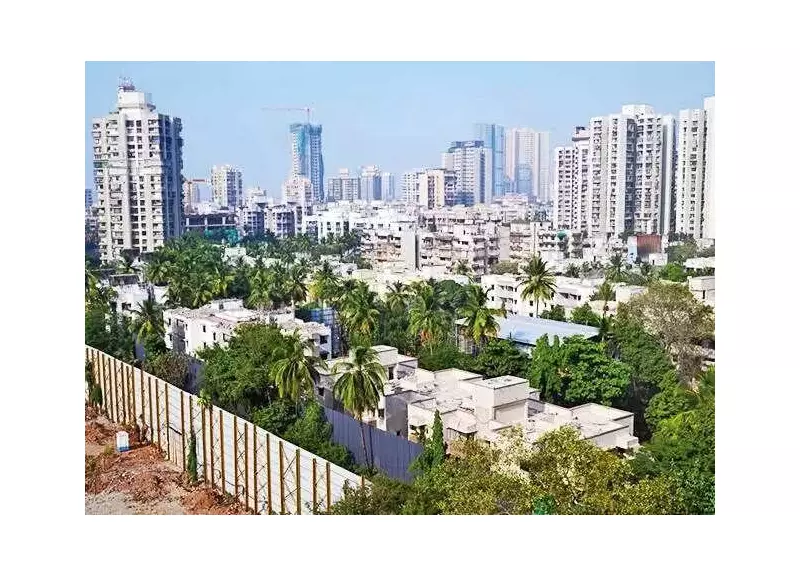
Lokhandwala Complex originally emerged as a self-contained township. It features four parallel cross lanes filled with hundreds of shops. These establishments provide everything from daily necessities to luxury goods for residents. Now, the familiar skyline is set for a dramatic change.
Demolition and reconstruction work is gaining momentum across the complex. The activity stretches from the Svati building, infamous for the 1991 Lokhandwala shootout, all the way to the Apna Ghar societies and Lennie at the complex's end. New signboards proudly announce the arrival of fresh developers and project management consultants.

From Camel Rides to Concrete Jungles: A Four-Decade Journey
The story of Lokhandwala began four decades ago. Old-time residents share vivid memories of riding camels to view flats in 1983-1984. Proper roads were nonexistent back then. Young middle-class families took loans to purchase their dream homes in this emerging locality.
Those original buyers are now senior citizens. Many face a difficult reality. The new apartments emerging from redevelopment might become unaffordable for them. This could force some to sell and relocate. Furthermore, property tax will be calculated based on the ready reckoner rate at completion. Maintenance costs are also expected to rise sharply.
Builders Old and New Shape the Future
The first round of construction saw builders like Lokhandwala, Hiranandani, and Walawalkar create these homes. The locality itself takes its name from the main developer. Now, round two introduces a new set of players.
Major developers such as DLH, DGS, Bharat, Rishabhraj, Ajmera, Kalpataru, Puravankara, Rustomjee, and Mahindra Lifespaces have secured projects. Resident societies have negotiated a wide range of deals. These agreements promise them extra area ranging from 35% to an impressive 110%.
Resident Stories: Floods, Lifts, and Hard Choices
Consider the case of Hrushikesh Society in Apna Ghar-1. Built in 1983, it housed 290 flats across eight buildings. Demolition crews razed these structures in mid-2025. Committee members still meet daily in a makeshift office.
They explain their decision. "The original construction quality by Walawalkar was good," they note. "But the June 2005 floods inundated our ground-floor homes and destroyed belongings. That was a wake-up call. Repeated repair costs became exorbitant. Our buildings lacked lifts, making life difficult for senior citizens climbing three or four storeys."
The society secured a deal offering 52% extra space plus a corpus of Rs 15-16 lakh. New buildings should be ready in three-and-a-half years.
The Dilemma: Need Versus Greed in Lane 2
Lane 2 and beyond host the upper-crust societies with buildings spanning 7 to 14 storeys. Here, residents grapple with a classic dilemma: need versus greed.
Dhaval Shah of the residents' association LOCA sheds light on the situation. "As families grow, people feel an extra room would be ideal," he says. "Conversely, the original 1980s buyers are now seniors. Some have limited resources, others are retired, and many have children living abroad."
Shah predicts many will consider selling their flats. Larger houses bring higher property tax, increased electricity costs, and steeper wages for domestic help. Amenities like swimming pools, clubhouses, and gyms come with hefty maintenance bills and GST. Monthly maintenance could jump fivefold, from around Rs 2,000 to Rs 10,000.
Personal Accounts of Change and Uncertainty
Shah connected us with residents currently undergoing reconstruction. Priyam Gangrade of Sheetal Chhaya points to shoddy original construction as the main driver for redevelopment. "Our work is progressing briskly," she admits, "but we secured a raw deal."

Sweeta Choitramani vacated her Svati building apartment in December after 27 years. "I married and came here, my daughter was born here," she shares emotionally. "So, this redevelopment is painful."
Brokers and Analysts Weigh In on the Future
Property broker Arun Lillaney believes Lokhandwala will become "the next Lower Parel." He states, "Redevelopment is the need of the hour. The buildings are 40-45 years old. The government has sanctioned good FSI, attracting reputable builders. Each deal varies by location, but everyone gets something extra."
Broker Jaideep Mandal, whose own Lane 2 building is in the pipeline, highlights a concern. Retired seniors with children abroad may struggle to bear the fivefold increase in outgoing costs.
Infrastructure Challenges and Expert Advice
Dhaval Shah warns that new towers will bring an influx of residents. This demands wider roads, better parking, improved drainage, and enhanced water facilities.
Rajesh Makhija of Landmark Estate Agency has watched the area transform since 1983. "There were no roads, so no rickshaws or buses," he recalls. "We had no water supply, sanitation, or drainage. Sun Swept even installed septic tanks. Lokhandwala Complex rose from scratch. The original amenities were installed then and will be rebuilt now. After all, the city can only grow vertically."
Makhija offers crucial advice. He cautions people to choose a reputed developer only after thoroughly checking their financial credentials.
The Resident Sentiment: Eagerness and Apprehension
The mood among residents mixes eagerness with apprehension. At a doctor's clinic in Apna Ghar, patients debated the future. One managing committee member revealed, "At every meeting, 90% of members eagerly ask, 'Building kab tootegi?' (When will the building be demolished?). All for one extra room."
This sentiment captures the complex dynamics at play. Lokhandwala Complex stands at a crossroads, balancing its storied past with an ambitious, vertically growing future.