

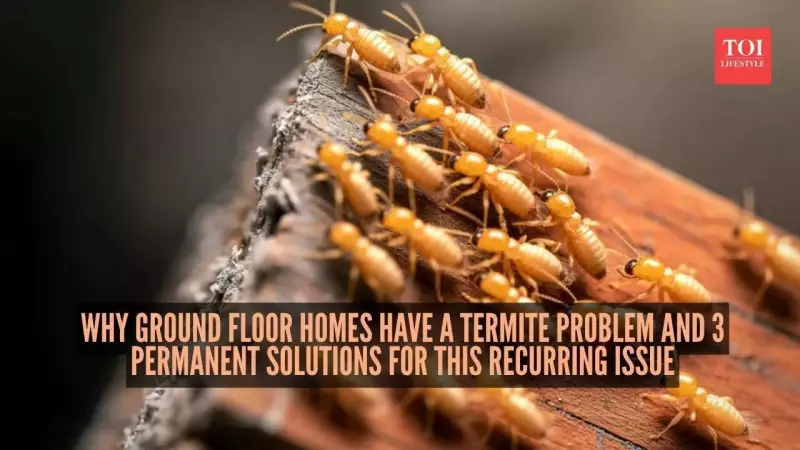
For homeowners, particularly those residing on the ground floor, the silent menace of termites represents a persistent and costly threat. These pests pose a significant risk to the structural integrity and safety of buildings, with ground-level units being exceptionally vulnerable. This heightened risk stems from a perfect storm of the termites' natural behaviour, favourable environmental conditions, and common construction practices.
The Triple Threat: Why Ground Floors Are Termite Magnets
The primary reason for this vulnerability lies in the biology of the most destructive species: subterranean termites. These insects live in extensive underground colonies and are entirely dependent on soil contact to maintain vital moisture levels. Exposure to air causes them to dry out rapidly. Consequently, a ground-floor home sitting directly on or near the soil provides the shortest, most direct highway for these pests to invade.
Termites expertly exploit the path of least resistance. They do not eat through concrete but are masters at navigating microscopic gaps. Tiny cracks in foundations, plumbing conduits, expansion joints, and poorly sealed edges become gateways. From these entry points, they construct their signature mud tubes to travel from the soil to the wooden structures within your home, targeting everything from beams and joists to furniture and cabinetry.

Moisture: The Irresistible Attractant
Termites are drawn to humidity like a magnet. Ground-floor areas are naturally prone to moisture accumulation, creating an ideal habitat. Basements, kitchens, bathrooms, and spaces near drains are common hotspots. Factors such as poor drainage, leaking pipes, clogged gutters, or even high ambient humidity can dampen the soil and wood around the foundation. This moisture not only attracts termite colonies but is essential for their survival, making infestations recurrent unless the source of dampness is permanently addressed.
Perhaps the most significant risk factor is direct wood-to-soil contact. When structural timber, door frames, or even stored firewood inside the premises touch moist soil, it offers termites a direct entry ticket, bypassing the need for mud tunnels. This scenario is frequently observed in older constructions or poorly maintained properties, where the fundamental barrier between earth and wood has been compromised.
Three Permanent Solutions for Lasting Protection
While temporary sprays and repellents offer short-term relief, lasting termite control requires strategic, professional-grade interventions. Here are three permanent approaches endorsed by experts.
1. Professional Pre-Construction Anti-Termite Treatment
Considered one of the most effective long-term strategies, this involves creating a chemical barrier before a building is even erected. Trained technicians apply a specialised termiticide solution to the soil beneath and around the construction site prior to laying the foundation. This establishes a continuous, lethal zone that foraging termites cannot cross without encountering the treated soil. This proactive method, often mandated in building codes worldwide, ensures protection is built into the structure from the very beginning.
2. Foundation and Physical Barrier Systems
For existing homes where pre-construction treatment wasn't performed, installing physical barriers is a highly effective alternative. These non-chemical solutions are designed to block entry points permanently and can last for decades. Key measures include:
- Installing physical termite membranes and sealants around the foundation perimeter.
- Using stainless-steel mesh or termite shields at critical junctions where soil meets wood.
- Ensuring all wooden structural elements are raised at least 150-180 mm above ground level to break direct contact.
These barriers physically deny termites access through cracks, plumbing penetrations, and other vulnerabilities.
3. Proactive Moisture Management and Soil Separation
Since termites cannot thrive without moisture, environmental control forms the cornerstone of any long-term prevention plan. Homeowners must adopt rigorous moisture management practices:

- Improve grading and drainage to ensure water flows away from the foundation.
- Promptly fix plumbing leaks, faulty gutters, and downspouts.
- Eliminate all direct wood-to-soil contact by using concrete bases or treated wood for outdoor structures.
- Maintain proper ventilation in crawl spaces and attics to reduce humidity.
By making the environment around and under the home less hospitable, you actively deter termite colonization.
In conclusion, while ground-floor homes are inherently more susceptible to termite attacks due to their proximity to soil, moisture, and food sources, this risk is not inevitable. A combination of professional pre-construction treatment, robust physical barriers, and diligent moisture control can create a formidable, permanent defence, safeguarding your property from these destructive pests for years to come.





