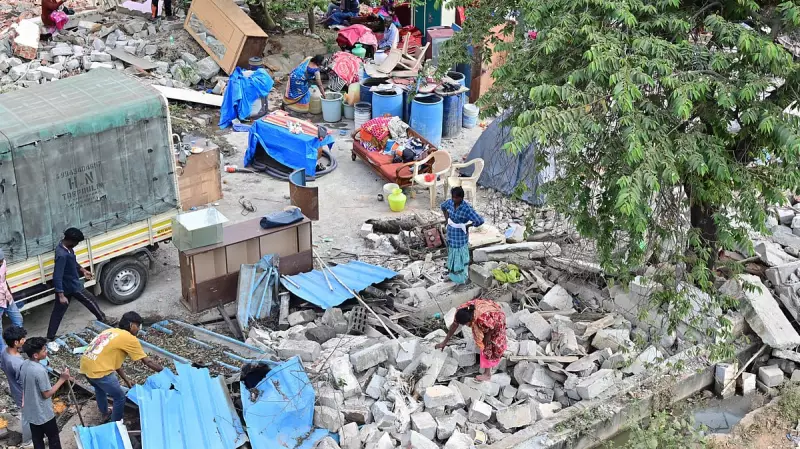
The long-pending and critical task of reclaiming public land illegally occupied by powerful entities is finally gaining momentum in Karnataka. An editorial underscores that this recovery mission, while long overdue, must be executed with a balanced approach of empathy and unwavering fairness, ensuring no influential person is spared.
A Mission Long Overdue
For years, the issue of land grab has plagued urban and rural landscapes across the state, with prime public property falling into private hands through dubious means. The call to action, emphasized in a recent editorial, marks a significant shift towards accountability. The process, initiated with renewed vigour, aims to restore assets that rightfully belong to the community and the state exchequer.
The Imperative for Empathy and Fairness
While the drive is necessary, the editorial stresses that the methodology is crucial. Recovering public land must not become a chaotic or vindictive exercise. Authorities are urged to follow due process and legal frameworks meticulously. This means distinguishing between wilful, large-scale encroachments by the powerful and potential cases of marginalised communities caught in complex historical circumstances.

The principle of fairness demands that the law applies equally to all, regardless of political clout or financial muscle. The editorial explicitly warns against sparing the influential, suggesting that the success of this campaign will be judged by its ability to target the powerful and recover high-value assets they have appropriated.
The Bengaluru and Karnataka Context
In a state like Karnataka, with its booming real estate market, especially in capital city Bengaluru, the recovery of grabbed land holds immense financial and social importance. Liberated land can be used for public infrastructure, affordable housing, green spaces, and civic amenities, addressing critical urban shortages. The editorial positions this not just as a legal cleanup, but as a vital step for equitable urban development and justice.
The renewed focus signals an administrative willingness to tackle a deeply entrenched problem. The success of this initiative will depend on transparent action, resistance to pressure, and a commitment to converting recovered land into tangible public good, setting a precedent for the entire nation.