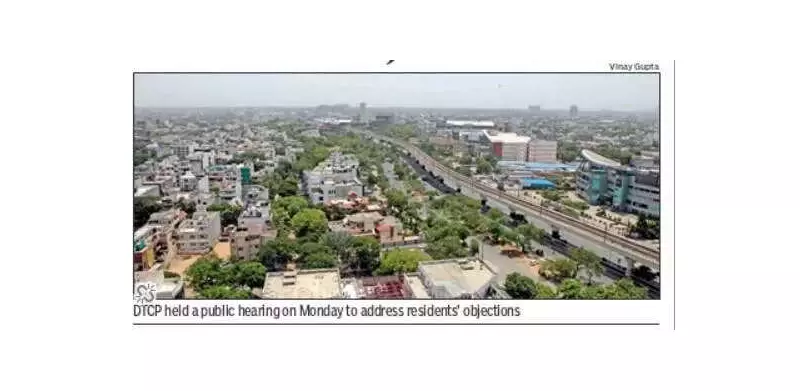
The long-running dispute over which law governs DLF phases 1 to 5 in Gurgaon took center stage on Monday. The Department of Town and Country Planning conducted a public hearing to address resident objections regarding legal jurisdiction. This hearing followed a November 26, 2025 order from the Punjab and Haryana High Court.
Residents Voice Strong Objections
More than 100 residents actively participated in the hearing. Many residents presented a clear argument. They stated that since the entire DLF area falls under the Municipal Corporation of Gurgaon, the Town and Country Planning Act of 1963 should apply. They believe the Haryana Development and Regulation of Urban Areas Act from 1975 does not apply here.
Residents made a specific claim. They argued that once an area comes under a civic body like MCG, the DTCP loses its authority to take enforcement action. They pointed to building plans and occupancy certificates as evidence. These documents are issued under the 1963 Act, which residents say strengthens their position that the planning department has no jurisdiction.

DTCP's Firm Response
DTCP enforcement officials responded directly to these concerns. They explained that their powers in licensed colonies come specifically from the 1975 Act, not the 1963 law. Officials clarified that DLF 1-5 were developed as a licensed area. Permissions for carving out residential plots, approving zoning layout plans, and defining land use were granted under Section 3 of the 1975 Act.
Officials emphasized a crucial point. These licence conditions continue to apply even if the colony later falls within municipal limits. They addressed the building approval process specifically. While independent house plans are approved under the Haryana Building Code, 2017 through a self-certification system, this does not reduce DTCP's authority.
How the System Works
Under the current system, architects approve building plans and issue occupancy certificates. However, officials made an important distinction. If any violation is later found in these approvals, it is treated as a breach of licence conditions under the 1975 Act. In such cases, action can be taken under Section 3-B by the director of town and country planning or an authorized officer.
At the hearing's conclusion, DTCP stated clearly that all violations flagged in DLF 1-5 relate to licence conditions under the HDRUA Act of 1975. This makes their actions legally valid according to their interpretation. Residents were allowed to submit formal objections during the proceeding.
Next Steps in the Process
Officials announced that a common speaking order would be issued in the coming days. This document will be submitted to the High Court as a status report. The hearing represents a significant development in a dispute that has concerned Gurgaon residents for some time. Both sides presented their legal interpretations with conviction, highlighting the complexity of urban governance in rapidly developing areas.
The outcome of this process could set important precedents for other licensed colonies in Haryana facing similar jurisdictional questions. Residents await the formal order while continuing to advocate for their position on which law should properly govern their neighborhoods.