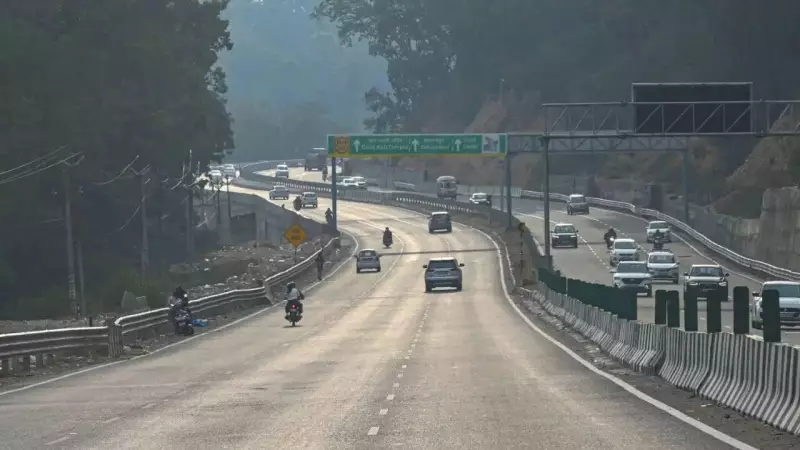
The much-anticipated Delhi-Dehradun Economic Corridor is in its final sprint, with the National Highways Authority of India (NHAI) targeting an opening shortly after the first week of February 2026. This 213-kilometre access-controlled highway promises to revolutionize connectivity between the national capital and the Uttarakhand hills, dramatically cutting travel time and cost.
Final Push for a February Launch
With over 99% of the physical construction work already complete, the focus has now shifted to finishing touches. Workers are racing against the clock to complete pit stops, toilet facilities, road shoulders, and other ancillary structures to ensure full commuter convenience from the very first day of operation. NHAI officials expect the remaining tasks, which include finishing interchanges and minor civil works, to be wrapped up within the next ten days.
A Game-Changer for Travel Time and Cost
The operational corridor will be a boon for motorists. The gruelling journey that often takes six hours or more will be slashed to under three hours by car. In a significant move for affordability, commuters using FASTag can avail an annual pass allowing them to traverse the highway's four toll plazas for a mere ₹60 for a one-way trip. For those without the pass, the one-way toll is estimated to be around Rs 500.

The highway begins at Delhi's Akshardham, though the fully access-controlled experience starts after Loni. While initial stretches near the Akshardham Metro may still see mixed traffic, the main corridor is designed for smoother and safer high-speed travel.
How Local Demands Shaped the Highway
The project's design was notably influenced by local communities and farmers. For instance, powerful sugarcane farmers in Muzaffarnagar successfully lobbied for changes. At Karaunda Mahajan, the road elevation for an underpass was raised to 5.5 metres to accommodate the passage of overloaded tractors commonly used in the region.
Similarly, local protests in Badgaon, Saharanpur, led to the addition of an extra interchange to improve connectivity for residents. The project also involved extra land acquisition and careful coordination with existing irrigation and power projects, which caused some delays but ultimately helped in bringing local stakeholders on board.
Environmental Care and Future Plans
A critical stretch of the highway passes through the ecologically sensitive Rajaji National Park and an elephant corridor. To minimize environmental impact, construction faced strict restrictions, including bans on night work and stoppages during the monsoon season. The design incorporates elevated sections, special animal-friendly lighting, and provisions for wildlife monitoring to reduce disturbance to fauna.
Looking beyond this project, NHAI is already planning two new road corridors to further improve connectivity towards popular destinations like Mussoorie and Paonta Sahib, aiming to boost tourism and pilgrimage travel in Uttarakhand.
Built in four distinct phases, the corridor includes a brownfield elevated section from Akshardham to the Eastern Peripheral Expressway (Phase I), a long greenfield stretch to Saharanpur (Phase II), a completed section to Ganeshpur (Phase III), and the final leg entering Dehradun (Phase IV). Officials highlight that the road was laid well before the last monsoon to allow for proper settling, resulting in a superior ride quality compared to older expressways.