In a significant legal development for Bengaluru's infrastructure landscape, a city court has dismissed an urgent plea filed by engineering giant Larsen & Toubro (L&T). The company had sought to restrain the rail project implementing agency K-RIDE from encashing bank guarantees related to a major metro corridor contract.
The Core of the Contractual Dispute
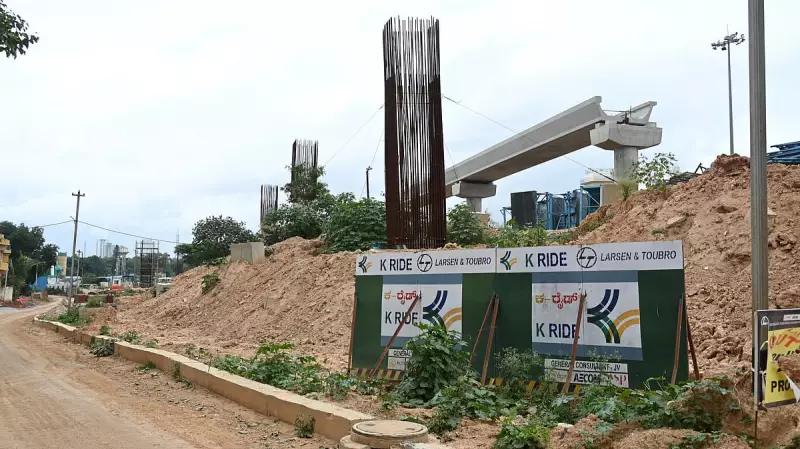
The dispute stems from a substantial contract awarded to L&T for the design and construction of a crucial section of Bengaluru's rail network. The scope of work involved building an 8.96-kilometre elevated corridor along with a much longer 37.92-kilometre at-grade corridor on the Heelalige-Rajanukunte line. This project is a key part of the city's efforts to decongest traffic and improve public transport connectivity to its growing suburbs.
While the exact reasons for the friction leading to the legal move were not detailed in the court's dismissal order, the act of seeking to restrain the encashment of bank guarantees typically indicates a serious disagreement over contract terms, payments, or project execution. Bank guarantees are standard financial instruments in large contracts, serving as a security for the project owner in case the contractor fails to meet obligations.

Court's Decision and Immediate Implications
The court, on 12 January 2026, dismissed L&T's petition. This decision effectively allows K-RIDE (Karnataka Railway Infrastructure Development Entity) to proceed with encashing the bank guarantees if it deems necessary. For L&T, this legal setback means it has lost a key interim protection that could have shielded it from immediate financial recourse by the project authority during the ongoing dispute.
The ruling underscores the judiciary's stance on the sanctity of such financial instruments in infrastructure contracts. It signals that courts may be reluctant to interfere with the encashment process unless there is a clear case of fraud or irretrievable injustice, which L&T's plea apparently failed to establish to the court's satisfaction at this stage.
What This Means for the Bengaluru Metro Project
This legal tussle between a premier engineering conglomerate and a state infrastructure agency casts a shadow over a critical urban mobility project. The Heelalige-Rajanukunte line is envisioned to serve several densely populated and industrially significant areas on the outskirts of Bengaluru.
The court's decision could lead to several potential outcomes:
- Potential Financial Repercussions: K-RIDE may now consider encashing the guarantees, which would directly impact L&T's finances.
- Renegotiation or Arbitration: The parties may be pushed towards renegotiating terms or entering formal arbitration to resolve the underlying contract issues.
- Project Timeline Concerns: Any prolonged dispute risks delaying the completion of this important infrastructure, affecting the commuting public.
The dismissal of the plea is unlikely to be the end of the matter. L&T may explore other legal avenues or challenge the order in a higher forum. Meanwhile, the focus will remain on how both entities navigate this conflict to ensure the vital rail project stays on track for the benefit of Bengaluru's citizens.