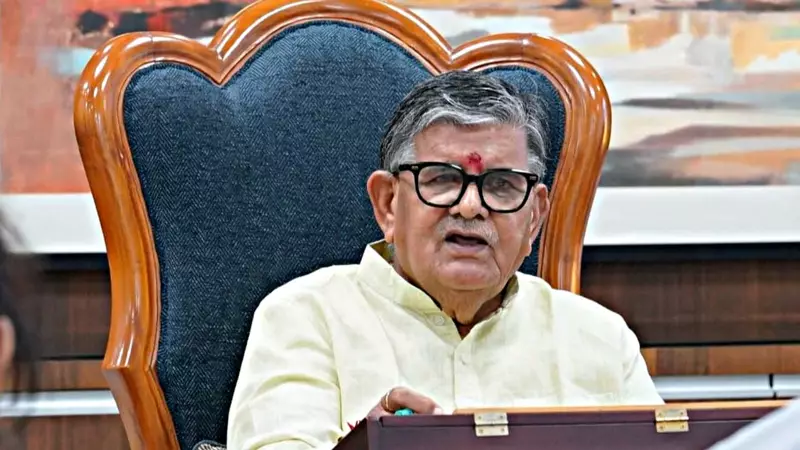
In a significant shift, Chandigarh's Administrator, Gulab Chand Kataria, has reignited the possibility of implementing a land pooling policy for the Union Territory's peripheral villages. This move comes less than three months after the Union Government stated that no such policy was being formulated.
A Renewed Promise in the General House
During a recent meeting of the Municipal Corporation's General House, Kataria directly addressed the long-standing demand of farmers and councillors. He stated that landowners who prefer developed land would be allotted the same under a land pooling policy. He assured that if the policy could not be implemented, the administration would offer compensation so substantial that it would be impossible for landowners to refuse.
The announcement, made on December 30, was met with immediate approval from councillors, who thumped their tables in support. This endorsement has revived the aspirations of countless landowners in the 22 villages on Chandigarh's periphery, who have sought a policy similar to those in Punjab and Haryana.

Complications and Cautious Optimism
Despite his supportive stance, Administrator Kataria also highlighted practical hurdles. He pointed out potential complications, such as cases where the legal owner of a plot is different from the person in possession. "This issue has its own complications, and it remains to be seen how and to what extent we can implement the land pooling policy," Kataria remarked.
He cautioned, "There are obstacles too. For instance, the owner may be someone else while another person is in possession of the land. How would we get it vacated for the policy even if the owner is ready to give it?" However, he firmly added, "Those who want developed land under the land pooling scheme will be given the same. We will certainly try to make it happen."
Stakeholders Welcome the Move
Local leaders have expressed renewed hope. Mayor Harpreet Kaur Babla confirmed that this is a collective demand and that she has raised the issue before the UT Advisory Council and with the Governor multiple times.
Nominated councillor and Chandigarh Pendu Vikas Manch president, Satinder Pal Singh Sidhu, emphasized that a robust land pooling policy is the only solution for planned development on Chandigarh's periphery. It would curb illegal plotting and construction. He argued that with such a policy, landowners would willingly hand over land in exchange for developed plots, aligning with the Master Plan for 2031.
Sidhu recalled that the last land acquisition occurred in 2016 for a road project. "In 2024 too, most farmers from Chandigarh villages refused to give land for the Airport Road, demanding a land pooling policy instead," he noted, highlighting the persistent demand.
The Land Pooling Model: Benefits and Concerns
Land pooling is a development model where farmers surrender their agricultural land for urban expansion. Instead of cash, they receive a portion of the serviced, developed land after infrastructure like roads and utilities are built. Proponents say it ensures:
- Equitable development and fair value sharing.
- Minimised forced displacement.
- Reduced litigation over compensation.
However, critics warn that without proper safeguards, the model could disproportionately benefit developers over the original landowners. The successful variations implemented in neighbouring Punjab and Haryana serve as a reference point for Chandigarh's aspirations.
This new intent from the UT Administration marks a pivotal moment, potentially ending the policy paralysis noted since August 2024, when the Ministry of Home Affairs informed Parliament that no land pooling policy was under consideration for Chandigarh.