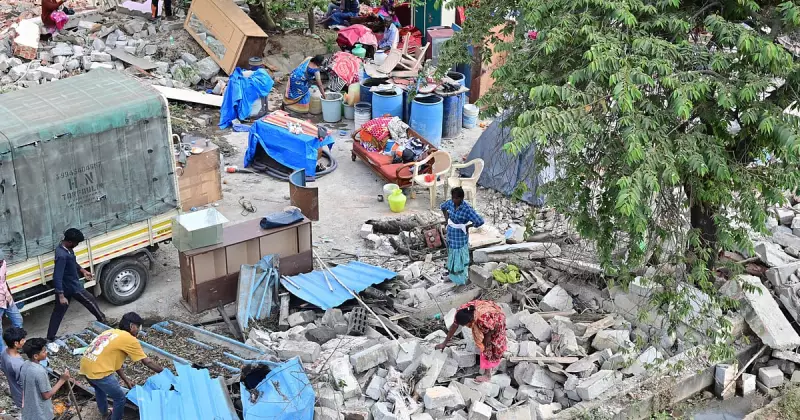
The chilling night of January 9, 2026, will be etched in the memories of residents in Bengaluru's Thanisandra area. As temperatures dropped, they were left exposed to the elements, their homes reduced to rubble by bulldozers in a massive encroachment removal drive by the Bengaluru Development Authority (BDA).
A Night of Hardship and Despair
Despite the BDA arranging temporary shelters and food, the affected people, predominantly tenants and families from lower-income groups, have labeled the relief efforts as grossly inadequate. The scene on Friday was one of utter devastation, with personal belongings scattered amidst debris as people tried desperately to salvage whatever they could from the ruins of their homes. The emotional toll was captured in a searing indictment from the residents, who felt dehumanized by the entire process. "They treated us like dogs," said one, summarizing the collective sentiment of anguish and injustice.
The BDA Drive and Its Aftermath
The eviction operation, which continued into its second day on Friday, January 9, 2026, was part of the BDA's ongoing mission to reclaim government land from illegal encroachments. While the authority's action is based on legal grounds, the manner of its execution has sparked severe criticism. The suddenness and force of the demolition have left hundreds without immediate, viable alternatives for housing. Photographs from the site show individuals sifting through piles of concrete and twisted metal, their lives upended in a matter of hours.

Inadequate Relief and a Plea for Humanity
The core of the controversy lies in the gap between the official provision of aid and the ground reality. For daily wage earners and tenant families who lived in the now-demolished structures, the promised temporary shelters are often not a practical solution. The loss extends beyond bricks and mortar; it includes access to work, schools, and a fragile sense of community stability. The residents argue that the eviction was carried out without sufficient notice or consideration for humanitarian concerns, turning a legal procedure into a traumatic event. Their plea is not just for shelter but for dignity and a more compassionate approach from the authorities in future drives.
The incident in Thanisandra highlights the ongoing tension between urban development plans and the rights of the city's most vulnerable inhabitants. It raises critical questions about the protocols followed during such evictions and the responsibility of the state to ensure that enforcement actions do not strip people of their basic human rights.