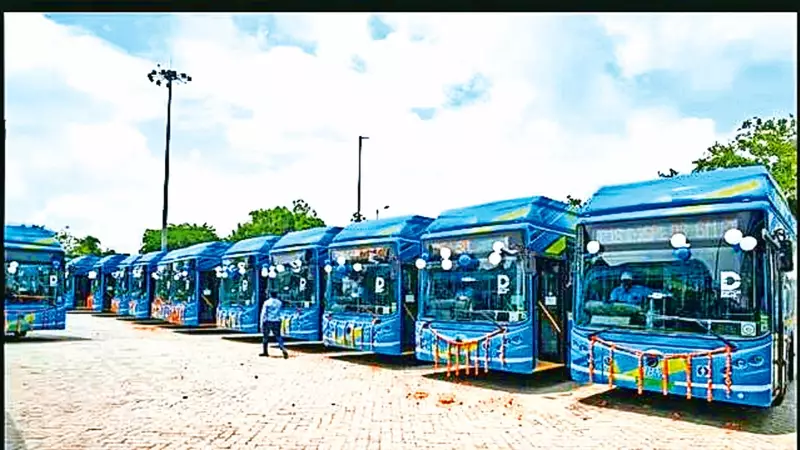
The Noida Authority is gearing up to significantly enhance public transportation in the region with the introduction of a massive fleet of electric buses. According to officials, over 500 electric buses (e-buses) will begin operating in a phase-wise manner starting July-August 2026. This ambitious project aims to serve Noida, Greater Noida, and the areas around the Yamuna Expressway.
Phased Rollout and Operational Details
In an exclusive conversation, S P Singh, Chief Manager of Noida Authority's New Township Cell, outlined the plan. The service is expected to commence in the second quarter of the year, with an initial deployment of 100 buses. The ultimate goal is to have buses available at intervals of just 10 minutes, with a scheduled halt of 20 minutes between each trip to manage operations efficiently.
Singh explained that the project will be executed through a fresh tender process and the formation of a Special Purpose Vehicle (SPV) at the government level. This marks a reset from a previous attempt where tenders were awarded in June 2025 to two companies—Travel Time Mobility India Private Limited and Delbus Mobility Private Limited. Those contracts were later cancelled and terminated, leading to the new SPV-driven approach.

Route Network and Fleet Distribution
The expansive service will cover a total of 25 key routes, connecting major intra-city corridors and providing crucial links to the upcoming Noida International Airport in Jewar. Officials have specified the distribution plan: 257 e-buses will run on 13 routes in Noida, 196 on nine routes in Greater Noida, and 52 on two routes in the Yamuna Expressway area.
Between 10 to 20 buses will be deployed on each route, operating based on on-demand requirements. Some of the identified routes include Shashi Chowk to Ace City, areas in Kasna village to Sharda University, Tigri Gol Chakkar to Rajnigandha Chowk, and Botanical Garden to Sampoornam. Another significant route will connect Dadri to G B University via Kasna.
A Fresh Start for Sustainable Commuting
This initiative represents a major push towards sustainable urban mobility in the National Capital Region (NCR). The shift to an SPV model is intended to ensure smoother execution and operation of the service compared to the previous cancelled contracts. The focus on high-frequency service, especially with connections to the new international airport, underscores the project's role in shaping the future of public transport infrastructure in the rapidly developing satellite cities.
With the July-August timeline, residents of Noida and Greater Noida can anticipate a transformative change in their daily commute, moving towards a greener and more efficient public transit system powered entirely by electricity.