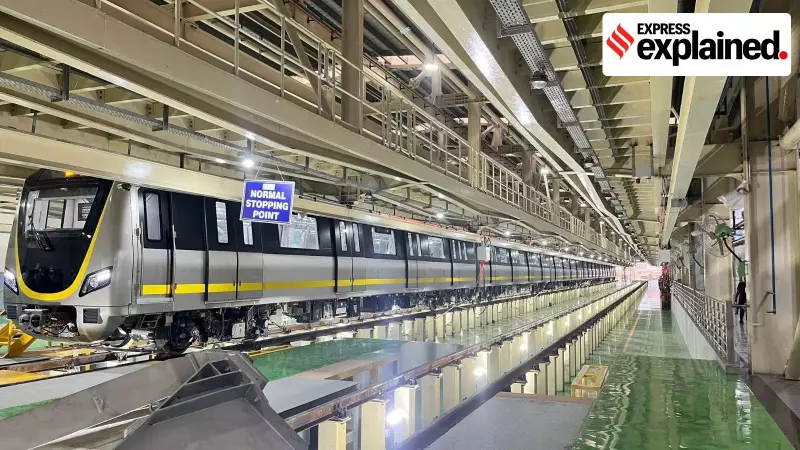
In a major boost for public transport in India's tech capital, three new stretches of the Bengaluru Metro, covering a combined length of 41.01 kilometres, are set to become operational in the coming year. The announcement was made by Karnataka Deputy Chief Minister and Bengaluru Development Minister D K Shivakumar, significantly advancing the city's Namma Metro network.
Three Key Stakes Set for 2026 Launch
The first section to open will be a part of the Pink Line, connecting Kalena Agrahara to Tavarekere. This 7.5 km elevated corridor with six stations is scheduled for commissioning in May 2026.
Following this, a crucial underground section of the same line will be launched. This 13.76 km stretch from Dairy Circle to Nagawara, featuring 12 stations, is expected to be operational by December 2026.

The third major launch will be Phase-2A of the Blue Line, also known as the Airport line. This 19.75 km elevated corridor along Outer Ring Road, connecting Central Silk Board to Krishnarajapura with 13 stations, is also slated for a December 2026 opening.
Network Expansion and Future Plans
The commissioning of these three stretches will mark a substantial expansion of Bengaluru's metro rail system. The operational length will grow from the current 96.1 km to 137.11 km, offering much-needed relief to the city's commuters.
Looking ahead, Phase-2B of the Blue Line, which will complete the connectivity from Southern Bengaluru to Kempegowda International Airport, is targeted for 2027. The section from Hebbal to the Airport is planned for June 2027, while the connecting 11 km stretch from Hebbal to Krishnarajapura is expected in December 2027.
Preparations for Phase 3 and Further Extensions
Deputy CM Shivakumar revealed that the government is already planning for the future. Detailed Project Reports (DPRs) are being prepared to extend metro lines to Tavarekere, Hosakote, Bidadi, and Nelamangala, pushing the network deeper into the city's outskirts.
In a significant financial move, he announced that a tender for 100 km of metro network under Phase 3, including a double-decker corridor, will be floated in January. The projected cost for Phase 3 is Rs 25,311 crore, with Rs 15,600 crore being financed through the Japan International Cooperation Agency (JICA). Tender works worth Rs 9,700 crore will be called next month.
This phased expansion underscores the state government's commitment to decongesting Bengaluru and providing a sustainable, efficient mass rapid transit system for its growing population.