

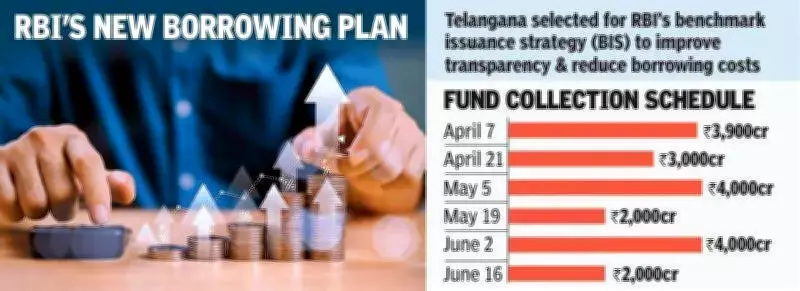
Hyderabad: Telangana is set to raise Rs 6,300 crore each month in the first quarter of the 2026-27 financial year, marking a sharp increase from its earlier practice of borrowing below Rs 4,000 crore monthly. The state has been selected for the Reserve Bank of India's new benchmark issuance strategy (BIS), which aims to bring transparency to bond auctions and lower borrowing costs.
Pilot Scheme Details
Telangana joins Andhra Pradesh and Maharashtra in the pilot scheme, which is part of a national borrowing plan of Rs 2.54 lakh crore. Financial experts emphasize that the funds must be channelled into productive sectors to spur growth rather than simply add to debt.
Borrowing Programme Timeline
The borrowing programme began on April 7 with an initial Rs 3,900 crore and will run until June 16. Of the total, Rs 5,900 crore will be raised through bonds maturing in over 25 years, Rs 6,000 crore through bonds maturing in 16-20 years, and additional sums through bonds with maturities of 6-15 years.

Officials say the loans are crucial for implementing guarantees, building infrastructure, and covering essential expenses such as salaries and pensions.
Addressing Liquidity Issues
The RBI will manage the process to cushion states against interest burdens and market volatility. The BIS strategy addresses liquidity issues that plagued earlier state borrowings, officials said. Previously, states issued bonds with varied maturities, making them harder to trade. Under the new system, bonds will be issued at fixed tenures — 5, 10, 15, 20 and 25 years — creating larger volumes of similar securities.
This makes them easier for investors to buy and sell, boosting confidence and potentially lowering interest rates, a financial expert said. Telangana was chosen for the pilot due to its record of efficient financial transactions. The move signals a shift in how states borrow, with structured issuance expected to improve transparency, market depth, and investor participation, officials added.
Financial experts caution that the increased borrowing must be directed towards productive investments to ensure economic growth and debt sustainability. The structured bond issuance under the BIS is anticipated to enhance market liquidity and reduce borrowing costs for states over time.






