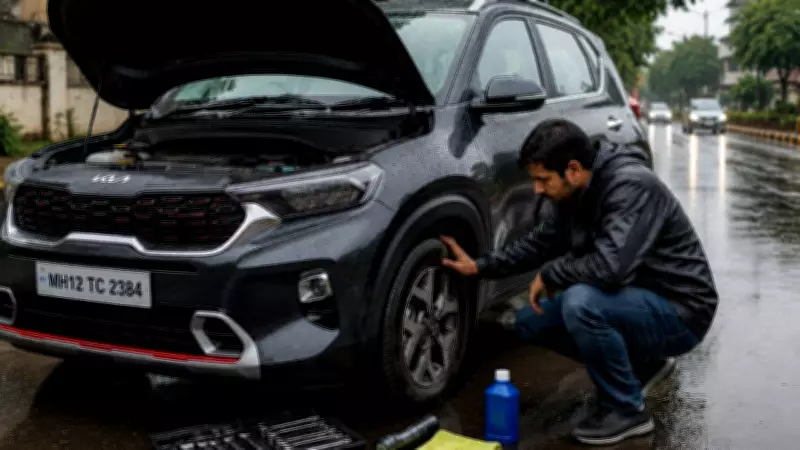
Before the monsoon arrives, vehicle owners should inspect key components such as tyres, wipers, brakes, lights, and the battery to reduce the risk of breakdowns and improve safety. Heavy rainfall, waterlogged roads, potholes, and high humidity can affect vehicle performance and increase maintenance costs if preventive checks are overlooked.
Check Tyre Condition
Tyres play a crucial role in maintaining grip on wet roads. Owners should inspect tread depth and look for signs of uneven wear, cuts, or cracks. Maintaining the recommended tyre pressure is equally important, as incorrect pressures can affect handling and braking. The spare wheel should also be checked.
Inspect Wipers and Washer System
Worn-out wiper blades can significantly reduce visibility during rain. If the blades leave streaks, make noise, or fail to clear water effectively, replacement may be necessary. Washer fluid levels and nozzle operation should also be checked.

Ensure All Lights Are Functioning
Headlights, tail lamps, brake lights, indicators, and fog lamps should be inspected before the rainy season. Proper lighting improves visibility for the driver and helps other road users spot the vehicle in poor weather conditions.
Test the Battery
Monsoon conditions can expose weak batteries. Owners should check for corrosion around terminals and ensure all connections are secure. Batteries that are several years old may benefit from a professional inspection.
Inspect the Braking System
Braking performance becomes even more important on slippery roads. Brake pads, discs, and brake fluid should be checked, especially if the vehicle exhibits vibrations, unusual noises, or reduced stopping performance.
Check Door and Window Seals
Damaged rubber seals around doors and windows can allow water to enter the cabin. Inspecting and replacing worn seals can help prevent leaks, damp carpets, and interior odours.
Clean Drainage Channels
Drainage channels can become blocked by dirt, leaves, and debris. Cleaning them regularly helps prevent water accumulation that may affect the cabin or electrical components.
Keep the Cabin Dry
High humidity can lead to mould growth and unpleasant smells inside the cabin. Wet carpets should be dried quickly, while floor mats, moisture absorbers, and regular cleaning of the AC system can help maintain a fresh interior.
Review Insurance Coverage
Vehicle owners should understand what their insurance policy covers before the monsoon begins. Comprehensive insurance and engine protection add-ons can prove useful in areas prone to flooding and waterlogging.
Avoid Deep Water Crossings
Driving through deep water can damage the engine and electrical systems. If the depth of standing water is uncertain, it is safer to wait or take an alternative route. Water entering the engine can lead to hydrolock, resulting in costly repairs.
Conclusion
A few preventive checks before the rainy season can improve safety, reliability, and ownership costs. Inspecting critical components and addressing minor issues early can help motorists deal with monsoon conditions more effectively and reduce the likelihood of unexpected repairs.