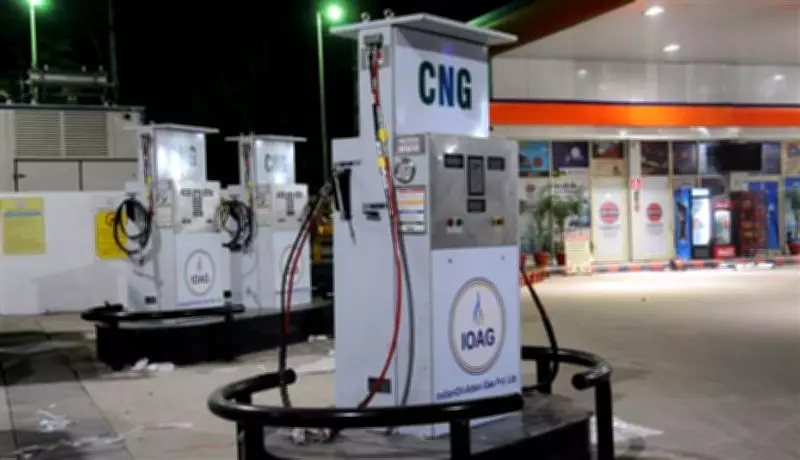
In a move that is set to impact commuters across the national capital region, the price of Compressed Natural Gas (CNG) has been increased by Rs 2 per kilogram. This marks the fourth price revision in less than two weeks, adding to the financial burden on auto-rickshaw and taxi drivers who rely heavily on this fuel.
Details of the Price Hike
The latest revision, effective from midnight, brings the price of CNG in Delhi to Rs 79.56 per kg, while in Noida, Greater Noida, and Ghaziabad, it now stands at Rs 83.04 per kg. The increase has been attributed to a rise in input costs and the ongoing volatility in global energy markets.
Impact on Commuters
With CNG being the primary fuel for public transport vehicles like auto-rickshaws and taxis, the price hike is expected to lead to a surge in fares. Drivers have expressed concerns over their shrinking margins, as the frequent increases make it difficult to maintain stable pricing for passengers.

Industry experts point out that the cumulative effect of these hikes could result in a significant rise in transportation costs for daily commuters. The Delhi government has not yet announced any subsidy or relief measures to counter the impact.
Reasons Behind the Increase
The state-owned Indraprastha Gas Limited (IGL), which supplies CNG in the region, has cited higher procurement costs as the reason for the price revision. The company adjusts prices periodically based on changes in the cost of natural gas, which has seen an upward trend globally due to supply constraints and geopolitical tensions.
This series of hikes comes at a time when consumers are already grappling with inflation in other essential commodities. The frequent adjustments in fuel prices have drawn criticism from various quarters, with demands for a more stable pricing mechanism.
Previous Hikes
Prior to this increase, CNG prices had been revised three times in quick succession. On July 6, the price was raised by Rs 2 per kg, followed by another Rs 2 hike on July 10, and a third increase of Rs 1.50 per kg on July 14. The cumulative effect of these four hikes amounts to an increase of Rs 7.50 per kg in less than two weeks.
Auto-rickshaw unions have threatened to go on strike if the government does not intervene to control the price rise. They argue that the frequent hikes make it impossible for drivers to earn a livelihood, as fare revisions do not keep pace with the fuel cost increases.
Future Outlook
As global energy prices continue to fluctuate, further increases in CNG prices cannot be ruled out. Experts suggest that the government may need to consider long-term measures to stabilize fuel prices and protect consumers from sudden shocks. Meanwhile, commuters are advised to brace for higher travel expenses in the coming days.