The year 2025 marked a significant phase of policy recalibration for Punjab's industrial sector, with the state government undertaking a series of reforms aimed at reviving growth and addressing long-standing grievances. While key structural challenges persist, the year witnessed notable movements on amendments to century-old laws, relief for micro, small, and medium enterprises (MSMEs), and a crucial one-time settlement scheme for legacy disputes.
Key Policy Reforms and Institutional Engagement
A cornerstone of the government's approach was the formation of sectoral committees by Industries Minister Sanjeev Arora. These committees, comprising representatives from large industries, medium enterprises, and MSMEs, were established to foster structured dialogue. Industry leaders view this as a positive shift from past policies. Pankaj Sharma, president of the All Traders and Industrialists Union (ATIU), noted this consultative model is expected to shape the new industrial policy proposed for January 2026.
In a historic move, the Punjab government amended the Society Registration Act, 1860, marking the first change to this legislation in over 160 years. Industry bodies have hailed this as a major step towards simplifying compliance for registered entities.

Further procedural easing came via amendments to the Right to Business Act, 2025, designed to streamline approvals across departments like the Punjab Pollution Control Board (PPCB) and the Forest Department. The goal is to cut down regulatory delays, though the full impact is still being assessed on the ground.
Substantial financial relief was provided through changes to the Industrial and Business Development Policy (IBDP), 2023. The amendment allows stamp duty exemption incentives to be secured via a first charge on property until commercial production begins, removing the need for bank guarantees and easing initial project costs.
In a major relief for hundreds of entrepreneurs, the state announced a one-time settlement scheme for long-pending dues with the Punjab Small Industries and Export Corporation (PSIEC). This scheme aims to resolve allotment-related disputes that have lingered for nearly three decades.
Additionally, the government abolished the 0.25 per cent duty on total loans in late October 2025, addressing a persistent industry complaint and reducing the cost of doing business.
Persistent Challenges and Industry Demands for 2026
Despite these reforms, several critical issues continue to hinder Punjab's industrial landscape. A significant concern is the plight of over 50,000 industrial units operating in mixed-use areas, facing a relocation deadline of September 2026. The industry is seeking a one-time settlement option to remain in place, citing the scarcity and high cost of industrial land outside city limits.
Delays in GST refunds have become a major pain point, causing growing resentment. Anil Sarin, president of the Punjab Tax Bar Association, has repeatedly flagged this issue. Entrepreneurs are urging urgent procedural reforms to expedite refunds, even as the state reports rising GST collections.
The functioning of the Punjab Pollution Control Board (PPCB) remains a source of contention, with allegations of procedural complexity and harassment. Industry bodies are pushing for comprehensive reforms to make the regulator more facilitative.
Infrastructure gaps also loom large. The continued delay in operationalising Halwara Airport is seen as a major setback, particularly for Ludhiana's industry, which suffers from locational disadvantages. Industry believes the airport's launch is vital to improving connectivity and reviving investment.
Furthermore, skyrocketing industrial land costs are stifling growth. Leaders stress the urgent need to develop new industrial zones with robust infrastructure, specifically for MSMEs, to regain a competitive edge against other states.

Investment Push and the Road Ahead
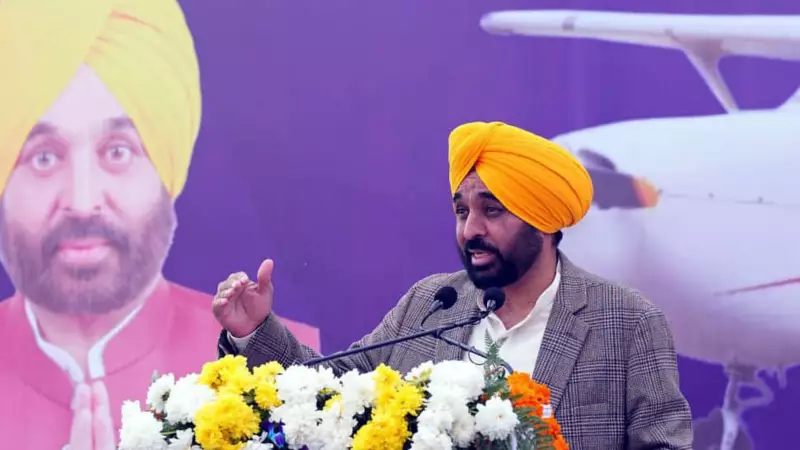
Throughout 2025, the government actively reiterated its intent to attract fresh capital. Chief Minister Bhagwant Mann led delegations to Japan and other parts of India to secure investment commitments. However, industry stakeholders caution that while policy intent is welcome, consistent execution and administrative efficiency will be the true determinants of success.
As Punjab moves into 2026, the industrial sector's hopes are pinned on the effective implementation of announced policies, resolution of the mixed-land use crisis, faster GST refunds, and tangible progress on infrastructure projects like Halwara Airport. The success of the reset initiated in 2025 will depend on translating policy movements into on-ground ease of doing business.