Punjab Energy Development Agency Launches Comprehensive Energy Audit Program for MSMEs
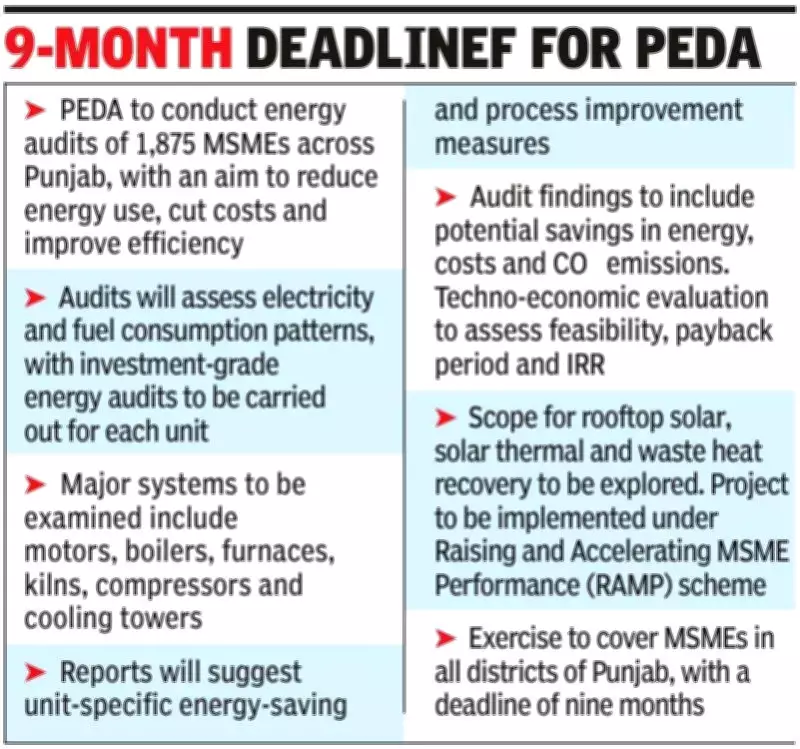
In a significant move to enhance industrial energy efficiency and reduce operational expenditures, the Punjab Energy Development Agency (PEDA) has announced a major initiative targeting 1,875 micro, small and medium enterprises (MSMEs) across the state. This ambitious project aims to provide these businesses with detailed insights into their energy consumption patterns and identify concrete areas for substantial savings.
Strategic Initiative for Cost Reduction and Sustainability
The comprehensive energy audit program is specifically designed to assist MSMEs that often operate on thin profit margins. Even modest reductions in energy usage can translate into meaningful cost savings, thereby improving their market competitiveness while simultaneously supporting broader decarbonization and environmental sustainability goals. Officials emphasize that this initiative represents a crucial step toward creating more resilient and efficient industrial operations throughout Punjab.
Detailed Audit Methodology and Scope
Under this project, the energy audits will employ a multi-faceted approach:

- Investment-Grade Energy Audits (IGEA) to determine the existing energy performance of each industrial unit
- Examination of major energy-consuming systems including motors, boilers, furnaces, kilns, cooling towers and compressors
- Analysis of at least 12 months of historical utility data encompassing electricity and fuel consumption
- Review of production profiles and operational parameters such as working hours and equipment schedules
- Assessment of electrical, thermal, utility and process systems across participating enterprises
Comprehensive Evaluation and Implementation Framework
The audit process will extend beyond mere data collection to include:
- Identification of specific energy conservation measures and process improvement opportunities
- Estimation of potential savings in energy consumption, operational costs and carbon dioxide emissions
- Techno-economic evaluation assessing the feasibility of proposed measures through payback analysis and internal rate of return (IRR)-based financial evaluation
- Preparation of bankable and implementable audit reports with detailed implementation roadmaps
- Exploration of renewable energy opportunities including rooftop solar installations, solar thermal applications and waste heat recovery systems
Project Implementation and Timeline
This initiative is being undertaken in close consultation with the Department of Industries and Commerce under the Raising and Accelerating MSME Performance (RAMP) scheme. PEDA has already initiated the process of hiring specialized consultants for the project, which is scheduled for completion within a nine-month timeframe. The exercise will also establish a state-level energy efficiency baseline specifically for MSMEs, creating valuable benchmarking data for future initiatives.
Expected Outcomes and Benefits
Officials anticipate that this comprehensive audit program will provide MSMEs with actionable insights to significantly reduce energy consumption, lower operational costs, and transition toward more sustainable business practices. By identifying specific energy-saving interventions tailored to each enterprise's unique operational profile, the initiative aims to strengthen Punjab's industrial sector while contributing to broader environmental objectives through reduced carbon emissions and more efficient resource utilization.