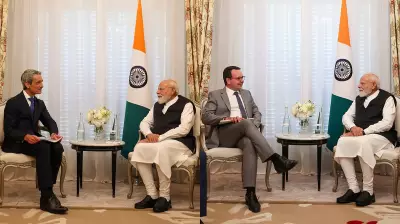
Private Sector Should Lead Industrial Cluster Management: Assocham President
In a significant policy recommendation, Assocham President Nirmal Kumar Minda has called for the private sector to play a central role in the management and operation of industrial cluster schemes across India. This statement comes amid ongoing discussions about enhancing the efficiency and competitiveness of India's manufacturing and MSME sectors.
Advocating for Private Sector Leadership
Minda emphasized that industrial clusters, which are geographic concentrations of interconnected businesses and institutions, require professional management and innovation-driven approaches. He argued that the private sector's expertise in operations, technology adoption, and market linkages makes it ideally suited to take charge of these schemes.
"The private sector should be at the forefront of managing industrial clusters to ensure they are globally competitive and sustainable," Minda stated. He highlighted that this shift could lead to improved infrastructure, better resource allocation, and increased productivity within these clusters, ultimately boosting economic growth and job creation.

Impact of West Asia Conflict on Global Economy
In a related development, Minda addressed the ongoing conflict in West Asia, warning that it could have severe repercussions for the global economy. He projected that global economic growth might fall significantly below the International Monetary Fund's (IMF) current forecast of 3.3 per cent for the year.
"The geopolitical tensions in West Asia are creating uncertainty and disrupting supply chains, which could dampen economic activity worldwide," Minda explained. He noted that such conflicts often lead to increased oil prices, trade disruptions, and reduced investor confidence, all of which can slow down economic growth.
Broader Implications for India
The Assocham President's comments underscore the interconnectedness of domestic industrial policies and global economic trends. By advocating for private sector involvement in industrial clusters, Minda aims to strengthen India's economic resilience in the face of international challenges.
- Enhanced management of industrial clusters could improve MSME competitiveness.
- Global economic slowdown due to West Asia conflict may affect India's export markets.
- Private sector leadership might attract more investment into industrial infrastructure.
As India continues to navigate both domestic reforms and global uncertainties, the role of industry bodies like Assocham in shaping policy discussions remains crucial. Minda's dual focus on local industrial strategies and global economic risks highlights the need for a balanced approach to economic planning.