OIL Achieves Record Heavy Crude Production in Jaisalmer Amid Global Tensions
In a significant development for India's energy sector, Oil India Limited (OIL) has achieved a major milestone in heavy crude oil extraction from the Thar Desert in Jaisalmer, Rajasthan. This accomplishment comes at a time of ongoing geopolitical tensions in the Gulf region involving countries like the United States and Iran, highlighting India's push for greater energy independence.
Record Production Figures and Strategic Importance
The company has recorded its highest-ever crude oil production of 1,202 barrels per day from the Jodhpur Sandstone formation in the Thar Desert. This output represents a substantial 70% increase compared to last year's production of 705 barrels per day. By the end of the financial year, OIL's annual crude oil production from this region reached 43,773 metric tonnes, up from 32,787 metric tonnes in the previous year.
The crude oil is being transported by tankers to Oil and Natural Gas Corporation (ONGC) facilities in Mehsana, from where it is further sent through pipelines to the Koyali refinery operated by Indian Oil Corporation. This achievement is expected to play a crucial role in advancing India's energy self-reliance strategy.

Technological Breakthroughs in Heavy Oil Extraction
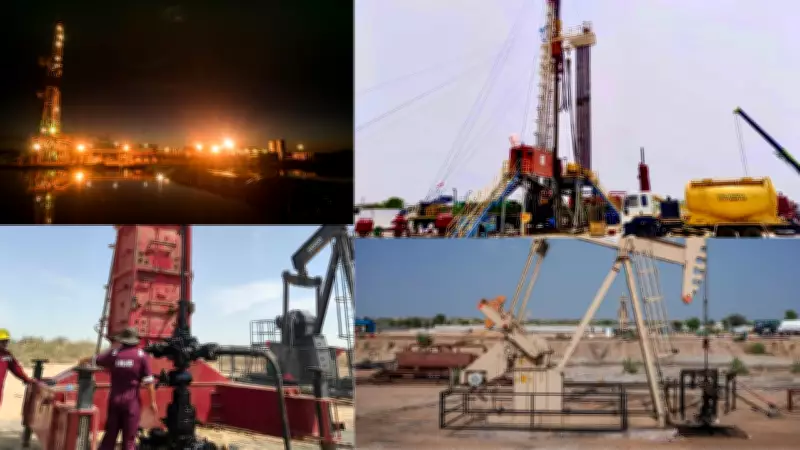
According to official sources in Rajasthan, the Rajasthan Field (OIL-RF) has emerged as a strong example of resilience and innovation during FY 2025–26. Operating in the harsh and arid conditions of western Rajasthan, the company has successfully implemented Cyclic Steam Stimulation (CSS) technology to extract heavy oil from the Jodhpur Sandstone, considered the oldest sedimentary rock formation in Rajasthan.
This technological breakthrough represents the first use of such advanced technology in this region and comes nearly 30 years after the field's discovery. The successful execution is being seen as a major milestone in India's energy sector.
Expansion of Operations and Advanced Techniques
The Baghewala oil field, located in the south-western part of the Bikaner-Nagaur sub-basin of the Rajasthan Basin, is among the few onshore heavy crude oil-producing fields in India. CSS technology has been implemented in 19 wells, representing a 72% increase from the previous year.
Despite challenging geological conditions, OIL has drilled 13 new wells, a 44% increase from nine wells in the previous year. The company has also adopted advanced techniques including:
- Fishbone drilling
- Barefoot completion
- Electric downhole heaters
- Mobile boilers for CSS
- Hydraulic sucker rod pumps (HSRP)
- High-temperature thermal wellheads
- Vacuum insulated tubings (VITs) for thermal enhanced oil recovery
These technologies represent first-time applications in India's heavy oil reservoirs and have shown promising results in enhancing production capacity.
Historical Context and Future Prospects
OIL has been producing heavy oil from the Baghewala field since 2017, though the field was originally discovered in 1991 and covers an area of 200.26 square kilometers. Currently, there are 52 wells in operation, with 33 actively producing. The high viscosity of oil in this region made conventional extraction methods unfeasible, necessitating the development of specialized technologies.
In November 2018, OIL successfully conducted a pilot test of CSS technology in the BGW-08 well, marking its first implementation in India and setting new benchmarks in thermal enhanced oil recovery. Downhole heating cable technology is currently being tested and has shown promising initial results.
Government Recognition and Strategic Vision
Union Petroleum Minister Hardeep Singh Puri acknowledged this achievement in a social media post, stating that India continues to strengthen its energy infrastructure and pursue initiatives toward energy self-reliance under the leadership of Prime Minister Narendra Modi. He congratulated Oil India Limited for achieving its highest-ever daily oil and gas production.

The Rajasthan Field's performance during FY 2025–26 demonstrates the company's strengthened commitment to energy security, technological advancement, and sustainable development. This achievement reflects OIL's focus on enhanced recovery techniques, efficient drilling practices, and modernization efforts that contribute significantly to India's broader energy independence goals.