NIT Rourkela and ORMAS Forge Partnership for Mahua Processing Plant
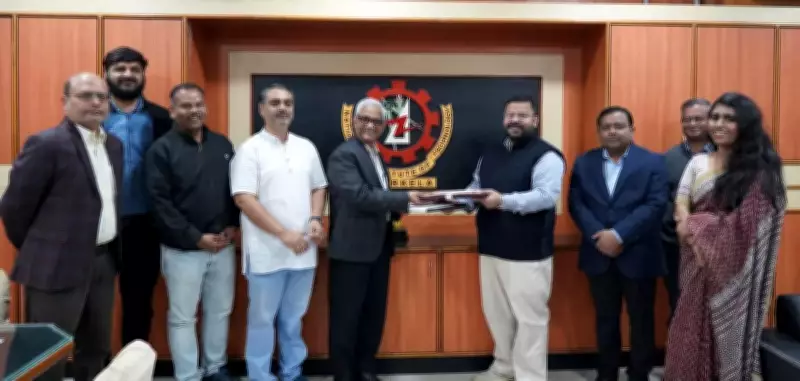
In a significant development for rural entrepreneurship and tribal welfare, the National Institute of Technology (NIT), Rourkela, has entered into a strategic collaboration with the Odisha Rural Development & Marketing Society (ORMAS), Sundargarh. The two entities formally signed a Memorandum of Agreement (MoA) on Thursday for the establishment of a state-of-the-art mahua processing plant at Kuanrmunda, with a substantial project outlay of Rs 1 crore.
Formalizing the Partnership
The MoA was officially inked by Prof K Umamaheshwar Rao, the Director of NIT Rourkela, and Subhankar Mohapatra, the District Collector of Sundargarh. This ceremony marks a pivotal step towards leveraging institutional expertise for grassroots economic development in the region.
Defined Roles and Technical Contributions
The collaboration outlines clear responsibilities for each partner to ensure the project's success:

- NIT Rourkela's Department of Food Process Engineering will spearhead the technical aspects. Their contributions will include:
- Providing the complete technical blueprint for the plant.
- Overseeing the installation of specialized machinery.
- Ensuring strict compliance with all food safety and quality standards.
- ORMAS and the Sundargarh District Administration will handle the operational and financial management. Their key duties encompass:
- Securing and managing the project funding.
- Coordinating all project-related activities and stakeholder engagement.
- Facilitating the release of funds as per the project timeline.
- Organizing comprehensive training programs for local Self-Help Groups (SHGs).
- Implementing a robust system for continuous project monitoring and evaluation.
Beyond Infrastructure: A Focus on Capacity Building
The initiative extends far beyond merely setting up a processing unit. It incorporates a strong capacity-building component designed to create a sustainable ecosystem. The project will conduct demonstrations and hands-on training sessions for local producer groups and companies. The objective is to enable the large-scale adoption of improved technologies for the value-addition of mahua, specifically for non-liquor products.
Furthermore, dedicated support will be provided for branding, packaging, and enhancing market readiness for the new range of mahua-based products. This holistic approach aims to ensure these goods are competitive in broader markets.
Vision for Transformation and Economic Integration
Elaborating on the collaboration's core vision, Prof. Sabayasachi Mishra, Head of the Department of Food Process Engineering at NIT Rourkela, stated, "This partnership aims to transform mahua, a traditional forest produce, into high-value non-liquor food products through advanced processing technology. Our goals are threefold: to significantly reduce post-harvest losses, diversify tribal income streams, and successfully integrate rural producers into the formal global market."
The Significance of Mahua
Mahua flowers, native to central and eastern India, hold immense socio-economic importance. They are a vital source of household income, provide crucial seasonal employment, and form the backbone of local trade in many tribal communities. This project seeks to amplify this impact by adding scientific value to this traditional resource.
This partnership between a premier technical institute and a rural development body represents a model for academia-industry-government collaboration, directly targeting rural upliftment, tribal empowerment, and the promotion of indigenous forest produce through innovation.