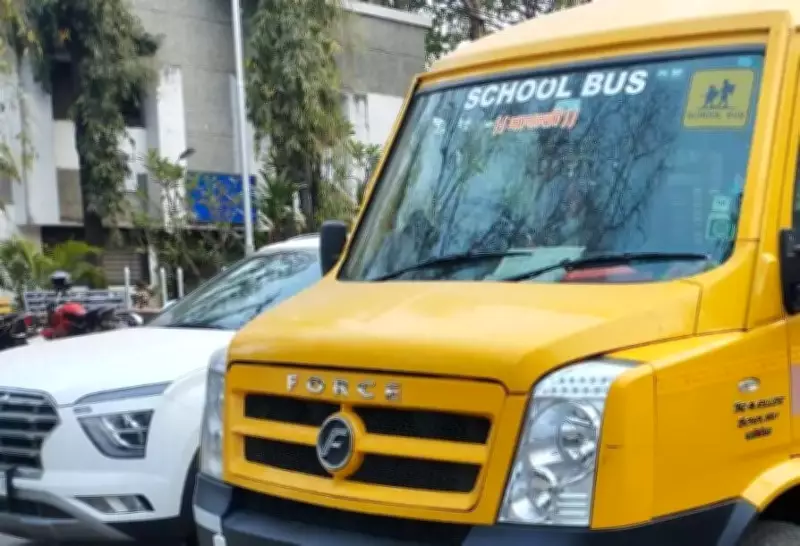
School van operators in Nashik are contemplating an increase in fares for transporting students to and from school following a sharp rise in fuel prices. Over the past week, fuel prices have surged by approximately Rs7 per litre, putting additional financial strain on operators.
Operators Plan Discussions on Fare Revision
With most schools yet to reopen after the summer break, operators have indicated that they will hold discussions among themselves to determine the extent of the fare hike. The goal is to reach a consensus on a revised monthly tariff that can offset the increased operational costs.
RTO Denies Any Immediate Tariff Revision
Senior officials from the Nashik Regional Transport Office (RTO) have clarified that no decision has been taken to revise the tariff for autorickshaws, vans, or other vehicles despite the fuel price hike. The RTO stated that any such revision would require a formal process and consideration of multiple factors.

Kiran Kabade, a school van operator, highlighted that drivers have been strictly adhering to all guidelines issued by the Nashik RTO. He noted that most operators obtained fitness certificates for their vehicles in May, when schools were closed for summer vacation, ensuring compliance with safety norms.
Kabade further explained that the recent fuel price hike has imposed an additional burden on operations. Convincing parents about fare increases has been challenging, he said, and emphasized the need for all operators to collaborate and decide on a uniform tariff revision due to intense competition in the business.
Bhagwan Pathak of the Shramik Auto-Rickshaw and Taxi Union in Nashik pointed out that besides the hike in petrol, diesel, and gas prices, fuel is not readily available at most petrol pumps. He announced that the union will soon approach the RTO to request at least a 20 percent hike in tariffs to compensate for the rising costs.
The situation remains fluid as operators await the reopening of schools and further discussions with stakeholders. Parents, meanwhile, are bracing for potential increases in transportation expenses for their children.