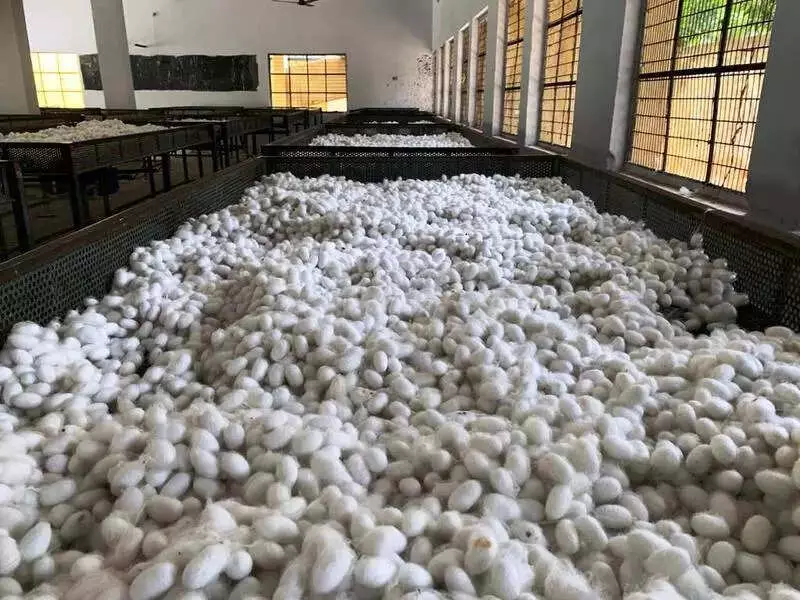
A major event in Mysuru has outlined a clear roadmap for Indian sericulture, focusing on technological adoption and efficient use of government support to enhance productivity and meet global standards. The 'Reshme Divas – A day with farmers' programme was organised by the Central Sericultural Research and Training Institute (CSRTI) on Wednesday, bringing together officials, scientists, and farmers.
Key Recommendations for Modern Sericulture
Inaugurating the event, Joint Director of Sericulture HR Prathibha stressed several critical areas for improvement. She emphasised the need for bivoltine silkworm rearing, which is known for producing superior quality silk. Prathibha also advocated for wider spacing in mulberry plantations to allow better weed management and enable mechanisation. She urged farmers to adopt advanced technologies and make the most of available government subsidies to improve both cocoon quality and overall yield.
Central Silk Board (CSB) member BS Nanjundaswamy addressed farmer welfare initiatives and highlighted the importance of tackling occupational health hazards associated with sericulture practices. Meanwhile, Deputy Director of Sericulture HC Nagendrappa informed attendees about the department's programmes for free input distribution and newly developed technologies for disease management.

Farmer-Scientist Interaction and Awards
The day was marked by active dialogue between farmers and CSRTI scientists. Discussions covered pressing issues like whitefly infestation, root rot, powdery mildew, the use of nano-fertilisers, mulberry spacing, cocoon prices, and the performance of newly released crop varieties.
CSRTI Director Dayananda called for a collective effort to adopt new technologies and help India become the world's largest raw silk producer. He specifically pointed out the necessity of proper silkworm rearing house design and adequate ventilation. Dayananda also promoted the use of climate-resilient silkworm hybrids like TT21 × TT56 and MV1 × S8 to produce silk that meets international benchmarks.
In a move to recognise best practices, six progressive sericulture farmers from South Karnataka districts were honoured with certificates of appreciation. They were awarded for their successful adoption of bivoltine technologies, implementation of best management practices, and consistent production of high-quality cocoons. The awardees are:
- K Madayya of Bommenahalli, Mysuru
- Krishnagowda of Hitnegebbgilu
- L Paramasivamurthy of Jakkanahalli, Mysuru
- Nagesh of Kunduru, Malavalli taluk
- Sri Sharath Kumar of Srirangapatna, Mandya
- GK Basavarajappa of Ganganahalli, Chikkamagaluru
Showcasing Innovations and Future Steps
The programme featured a comprehensive exhibition of the latest sericulture technologies. Attendees were shown a short film on technology preparation and another on extension activities. They also participated in exposure visits to CSRTI laboratories and experimental fields, and received technical handbills.
During the event, CSRTI scientists presented several key innovations and recommendations to the farming community, including:
- The improved mulberry variety AGB-8
- Strategies for integrated pest and nutrient management
- Guidance on the judicious use of pesticides
- Benefits of organic fertilisers and drip fertigation
- Advanced techniques for disease management
The Reshme Divas event has successfully bridged the gap between research and field application, providing Karnataka's sericulture farmers with a practical toolkit to enhance sustainability, productivity, and global competitiveness.