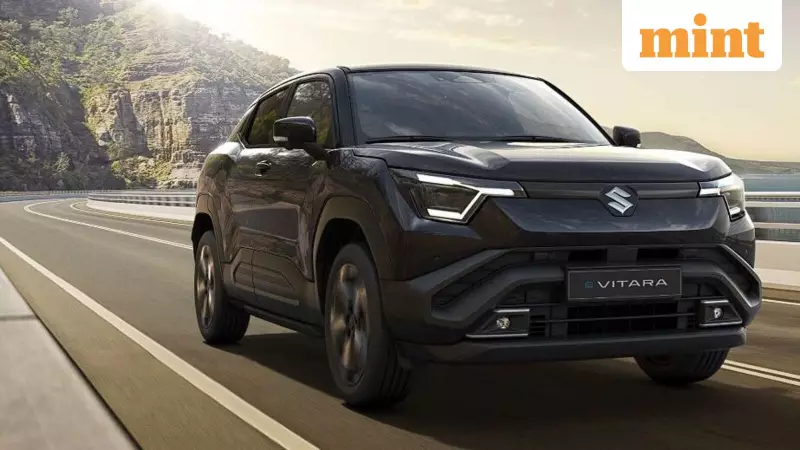
After dominating India's car market for over four decades, Maruti Suzuki is taking a page from its own history book as it gears up to enter the electric vehicle (EV) arena. The automaker is prioritizing the creation of customer confidence and a supportive ecosystem before the commercial launch of its first electric model, the eVitara, scheduled for the January-March quarter of 2025-26.
Addressing the Core EV Adoption Barriers
Maruti Suzuki is proactively tackling what it identifies as the three major hurdles to widespread EV adoption in India: insufficient charging infrastructure, a shortage of trained service technicians, and concerns over poor resale value. Partho Banerjee, Senior Executive Officer of Marketing and Sales, emphasized that launching a product without addressing these foundational issues would be counterproductive.
The company has already established a network of over 2,000 charging stations across 1,100 cities, with an ambitious target of reaching 1 lakh charging points by 2030. To ease resale anxieties, Maruti has announced an assured buyback scheme. Furthermore, it has trained more than 150,000 service personnel nationwide to handle EVs, ensuring backend readiness parallels product launch.

A Calculated Entry into a Competitive Market
The eVitara will enter a fiercely competitive mid-size electric SUV segment, competing with models like the Hyundai Creta EV, Tata Curvv EV, Mahindra BE 6, and newcomers from VinFast. While rivals have already scaled up sales, Maruti's entry appears deliberate. The company began exporting the eVitara to over 100 international markets, including Europe, in August 2024, allowing it to refine its approach for the domestic scene.
Analysts suggest that Maruti's late entry might not be a significant disadvantage. Subhabrata Sengupta, Partner at Avalon Consulting, notes that with overall EV penetration in India still below 5%, there is ample room for growth. "In a way, a later launch may give them pricing clarity," he added. Maruti had set a production target of 70,000 units for FY26, primarily for exports, and remains confident in achieving it.
Ecosystem Bet and Future Roadmap
Drawing parallels with its successful push for CNG vehicles, Maruti believes that building ecosystem confidence is key to driving adoption. The company plans to sell the eVitara through its premium Nexa dealership network. However, Banerjee clarified that as a market leader, Maruti cannot be limited to premium segments and must offer a range of technologies and form factors, remaining technologically agnostic.
This measured, ecosystem-first strategy underscores Maruti's long-term play in the electric transition. By ensuring that charging, service, and ownership concerns are addressed upfront, Maruti Suzuki aims to replicate its historic mass-market success in the new electric era, even if it means starting with the humility of a "fresher."