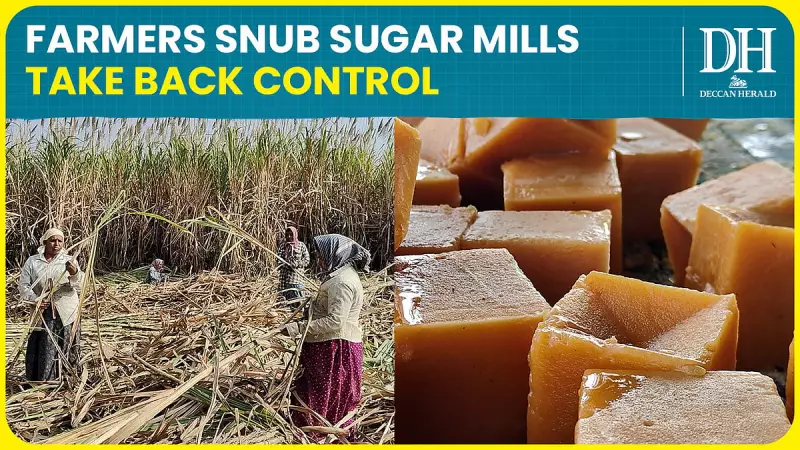
In a significant shift within Karnataka's agricultural heartland, sugarcane cultivators in the Haveri district are decisively turning their backs on traditional sugar factories. Frustrated by persistent delays in receiving their dues, these farmers are now channeling their harvest into producing jaggery, a move that is reshaping local economics and empowering the farming community.
The Pivot from Sugar to Jaggery
The core of this transformation lies in the farmers' quest for timely and assured income. According to reports, numerous sugarcane growers in and around Haveri have completely stopped supplying their cane to sugar mills. Instead, they are investing in and operating small-scale jaggery-making units, known locally as 'bellam gottila'. This direct processing allows them to sell the finished sweetener product in the open market, ensuring immediate cash flow.
The primary trigger for this exodus is the unresolved issue of pending payments from sugar mills. Farmers allege that mills have failed to clear dues for sugarcane supplied as far back as the 2023-24 crushing season. This financial uncertainty has made the traditional supply chain untenable for many. Shivanandappa Kuri, a farmer from Kaginele, confirmed that he and others have not been paid for their last season's crop, forcing them to seek alternative avenues.

Economic Viability and Market Response
The shift is not just born out of desperation but is proving to be economically sound. By producing jaggery, farmers capture a greater share of the value chain. The market for jaggery remains robust, with steady demand ensuring quick sales. This model eliminates the waiting period and uncertainty associated with mill payments, providing farmers with direct control over their profits.
This trend is causing noticeable concern among the management of sugar mills in the region. A representative from Haveri's Kaginele Sahakara Sakkare Karkhane acknowledged the challenge, stating that farmers are indeed diverting their cane to jaggery units. The mill's operations are being impacted as a direct consequence of this reduced supply. The situation underscores a growing rift between agricultural producers and industrial processors in the state's crucial sugar sector.
Broader Implications for Karnataka's Sugar Industry
The movement in Haveri is more than a local phenomenon; it signals a potential crisis for Karnataka's sugar industry. The state is one of India's major sugarcane producers, and mills rely on a consistent supply from farmers to operate viably. A widespread adoption of this practice could lead to operational shortages for mills, affecting production targets and the broader ecosystem of workers and distributors dependent on these factories.
Furthermore, this shift highlights the failure of existing mechanisms to ensure prompt payment to farmers, a long-standing grievance. The farmers' action is a form of protest and a pragmatic business decision. It demonstrates their adaptability and willingness to explore traditional, decentralized methods of processing when formal institutions fail them. The success of their jaggery ventures could inspire farmers in other sugarcane-growing districts of Karnataka to follow suit.
In conclusion, the farmers of Haveri are writing a new chapter in agrarian entrepreneurship. By choosing jaggery making over sugar mills, they are asserting their financial independence and challenging the established industrial model. This trend, driven by the need for reliable and timely remuneration, may force sugar mills and policymakers to address payment delays more urgently. The coming months will reveal whether this becomes a sustained alternative or a catalyst for reform in the state's sugar payment systems.