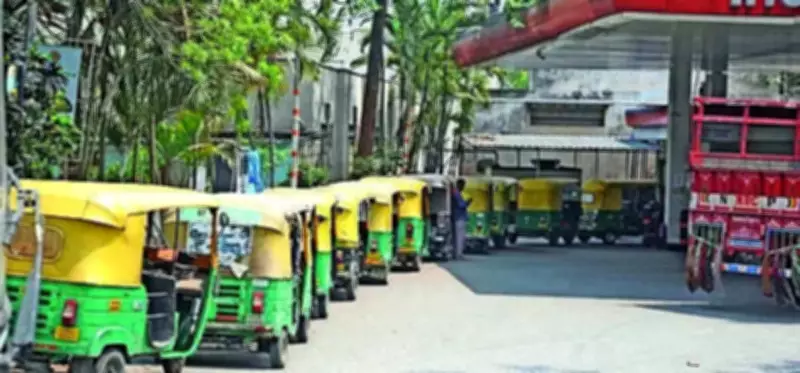
In a significant development, autorickshaw and taxi operators across Karnataka have appealed to both the state and Union governments for immediate financial assistance and policy support. This comes in the wake of a prolonged LPG shortage that has severely impacted the transport sector for over 45 days. The operators are also seeking subsidies for converting existing LPG-run vehicles to CNG and electric vehicles, with costs ranging from a few thousand to lakhs of rupees.
Representation to the Government
The Federation of Karnataka State Private Transport Associations submitted a representation to the government, highlighting the acute scarcity of LPG. The shortage, allegedly triggered by disruptions in supply chains amid the ongoing war situation in West Asia, has forced thousands of LPG-run autos and taxis off the roads across the state.
Continued Shortage Despite Government Assurance
The federation noted that although the central government initially indicated that the fuel disruption would be temporary, the shortage continues unabated. This has left drivers struggling to sustain their livelihoods. The association argued that converting LPG-operated vehicles to CNG and electric alternatives now appears to be the most practical and sustainable solution.

Call for Subsidies and Financial Schemes
Citing a recent statement by Union Minister Pralhad Joshi supporting the conversion of LPG vehicles to CNG, the federation urged the governments to introduce subsidies and financial support schemes for vehicle conversion. According to federation president S. Nataraja Sharma, converting an auto or taxi from LPG to CNG costs around Rs 55,000, while conversion to electric vehicles costs nearly Rs 1.3 lakh.
Additional Demands
The federation also sought several other measures, including:
- Soft loans at low interest rates for vehicle conversion.
- Expansion of CNG infrastructure across the state.
- Uninterrupted CNG supply to ensure smooth operations.
- Emergency welfare measures for drivers and owners belonging to the unorganised transport sector.
Exclusion from Previous Relief Schemes
The federation pointed out that during the Covid-19 pandemic, several relief schemes were extended mainly to MSME-registered entities. Many small and individual transport operators in the unorganised sector were excluded from financial assistance, exacerbating their plight during the current crisis.