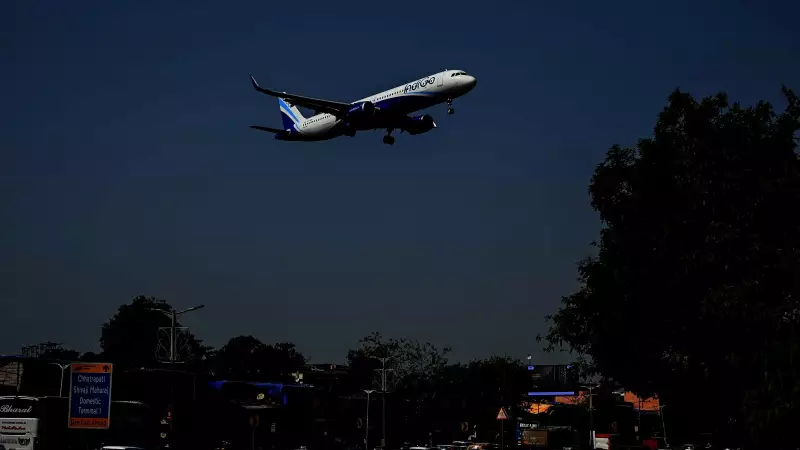
After a chaotic start to December that saw India's largest airline, IndiGo, cancel thousands of flights, a temporary reprieve from the aviation regulator has brought some calm. The Directorate General of Civil Aviation (DGCA) granted IndiGo an exemption from new crew rest rules, allowing it to stabilise operations and ramp up daily flights from around 700 to over 2,050 since Saturday, December 13. This recovery hinges on a critical factor: IndiGo's overwhelming dominance of India's night skies.
The Night Sky: IndiGo's Kingdom
The root of the crisis lies in revised Flight Duty Time Limitation (FDTL) norms that kicked in on November 1. The new rules redefined 'night duty' as any duty between 0000 hrs and 0600 hrs, an hour longer than the previous midnight-to-5-am window. Crucially, for operations in this period, the maximum number of landings allowed for a pilot was capped at two, down from six previously.
This change hit IndiGo with disproportionate force. An analysis of schedule data reveals that between midnight and 6 am, IndiGo operates more domestic arrivals and departures than all other major Indian airlines combined. For Mondays in November, IndiGo had 155 arrivals and 166 departures in this window, accounting for 59.2% of all domestic arrivals and 62.2% of departures across IndiGo, Air India, Air India Express, Akasa Air, and SpiceJet. Simply put, six out of every ten aircraft movements in this period were IndiGo's.

The airline also dominates the newly added 5-6 am hour, with a staggering 95% share of all arrivals among the five carriers. In absolute numbers, the gulf is vast. While night operations constitute only about 8% of IndiGo's total daily flights, its scale means it operates far more night flights than any competitor.
Why the Rules Caused a Cascading Collapse
IndiGo's vast network, where it is the sole operator on over 60% of domestic routes, made it uniquely susceptible. The cap on landings during night hours created a cascading effect on crew rostering for the entire day. For example, if pilots landed a flight post-midnight, they could operate only one more sector that day, drastically reducing productivity compared to the earlier norm of four or five sectors.
Compounding this was a critical shortage of pilots, especially captains. Data shared with the DGCA showed IndiGo was short by 65 captains for its Airbus A320 fleet to comply with the new FDTL rules. While it had sufficient first officers, the buffer was minimal. Paradoxically, even as the new rules loomed, IndiGo expanded its schedule, with night flights in November up almost 13% compared to the previous year.
Other airlines, with smaller networks and stronger relative pilot bench strength, adjusted better. For carriers like Air India and SpiceJet, around 80% of their night movements are concentrated at the top six metro airports, simplifying crew logistics. For IndiGo, this figure is only around 60%, reflecting its deeper penetration into smaller cities, which adds layers of rostering complexity.
The Path to Recovery and Lingering Questions
The DGCA's temporary exemption, valid until February 10, provided a lifeline. The regulator has also ordered IndiGo to curtail its domestic schedule by 10%. Sources indicate the airline plans to operate around 2,200 daily flights (1,900 domestic) until March 28, 2026, down from 2,300 pre-crisis.
IndiGo is now on a hiring spree and expediting command upgrades for first officers to build captain capacity. The airline admitted to the DGCA that the disruptions stemmed from "misjudgement and planning gaps" in implementing the rules, which were announced nearly two years ago.
If sufficient pilots aren't added by the exemption deadline, IndiGo may have to rationalise its night network. While the immediate crisis has eased, the episode raises serious questions about the preparedness of India's aviation giant, which soared to dominate the night sky but was unprepared when the rules of the game changed.