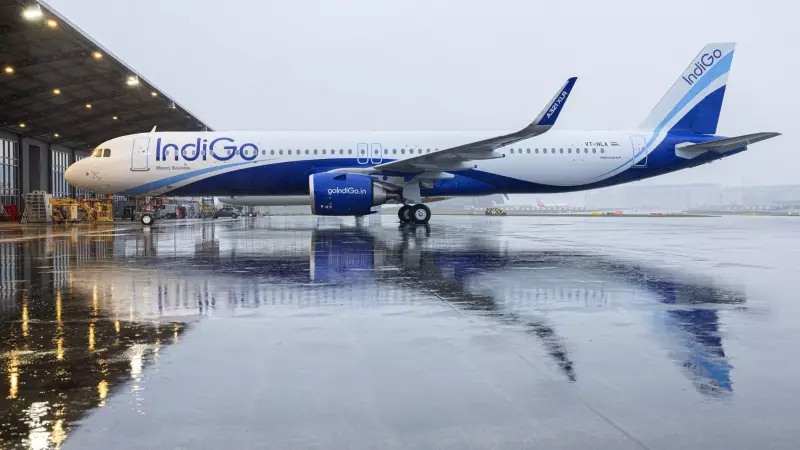
In a significant fleet upgrade, IndiGo has commenced the induction of its new Airbus A321 XLR aircraft, a move that will directly impact its operations to Turkey. The airline's first A321 XLR, which also marks the arrival of India's inaugural aircraft of this type, touched down in Delhi on Wednesday, January 7, 2026.
Replacing Turkish Jets on Key Routes
IndiGo will deploy its new long-range narrow-body planes to replace the two damp-leased Boeing 777 wide-body aircraft currently operating on the Delhi-Istanbul and Mumbai-Istanbul routes. This transition is set to occur by the end of February or early March. The regulator, the Directorate General of Civil Aviation (DGCA), had previously informed the airline that it would not permit extensions for the leases on these two aircraft, which are sourced from Turkish carriers.
The lease agreements were valid only until the end of February 2026. Last month, the DGCA clarified its stance, confirming no further extensions would be granted. This decision came against the backdrop of diplomatic friction between India and Turkey, following Turkey's public support for Pakistan during the recent Operation Sindoor.

The A321 XLR: A Game-Changer for IndiGo's International Ambitions
The Airbus A321 XLR is a pivotal aircraft for IndiGo's expansion strategy. With an impressive range of up to 8,700 kilometers, it is the longest-range narrow-body jet available. This capability allows it to connect India to various parts of Europe and the Far East non-stop, a feat previously reserved for larger wide-body planes.
IndiGo has placed an order for 40 A321 XLRs and expects to receive an additional eight aircraft within this year. The initial deployment of these new jets will be on existing routes, including services to Istanbul and Bali, Indonesia. Subsequently, as more aircraft join the fleet, IndiGo plans to launch flights on new long-haul routes to Europe and East Asia.
Before the Istanbul switch, the airline will first utilize its new A321 XLR to launch flights to Athens from both Mumbai and Delhi later in January 2026.
Behind the DGCA's Decision and Lease Dynamics
The DGCA's firm position on the Turkish Boeing 777 leases stems from a broader context. Amid significant backlash in India against Turkey due to its stance on Pakistan, the regulator had initially stated it would not allow lease extensions beyond August of the previous year. However, upon IndiGo's request, a one-time final extension was granted until February-end, with a clear directive that no further approvals would be given.
It is mandatory for Indian airlines to secure DGCA approvals for wet-lease arrangements. In a damp lease—the specific arrangement for the Turkish 777s—the lessor provides the aircraft, crew, maintenance, and insurance, while the lessee airline (IndiGo) markets and sells tickets for the flights. This is different from a wet lease (full crew and operations) or a dry lease (aircraft only).
This shift from leased wide-body aircraft to owned narrow-body XLRs represents a strategic operational and financial pivot for IndiGo as it seeks greater control over its long-haul network.
Driving IndiGo's "Internationalisation" Forward
With a commanding domestic market share exceeding 60%, IndiGo has been aggressively pursuing its "internationalisation" strategy. Over the past few years, it has expanded its network to include destinations in Central Asia, the Caucasus, Southeast Asia, and Africa using its existing narrow-body fleet.
The A321 XLR is central to the next phase of this plan. It will enable the airline to connect to medium-haul international destinations that were previously out of reach for its fleet, thereby competing more effectively with foreign carriers. Indian airlines currently carry only about 45% of India's international air passenger traffic, with overseas carriers dominating the remaining 55%. The imbalance is even more pronounced on India-Europe routes, where foreign airlines hold roughly a 70% share.
Looking further ahead, IndiGo has also placed an order for 60 wide-body Airbus A350 aircraft, expected to start arriving from 2027. These planes will empower the airline to serve long-haul destinations with its own fleet, solidifying its position as a major global player.

The arrival of the A321 XLR is more than just a new plane joining the fleet; it is a symbol of IndiGo's evolving ambitions and a direct response to both market opportunities and geopolitical realities shaping Indian aviation.