

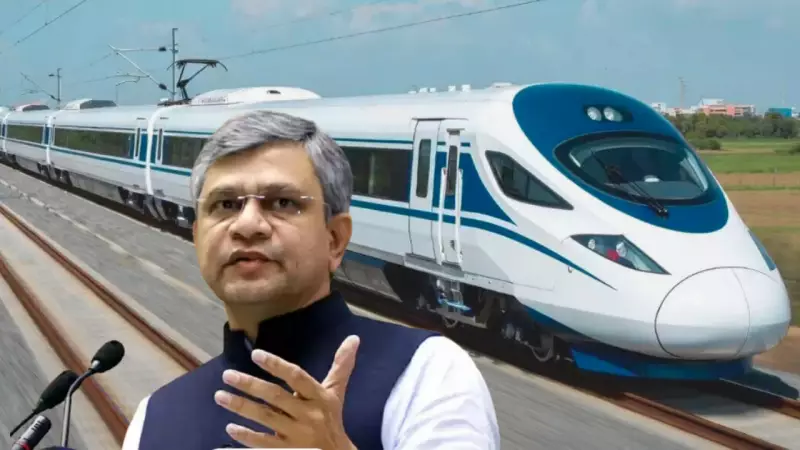
India's long-awaited leap into the era of high-speed rail is finally on the horizon, with a firm deadline now set for the country's first bullet train. Union Minister for Railways, Ashwini Vaishnaw, made a significant announcement on Thursday, declaring that India is poised to receive its inaugural bullet train service on August 15, 2027.
Project Timeline and Phased Rollout
Providing a clear roadmap for the ambitious project, Minister Vaishnaw outlined the phased opening of sections for the 508-km Mumbai–Ahmedabad High-Speed Rail Corridor. The first operational stretch will connect Surat to Bilimora. This will be followed by the opening of the Vapi to Surat section. Subsequently, the corridor will extend from Vapi to Ahmedabad, then from Thane to Ahmedabad, culminating in the full-fledged operation of the entire Mumbai to Ahmedabad route.
In a light-hearted remark, the minister even quipped that eager passengers could "buy a ticket now itself, as it will be operational by 2027," highlighting the confidence in the project's timeline.

Steady Progress on India's Pioneering Rail Corridor
The project, which is a landmark collaboration between India and Japan, is witnessing steady and substantial progress. Officials report that a significant 320 km of viaduct work is already complete. The construction is progressing on multiple fronts simultaneously, including land acquisition, tunnelling, station development, and electrification works.
This corridor represents a massive engineering feat, blending Japan's renowned Shinkansen (bullet train) technology with Indian engineering prowess on an unprecedented scale. Once complete, trains are designed to cruise at speeds of up to 320 km per hour, effectively reducing the travel time between the two major economic hubs of Mumbai and Ahmedabad to under two hours. The full corridor is expected to be operational by 2029.
Vande Bharat Success and the New Sleeper Variant
Alongside the bullet train update, Minister Vaishnaw also shared positive news about the indigenous Vande Bharat Express trains. He announced that the first Vande Bharat sleeper train is scheduled for launch this month. Prime Minister Narendra Modi is expected to flag off this new service in the second half of January 2026.
Reflecting on the success of the existing Vande Bharat fleet, the minister stated that it has instilled a "new sense of confidence across the country." He noted the overwhelming public and political demand for these trains, adding, "Requests are now coming in from all over India to run Vande Bharat trains, and almost every MP wants one." The new sleeper version promises to extend the same standards of comfort, safety, and reliability to overnight journeys, marking another significant milestone for Indian Railways.






