Geopolitical Vulnerabilities Exposed by West Asia Conflict
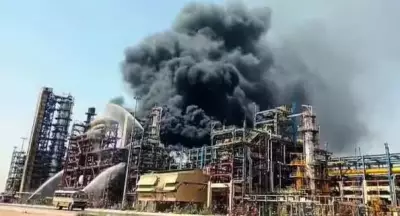
The West Asia conflict has once again highlighted the vulnerability of India’s fertiliser sector to geopolitical shocks, exposing the economic risks of its heavy dependence on imported chemical fertilisers. When Prime Minister Narendra Modi advised the people to prefer organic food, the advisory did not really emerge from the qualitative superiority of such food but the possibility of an imminent shortage of fertilisers due to disruptions caused by the West Asian conflict.
India is heavily dependent on imports to meet its ever-growing demand of chemical fertilisers, which are considered an essential input to maintain foodgrain production. The prevalence of inorganic fertilisers is almost synchronous with the ushering of the Green Revolution in India as they were an essential nutrient supplier to delivering the optimum yield by nutrient-responsive high-yielding varieties.
Rising Consumption and Import Dependence
Virtually negligible at merely 0.58 kg per hectare (ha) before 1950, their per ha use rose to 0.89 kg in 1955-56 and to a massive 151 kg in 2025-26, making the country the second-largest fertiliser consumer in the world. In 2024-25, India imported 5.65 million tonnes (MT) of urea (nitrogenous fertiliser), 4.57 MT of DAP (di-ammonium phosphate) and 2.27 MT of NPK (nitrogen-phosphate-potassium) fertilisers.

The NPK fertilisers contribute about 20% to the total consumption. Nearly 15% of the urea, which constitutes about 55% of the total consumption and 60% of DAP domestic demand is met through imports. The current demand is still substantial even after the Ministry of Agriculture and Farmers' Welfare reduced the fertiliser demand for the kharif season from 39.05 MT to 38.39 MT after the revision of the south-west monsoon rain forecast to 90% from 92% of the long period average. It cannot be met without overseas purchases.
Global Supply Chains and Forex Impact
More than 86 lakh tonnes of fertiliser needs are met through short- and long-term global agreements with countries like Russia, China, Canada, the US, Oman, Malaysia, the Netherlands, Saudi Arabia, Morocco and Jordan. Besides substantial imports, feedstock like sulphur, ammonia and more than 85% of natural gas required for domestic production of fertilisers are also met through imports -- mostly from the Gulf countries.
As a whole, this makes fertilisers a major forex guzzler as well as extremely vulnerable to disruptions in the foreign supplies and prices, as was seen recently with a steep increase in the prices of natural gas due to the war in West Asia. To sustain the prevailing upward production of foodgrain, the prices of this crucial input are kept under check and subsidised to reduce the input cost of farmers and also by providing monetary support to the fertiliser industry to maintain domestic production as well.
The disclosure of the Department of Fertilisers at the recently held conference organised by the Indian Council of Research on International Economic Relations (ICRIER) that the government currently has 20 MT of fertilisers may help mitigate shortages during the sowing season of the current kharif crops awaiting the restoration of the normal supplies by the opening of the Strait of Hormuz.
Longstanding Push for Self-Reliance
Push for self-reliance in fertilisers is a longstanding issue. The need for higher attention was felt in the wake of the surge in demand offsetting earlier gains by boosting the production from time to time. In 2020, the government made efforts to attain self-sufficiency by reviving old urea plants and adopting green technologies, following which a nearly 13% fall in import dependence of urea was attained by 2024-25.
However, the favourable monsoon and increase in area sown under kharif crops spiked the demand of urea from 31 MT to 40 MT in 2025-26, making the target still elusive. Previous efforts towards reviving dormant urea manufacturing plants, bringing a new urea policy, a nutrient-based subsidy scheme and the Natural Gas (Supply Regulations) Order have been insufficient to fill the gap between demand and supply through indigenous manufacturing.

Multipronged mission mode strategic efforts are required to come out of fertilisers deficiency with a futurist approach and an aggressive focus on enhancing domestic manufacturing and import substitution without compromising agricultural production.
Boosting Indigenous Manufacturing
It is important to escalate indigenous manufacturing capacity by fully operationalising the final phase of all six mega urea plants at Sindri, Barauni, Gorakhpur, Ramagundam and Talcher. Further, commercialising coal gasification-based fertilisers production, like that at Talcher, will reduce unstable liquefied natural gas (LNG) imports. Scaling up phosphate and potassic (P and K) manufacturing units can lower reliance on international open general licensing.
Securing strategic access to indispensable raw material, like rock phosphate and potash, long-term joint venture processing plants directly at source and long-term multiple supply agreements can largely shield domestic manufacturing from geopolitical choke points like the Strait of Hormuz.
Promoting Alternatives and Demand Management
Promoting alternatives and managing demand through liberal funding by fully implementing the PM-PRANAM scheme is urgent to substitute chemical options with organic variants like fermented organic and phosphate-rich manures. The prevailing fertiliser manufacturing is heavily natural gas-dependent. Leveraging the integration of green hydrogen derivatives will greatly replace the import of fossil-fuel based feedstock with eco-friendly domestic alternatives.
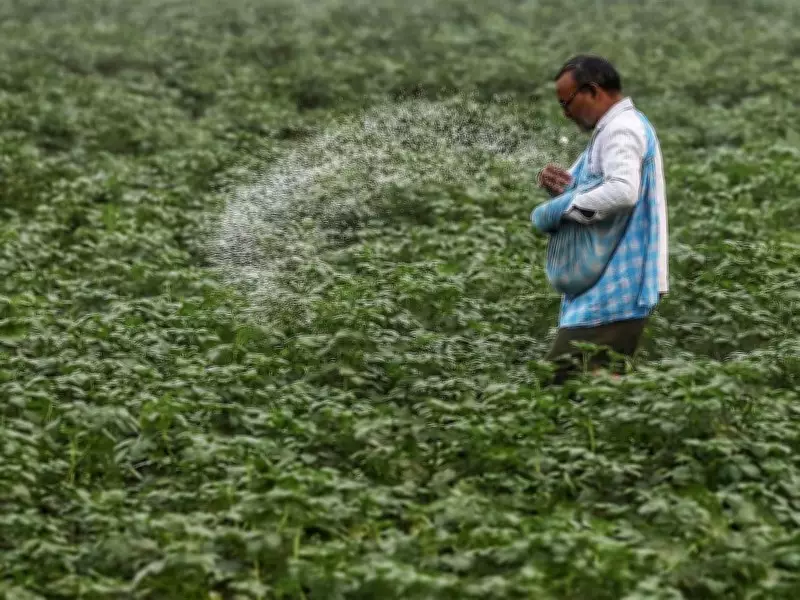
Accelerating mass commercialisation and adopting nano-fertilisers and bio-stimulants, addressing questions on their field efficiency, providing production-linked incentives to indigenous manufacturers and expanding precision in uniform application through drone spraying can cut aggregate demand by minimising overuse by soil application.
Reforming Subsidies and Soil Health
Subsidised pricing, mainly of urea, has created a highly skewed N:P:K ratio towards 10:3:1, which ideally should be 4:2:1, thus depleting soil health which needs to be reformed. Upscaling land-based subsidy schemes, transparent land-based fertiliser sales and direct benefit transfer of cash, eliminating supply chain leakages, are needed. Balancing nutrient use is also an acute ecological necessity for restoring soil biodiversity to improve the structural integrity of the top soil.
At the critically low level of less than 0.5%, soil organic matter must at least be doubled by employing organic amendments, crop residue retention by adopting zero burning of agricultural waste, green manuring and utilising microbial inoculants like phosphate solubilising bacteria, Azotobacter and mycorrhizal fungi.
It is worthwhile to enhance area under organic and natural farming from the present less than 3% of the total cropped area. In a pulses deficit situation, it is doubly beneficial to promote the cultivation of nitrogen-fixing leguminous crops. It is another highly effective way of bringing down the use of chemical fertilisers.
Future Innovations
In future innovations in synthetic biology for engineering, self-fertilising cereal crops that can fix nitrogen, like legumes, may prove to be a wonder in contributing towards sustainable atmanirbharta in fertilisers.