As 2025 draws to a close, India's ambitious journey towards a greener energy grid stands at a crucial inflection point. While the nation has impressively built a non-fossil fuel capacity constituting 50% of its total power generation, primarily from solar and wind, a new set of complex challenges demands attention. Industry leaders and policymakers are now steering the focus towards building robust energy storage systems, expanding transmission networks, and embracing stable sources like nuclear power to ensure this transition is both sustainable and reliable.
The Integration Imperative: Beyond Mere Capacity Addition
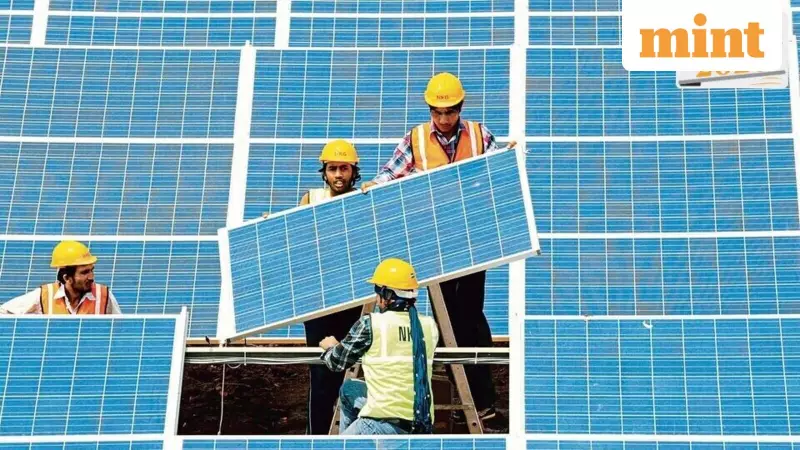
The year 2025 highlighted a critical gap in India's energy landscape. Despite having over 197 GW of renewable energy capacity (excluding large hydro), the variable nature of solar and wind power has resulted in a low capacity utilization factor. This means the installed potential isn't fully translating into consistent power output. Furthermore, the sector has grappled with unsigned power purchase agreements (PPAs) and forced curtailment of generation due to inadequate transmission infrastructure.
According to Srivatsan Iyer, CEO of Hero Future Energies, the core challenge has evolved. "The challenge is no longer just about adding renewable capacity — it is about integrating it intelligently," he stated. He emphasized strengthening three foundational pillars: storage, transmission, and a diversified energy mix to ensure round-the-clock reliability.

This sentiment is echoed in government assessments. In October, the power ministry acknowledged that India's next leap requires "deeper system reforms." The sector is shifting from a phase of rapid capacity expansion to one focused on capacity absorption, dealing with grid integration, storage, and market reforms essential for a 500 GW-plus non-fossil future.
Storage and Transmission: The Twin Engines for Grid Stability
To manage the intermittency of renewables, energy storage is taking center stage. The Central Electricity Authority (CEA) has mandated that upcoming solar projects integrate storage capacity of at least two hours or 10% of their capacity. Distribution companies are also planning battery storage auctions, though the sector remains nascent.
Alekhya Datta, Director at TERI, explained that storage will be pivotal for shifting solar power to evening peak demand and managing seasonal variations. He pointed to falling lithium-ion battery costs, the revival of pumped hydro projects, and the future potential of green hydrogen as enablers to push renewable energy share beyond 40-50%.
Varchasvi Gagal, CEO of Datta Infra, quantified the need, stating India requires a 5-6 times scale-up in storage deployment within five years to achieve a grid with continuous green power.
Parallelly, a robust transmission network is urgently needed. A lag in grid expansion is a primary cause for renewable energy curtailment. Data shows that in FY25, only 8,830 circuit kilometres (ckm) were added, a 38% drop from the previous year. The National Electricity Plan estimates a need for an additional 191,000 ckm by FY32.
Akshay Hiranandani of Serentica Renewables and Simarpreet Singh of Hartek Group highlighted that states like Rajasthan, Gujarat, and Tamil Nadu face significant challenges in evacuating the power they generate. Singh advocated for High Voltage Direct Current (HVDC) networks to efficiently transport electricity over long distances to demand centers.
Nuclear Power and Policy: A New Chapter for Baseload Energy
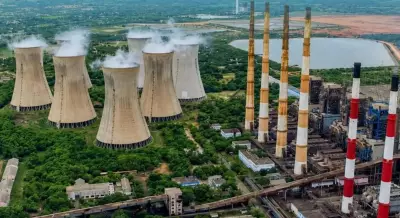
Diversification is key to energy security, and nuclear power is poised for a significant role. The government has set an ambitious target of 100 GW of nuclear capacity by 2047, a massive jump from the current ~9 GW. A landmark legislative move, the Sustainable Harnessing and Advancement of Nuclear Energy for Transforming India (SHANTI) Bill, 2025, was introduced in the Lok Sabha on December 15.
This bill aims to open the nuclear power sector to private companies and joint ventures, a major departure from the current regime restricted to government-owned entities. It also seeks to address liability concerns for global component and fuel suppliers, potentially unlocking foreign investment.

Alekhya Datta of TERI noted that nuclear energy is ideally suited for providing round-the-clock baseload power and aiding in the decarbonization of hard-to-abate industries. "A bold, 'second-generation' reform of the nuclear governance framework can unlock this potential," he said, referring to the SHANTI Bill.
As India recalibrates its strategy, the moderation in new renewable capacity addition is seen as a necessary pause. The focus for 2026 and beyond is firmly on creating a power system that is not just green in nameplate capacity, but also stable, dispatchable, and resilient—a system capable of powering the world's fastest-growing major economy sustainably.