India's Battery Supply Chain Push: Inside the Slow, Costly Race Against China
In a high-stakes race for energy sovereignty, Indian innovators are taking on China's battery monopoly. From academic labs to massive refineries, pioneers are forging the critical chemistry needed to power India's electric vehicle future.
The First Steps in Hyderabad
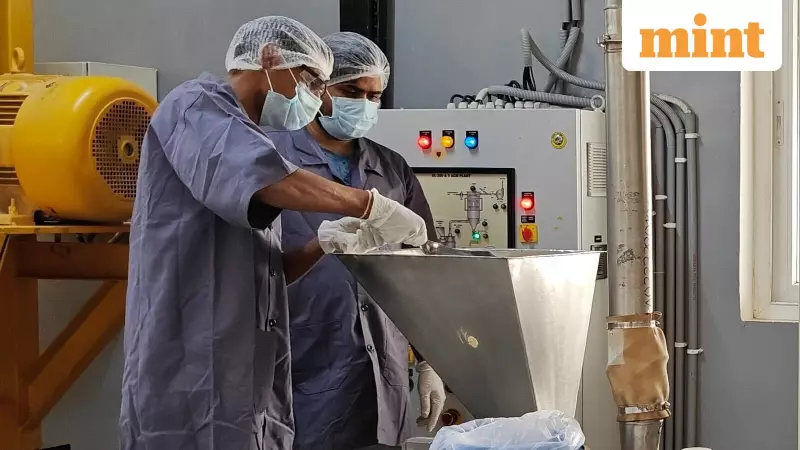
About three years ago, on a sunny August day in Hyderabad, battery materials company Altmin set out to make cathodes in India for the very first time. Cathodes are critical components in lithium-ion batteries. The pilot plant, established within the white walls of the government's International Advanced Research Centre for Powder Metallurgy and New Materials in 2023, now produces 250 kilograms daily.
Scientists at the research centre work as technology partners with Altmin. They share an ambitious goal: localizing the geopolitically critical battery supply chain currently dominated by China. Altmin now moves toward industrial-scale cathode manufacturing with a 100,000-tonne capacity plant in Telangana.

Last month, the company signed an agreement with state-owned Singareni Collieries Co. Ltd to set up India's first lithium refinery. The refined lithium will feed into manufacturing cathode active materials.
"We started working on the technology a decade back at laboratory scale with only a couple of scientists," said R. Vijay, director at ARCI. "The last few years we have worked on bringing down costs, solving teething problems faced with scaling from lab to plant."
The Critical Midstream Layer
Battery components form a critical midstream layer. This sits after mining but before cell manufacturing and battery pack assembly. Apart from cathodes, other battery cell parts include graphite anodes, separators and electrolytes.
This geopolitically sensitive segment attracts startups and established firms alike. All have capacity scale-up plans. India moves toward lithium-iron phosphate batteries since they overheat less in hot weather and cost less than older nickel and cobalt chemistries. Sodium-ion represents another emerging chemistry.
Reliance Industries Ltd announces plans to enter anode and cathode manufacturing by 2027-28. Epsilon Advanced Materials already makes anodes and plans cathode manufacturing too. Lithium-ion battery recycling startup Lohum Cleantech in Noida scales up its advanced materials business with plans to make lithium cell components at scale. Neogen Chemicals grows its electrolytes business.
If these midstream players succeed, they could underpin India's emerging electric vehicle and energy storage battery manufacturing ecosystem. Companies like Reliance, Exide Industries, Energy and Mobility Ltd, Ola Electric Mobility and Waaree Technologies lead this ecosystem.
Their ambitions align closely with India's broader goal: replicating, at least partially, China's dominance in EV and energy-storage batteries. This push sits at the heart of India's energy security efforts.
The Scale Challenge
According to think tank Observer Research Foundation, planned investments in battery and cell manufacturing in India total ₹43,300 crore. This excludes planned investments in cell component manufacturing by firms including Altmin, Epsilon and Neogen.
Satyadeep Jain, an analyst from advisory firm Ambit, argues that without establishing its own battery manufacturing ecosystem across upstream, midstream and downstream, India will remain a bystander. The country would rely on imports and lose employment and current account benefits.
"There is an opportunity for India to export midstream supplies to the US as that country looks to diversify supply sources away from China," said Jain. "This could continue at least until the US sets up domestic midstream capacities."
David vs Goliath
Despite decreasing battery prices and continued innovation, concentration of battery supply chains within China raises security concerns worldwide. The International Energy Agency notes that diversifying battery production and supply chains represents a substantial undertaking that may require trade-offs.

"Any country interested in expanding output needs time and investment to bolster domestic manufacturing, build expertise and reduce production cost gaps relative to China," said the Paris-based intergovernmental organization.
But replication faces scale and economics challenges. China plays a major role at each stage of the global battery supply chain and dominates interregional mineral trade. According to Jefferies, China controls about 70% of global lithium processing, 95% of graphite processing and nearly 70% of synthetic graphite capacity. It also dominates battery components, accounting for over 90% of global cathode and anode manufacturing.
Chinese cell makers price products close to raw-material and energy costs. Low financing costs support this strategy, effectively squeezing margins for new entrants elsewhere.
"China produces at large scale, giving them economies of scale and scope," said Rajat Verma, founder and CEO at Lohum. "This makes them the lowest possible cost player even without government subsidy. Then there are government subsidies that encouraged capacity setup. The third bit—dumping—always has indirect government support."
This makes life difficult for players like Altmin, still at a pre-revenue stage. Cell manufacturers in India and elsewhere take time to qualify materials and haggle over prices. The approval process for testing and qualifying advanced materials like cathodes takes two to four years in India versus just 27 days in China.
"Supply managers within cell companies tell us: first set up the industry, then we will see," said Anjani Sri Mourya Sunkavalli, founder and managing director of Altmin. "But how do we set up without assured clients? They ask us to match Chinese prices! We are just starting, we don't yet have full control over supply chain and input materials."
Policy Challenges
Selected beneficiaries under the National Programme on Advanced Chemistry Cell Battery Storage must ensure domestic value addition of at least 25%, raising it to 60% within five years. This proves challenging so far. Industry analysts believe schemes with more upfront cash for factory setup would help more than production-linked incentives.
Offtake agreements—commitments from buyers to purchase products—represent essential financing tools for operationalizing large-scale projects. This creates gaps in integrating India's battery supply chain despite some local players' increasing presence in making advanced battery materials.
Currently, all key battery cell components can be imported from China at zero duties. Cell manufacturers in India often contractually must buy cell components from Chinese technology partners.
Think tank International Institute for Sustainable Development states that India needs backward integration with high-value cell components and equipment manufacturing to truly capture value across the battery supply chain.
Export Focus and Local Challenges
Firms like battery materials manufacturer Epsilon Advanced Materials focus initially on export markets until local cell manufacturer demand increases. Epsilon already makes graphite anodes for Japanese, Korean, American and European customers. The company expands production with an eye on foreign companies ready to pay a premium for suppliers outside China.
Epsilon also plans to set up a large commercial-scale cathode plant. It bought Johnson Matthey's LFP cathode active material technology centre in Moosburg, Germany, in 2024.
"The Indian market is not ready to commit," said Vikram Handa, managing director at Epsilon. "These projects are difficult to finance because banks don't understand them today. When discussing contracts for outside markets, these are 6-10 year contracts. In India, they just want to compare prices."
Most of Epsilon's cathode production in India will go to an automotive customer in the US. Handa sets aside 15-20% capacity for Indian clients and expects demand to come through in three-four years. Currently, Indian cell manufacturers remain price sensitive and sometimes lack cell testing capability to qualify advanced materials.
Manufacturer Perspectives
For cell manufacturers in India, cost efficiency and long-term visibility of critical cell components matter for competitiveness. This remains true even when hedging against geopolitical uncertainty with China.
Amara Raja sets up a 16GWh gigafactory for cell manufacturing in Telangana. Cell components for the first phase, coming online this fiscal year, will source mainly from China.
"The material supply chain represents the bigger challenge," said Vijayanand Samudrala, president of new energy at Amara Raja Energy and Mobility. "You need a secure supply chain with clear visibility of where material will come from over longer periods. It should be cost-efficient to remain competitive."
Samudrala believes China represents a very competitive choice in short and medium terms. The company works on a Plan B in parallel.
"Plan B may not be the optimum choice, but exists for security reasons," he said. "We carefully watch what evolves in India and outside China. Any backup plan would be more difficult and expensive."
Risk of Chinese Reliance
A significant number of Indian companies enter technology transfer agreements with established battery manufacturers, particularly from China. Exide Energy Solutions signs a technology transfer agreement with China-based SVOLT. Under this arrangement, Exide gains irrevocable right to use and commercialize SVOLT's technology and know-how for battery manufacturing.
Amara Raja enters a similar agreement with Gotion InoBat Batteries, a unit of China-based Gotion High Tech Company, to access its technology.
"Such agreements enable Indian manufacturers to benefit from partners' technology, expertise in setting up manufacturing units, operational scale, and integration into global supply chain networks," said Anika Chhillar, an analyst with Observer Research Foundation. "For India, heavy reliance on Chinese technology carries strategic and geopolitical risks."
The Chinese government already controls exports of various battery materials and lithium-ion technology. In October last year, China announced major export controls on lithium-ion battery supply chains. New controls expand previous measures and cover a broader range of battery materials, technologies and equipment across multiple supply chain stages.
"Focus on 'sahi daam' (right price) is not how this supply chain will pan out," said Altmin's Mourya. "Geopolitics and mineral security play roles here."
The Indian government controlled solar panel imports from China through various tariffs and non-tariff barriers. No such measures exist yet for battery and cell makers, given lack of large local capacity. Solar panel assembly represents low-tech work while cell manufacturing and advanced battery components production remain technologically intensive.
India remains a battery cell importer along with many cell components.
The Lag and Funding Gap
"Global overcapacity exists in the entire battery supply chain currently," said Ambit's Jain. "India lacks lithium reserves and battery R&D where China accumulated process knowledge over time. But these headwinds shouldn't deter India from onshoring the battery supply chain."
Across ARCI, Indian Institute of Science, Central Electrochemical Research Institute and various IIT colleges, groundbreaking battery research continues. Government and private corporations fund this work. But scaling from laboratory to industry represents a different, expensive ball game.
"The lag with China can be overcome by more effort, resources and manpower added to the system," said Sagar Mitra, professor at IIT Bombay's department of energy science and engineering. "We excel at research scale but lack industry scale. Big players' R&D efforts must minimize this lag."
India's tech innovation, especially in deep tech, suffers from critical lack of patient capital. This means long-term funding for high-risk, long-gestation R&D. Traditional Indian venture capitalists and domestic institutions like insurance and pension funds prefer quick returns, unlike foreign investors. This creates a funding gap for science-led breakthroughs despite immense talent.
"Risk capital does not exist in India," said Epsilon's Handa. "Scientists struggle to raise patient capital."
Success in decoupling India's battery supply chain from China without compromising quality and scale will prove critical for geopolitical derisking.
"While China and the US lead production of next-gen chemistries, India's presence in lithium-ion, sodium-ion and flow technologies remains limited," stated consulting firm Praxis Global Alliance in a recent report. "The next decade will define whether India becomes a global hub or remains a late-stage assembler in the battery supply chain."