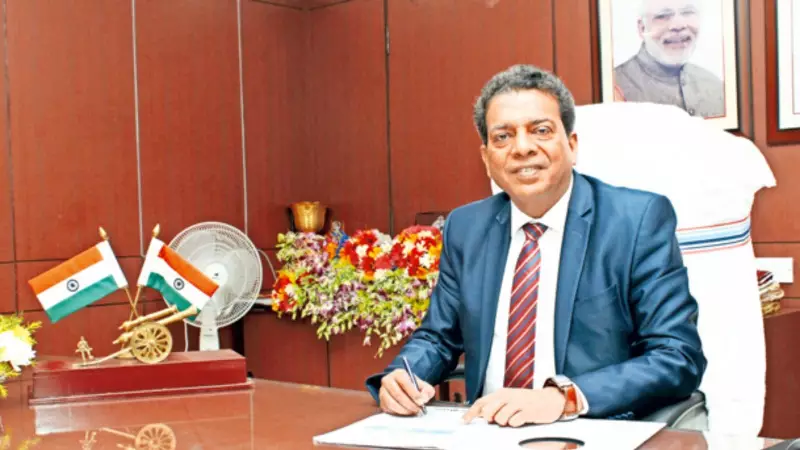
India's aluminium sector remains unprepared for the shift towards green aluminium. This statement comes from Brijendra Pratap Singh, the chairman and managing director of National Aluminium Company Ltd (NALCO). He shared these insights in a recent interview, highlighting the industry's current challenges.
Impact of International Policies
Singh addressed the European Union's Carbon Border Adjustment Mechanism (CBAM). He explained that aluminium production requires significant energy. If power costs increase sharply, the overall cost of aluminium will rise substantially. The sector needs more time to adapt to these green requirements.
Regarding US tariffs, Singh noted that NALCO avoids direct impact. The company does not export metal or chemicals to the United States. Its alumina exports primarily go to the Middle East, Europe, and Southeast Asia. In contrast, other firms like Vedanta and Hindalco export directly to the US and face potential challenges.

Strong Domestic Demand
Domestic demand for aluminium in India remains robust. Singh pointed out that several key sectors drive this demand:
- The power sector accounts for about 40% of aluminium consumption.
- Infrastructure contributes 10-12%.
- Automobiles make up 6-7%.
- Solar power is also boosting demand.
These sectors are experiencing growth, which supports good prices within India. Singh emphasized that if exports from other companies decline due to US tariffs, more aluminium might enter the domestic market. This could create pricing pressure, but strong demand helps mitigate this risk.
NALCO's Financial Performance
NALCO achieved record profits in FY25. Singh reported excellent performance in the current financial year. The first half saw the best-ever physical results. Revenues increased by approximately 18-19%, while profits rose by about 47%.
For the third quarter, physical performance remains strong. Financial results are pending, but expectations are positive. Singh mentioned that London Metal Exchange (LME) prices play a crucial role. Metal revenues constitute nearly 70% of NALCO's total revenues. If LME prices stay around $2,800–2,900 per metric tonne in the coming months, this year's financial performance could match last year's achievements.
Decarbonisation Efforts
NALCO is actively planning measures to reduce carbon emissions. About 80% of its emissions originate from its power plant. To cut emissions, the company aims to decrease reliance on thermal power and increase green power usage.
The company is exploring long-term power purchase agreements with renewable energy producers. A consultant has been engaged to develop a comprehensive strategy. Options under consideration include:
- Solar power
- Wind power
- Hybrid solutions
- Combinations with battery storage
NALCO's objective is to secure 200–300 MW of round-the-clock green power. This would represent 20–30% of its current consumption of 800–900 MW. The transition is expected to take three to four years.
Challenges in Green Power Adoption
Singh highlighted a significant hurdle. Green power is not consistently available round the clock. Aluminium smelting requires stable, uninterrupted power. Any disruption can severely affect operations and long-term production.
Green power combined with battery storage remains expensive. Immediate solutions are not readily available. The consultant is evaluating various mixes to identify viable options. Nuclear power was also discussed, but Singh noted its high capital intensity. Thermal power costs around Rs 6-7 crore per MW, while nuclear power costs about Rs 30 crore per MW.
Competitors in countries like China and Canada benefit from cheap, green hydropower available round the clock. India faces limitations in large-scale hydropower availability, putting it at a disadvantage.
Expansion and Critical Minerals
NALCO has a Rs 30,000 crore expansion plan. This includes a 0.5 million metric tonne smelter and a 1,080 MW captive power plant. The smelter requires around Rs 17,000–18,000 crore, while the power plant needs about Rs 12,000 crore. This expansion will increase capacity from 0.46 million metric tonnes to approximately 1 million metric tonnes.

A consultant is being appointed to prepare a Detailed Project Report (DPR). The target is to complete the DPR within six to seven months. Board approval is expected by July or August this year. Tendering will follow, with commissioning anticipated by the end of 2030 or early 2031.
Regarding critical minerals, NALCO holds a 40% stake in Khanij Bidesh India Ltd (KABIL). In Argentina, non-invasive exploration on three blocks is complete. The company is now moving to invasive exploration, which involves drilling and sample extraction. Results are expected by mid or end-2027. Based on these, decisions about commercial mining for lithium will be made.
For domestic critical minerals, NALCO has appointed a bid advisory consultant. The consultant will examine upcoming auctions and assess viable premiums. The company remains open to entering this sector.
Key Challenges and Market Dynamics
Singh identified exploration as a main challenge in India's critical minerals sector. Resources exist, but converting them into proven reserves requires extensive exploration. Improved exploration efforts are needed to clarify available quantities.
Domestic aluminium sales have increased in FY25. This growth is driven by better domestic prices compared to export markets. NALCO sells exports through a tender process and found domestic prices more favorable. Consequently, exports have declined sharply as the company focuses on the domestic market.
On aluminium scrap imports, Singh expressed concerns. Imported scrap currently attracts around 2.5% duty, while primary aluminium faces about 7.5% duty. As primary producers, NALCO advocates for:
- Quality standards for imported scrap to ensure product safety.
- Increasing scrap import duty to match that of primary aluminium.
The company has requested the government to align these duties to support domestic producers.