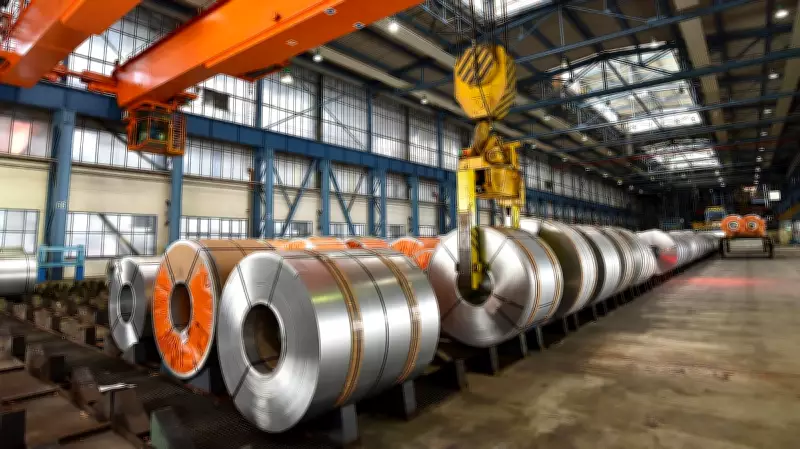
India has firmly rejected the United States' allegations of surplus capacity in the textiles and steel sectors, asserting that the concept of overcapacity is subjective and depends on a country's unique economic circumstances.
India's Stance on Overcapacity
Speaking at a trade forum, Amitabh Kumar, a senior Indian trade official, emphasized that India's per capita steel consumption remains among the lowest globally. "Overcapacity is a country's perspective. What may appear as surplus in one nation could be essential for another's developmental needs," Kumar stated.
The remarks come in response to recent US criticisms that India's textile and steel industries are producing excess capacity, which they claim distorts global markets and harms American manufacturers.

Low Per Capita Consumption
Kumar highlighted that India's steel consumption per person is far below the world average, indicating significant room for growth. He argued that India's production capacity is aligned with its domestic demand and infrastructure goals, rather than being geared toward export dumping.
In the textiles sector, India has also defended its position, noting that the industry supports millions of livelihoods and operates within fair trade practices. The official reiterated that India remains committed to multilateral trade rules and is open to dialogue to resolve any concerns.
Broader Trade Context
The dispute over capacity is part of a wider trade friction between the two nations. The US has previously imposed tariffs on Indian steel and aluminum, citing national security concerns. India, in turn, has retaliated with tariffs on American goods.
Despite these tensions, both countries have expressed interest in deepening economic ties. Kumar expressed hope that differences could be resolved through constructive engagement. "We are always willing to discuss and find mutually beneficial solutions," he added.
Industry Reactions
Indian industry bodies have welcomed the government's firm stance. They argue that the US allegations overlook the structural differences in both economies and the developmental needs of a populous nation like India.
As the global trade landscape evolves, India continues to advocate for a rules-based system that accounts for diverse economic realities. The rejection of the overcapacity charge underscores India's determination to protect its industrial growth while engaging in fair competition.