Gurgaon Rapid Metro Experiences Significant Ridership Growth Amid Financial Challenges
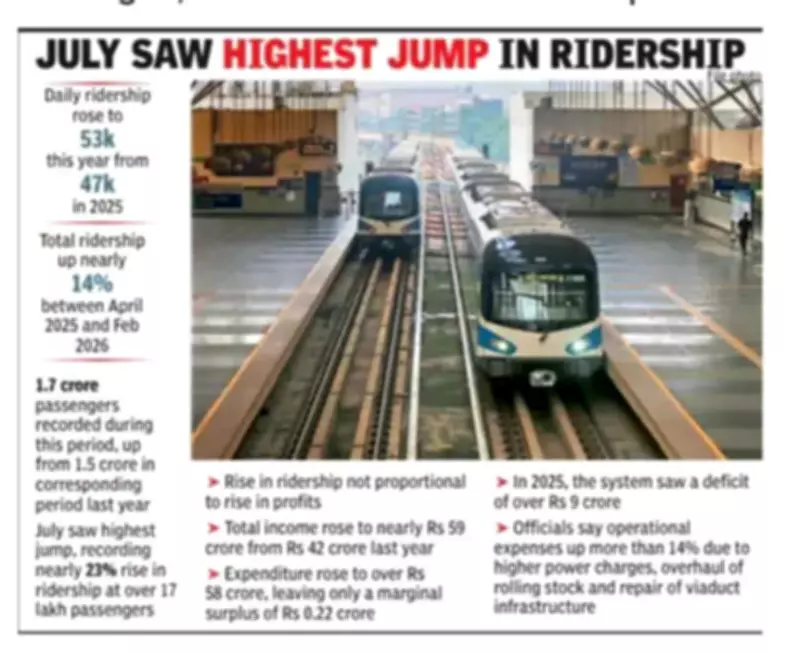
Gurgaon's Rapid Metro has witnessed a notable surge in commuter numbers over the past year, with average daily ridership climbing to approximately 53,000 passengers, up from nearly 47,000 in the previous period. According to data released by the Haryana Mass Rapid Transport Corporation Ltd (HMRTC), total ridership increased by 13.5% between April 2025 and February 2026, reaching 1.7 crore passengers compared to 1.5 crore in the same timeframe last year.
Financial Strain Despite Increased Passenger Footfall
However, this growth in ridership has not translated into robust financial health for the metro system. While HMRTC managed to move out of losses and record a surplus this year, the improvement was marginal. Total income rose to Rs 58.9 crore from Rs 42 crore last year, but expenditure also escalated sharply to Rs 58.7 crore, resulting in a slim surplus of only Rs 0.22 crore. This contrasts with a deficit of Rs 9.2 crore in the previous year.
Officials attribute the financial pressure primarily to a 14.46% increase in operational expenses, driven by higher power charges, rolling stock overhauls, and viaduct infrastructure repairs. Power and traction costs alone surged to Rs 11.26 crore, while overall operational costs approached nearly Rs 32 crore, limiting the impact of higher commuter numbers on the system's finances.

Revenue Sources and Future Plans
Fare revenue saw a modest growth of 12.6%, but a significant portion of the financial improvement came from non-fare sources, which skyrocketed by 108%. Revenue from advertisement rights through e-auctions more than doubled to Rs 21.5 crore, with additional income from station space rentals and marketing activities also showing incremental increases.
HMRTC Managing Director Chander Shekhar Khare emphasized that service reliability has contributed to the ridership increase. He stated, "Despite rising operational costs, we have recorded a surplus this year. We are pushing non-fare revenue through advertisement rights and will soon invite tenders for station naming rights, which will further boost revenue while ensuring better maintenance of station premises."
Expansion and Connectivity Projects
The state is making progress on multiple metro and regional transit projects to enhance connectivity. Key initiatives include:
- Metro connectivity from Sector 56 in Gurgaon to Pachgaon is under consideration, with a depot location finalized in Sector 36A near Sihi village.
- The Ballabhgarh-Palwal metro extension is undergoing a techno-feasibility assessment by RITES.
- A fresh study for Bahadurgarh-Asaudha connectivity is being undertaken following HRIDC's decision to develop a new interchange station at Asaudha to boost ridership.
- Last month, the Haryana government approved the final alignment of the Gurgaon-Faridabad-Noida RRTS corridor, with detailed project report preparation underway by NCRTC.
At a board meeting, Chief Secretary Anurag Rastogi highlighted that the consistent rise in ridership and revenue reflects the success of integrated transport synergy, stressing the need for timely project execution and improved coordination among agencies.