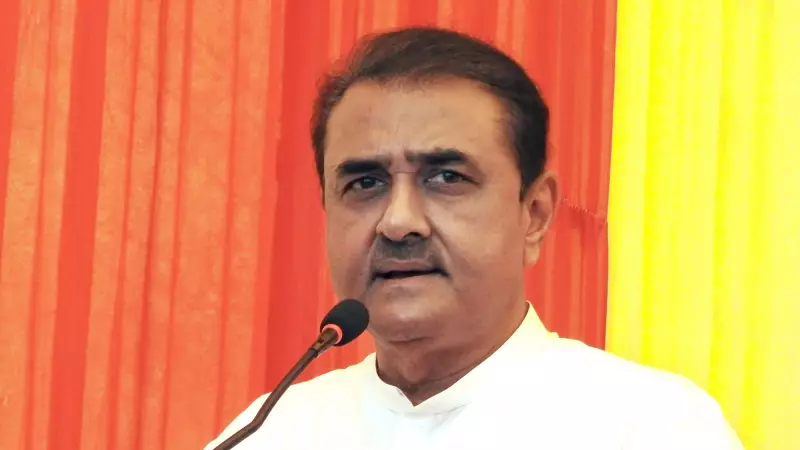
Former Civil Aviation Minister Praful Patel has made a strong case for the entry of large, financially robust players into the Indian aviation sector, cautioning against the risks posed by unstable or underfunded ventures. His comments highlight a crucial debate about the future structure and stability of one of the world's fastest-growing aviation markets.
A Call for Stability and Scale
In a significant statement, Patel stressed that the Indian aviation ecosystem requires participants with deep pockets and long-term vision. He implicitly warned that the industry's growth and health could be jeopardized by what he termed "fly-by-night" operators. These are entities that may enter the market without sustainable financial backing or a credible operational plan, potentially leading to disruptions, job losses, and instability for passengers.
The former minister's remarks, made on January 09, 2026, come at a time when the Indian aviation landscape is undergoing significant churn. While new opportunities are emerging, the sector has also witnessed the failure of several carriers in the past, underscoring the challenges of high costs, intense competition, and thin profit margins.

The Enduring Importance of Established Carriers
Alongside his call for new, substantial investment, Praful Patel also acknowledged the continued significance of existing major players. He pointed out that a certain dominant airline, despite facing its own set of challenges, remains a pillar of the market.
"Having said that, on the whole, it is still a very important player in the Indian aviation market and will remain important for many, many years to come," Patel stated. This balanced view recognizes that while fostering new competition is vital, the stability provided by established airlines is equally crucial for the sector's overall health.
Implications for the Future of Indian Aviation
Patel's perspective carries weight given his extensive experience overseeing the ministry during a period of rapid expansion and change. His advocacy for big players entering the fray suggests a model where new entrants have the financial resilience to withstand market cycles and invest in fleet modernization, customer service, and infrastructure.
This approach aims to prevent a repeat of past scenarios where airline failures left passengers stranded, employees unpaid, and lessors scrambling for their aircraft. A market dominated by strong, well-managed airlines is seen as beneficial for consumers in the long run, offering better service reliability, network coverage, and potentially more innovative offerings.
The former minister's comments are likely to fuel discussions among policymakers, investors, and industry analysts about the ideal framework to ensure sustainable growth. The focus is shifting from merely increasing the number of airlines to ensuring the quality and stability of market participants, securing the future of Indian aviation for decades to come.