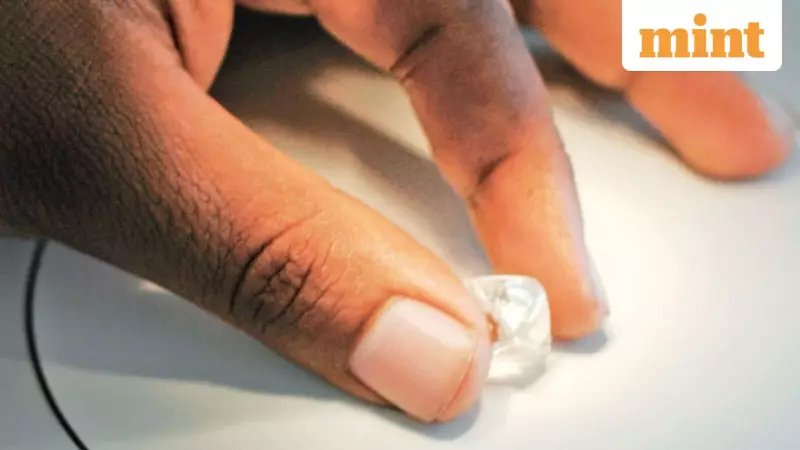
Despite the rapid expansion of India's lab-grown diamond sector and the recent entry of jewellery giant Titan into the segment, global diamond leader De Beers remains bullish about the enduring demand for natural, mined diamonds in the country. The company's top leadership has expressed strong confidence in India's position as the world's second-largest diamond market.
Robust Growth for Natural Stones
In an exclusive interview, De Beers CEO Al Cook highlighted that natural diamond sales in India surged by 11% in value during 2025 compared to the previous year. He emphasized that this performance solidifies India's status as the second most crucial market for diamonds globally, trailing only the United States.
"We see that growth continuing. It has been four years of double-digit growth in natural diamond demand here," Cook stated. He reiterated a previous projection that India's domestic diamond jewellery market, estimated at around $10 billion in May last year, is on track to double by the year 2030.

The Lab-Grained Diamond Landscape Expands
This confidence from the legacy miner comes at a time when synthetic diamonds are gaining significant ground. The Indian market for lab-grown diamonds is currently valued at an estimated $300 to $400 million and is growing at approximately 15% annually.
Major retailers are now actively participating. After Tata Group's Westside launched lab-grown diamonds under the 'Pome' sub-brand in October 2024, its sister concern Titan, which owns Tanishq, introduced its dedicated lab-grown diamond retail brand 'beYon' in Mumbai last month. Other industry players like Malabar Gold and Diamonds are also evaluating entry into this segment.
Clear Differentiation and Consumer Trends
De Beers views these moves by mainstream jewellers as a way to clarify the distinction between natural and lab-grown categories. Cook noted that Titan's approach is responsible, as initiatives like not offering exchange policies on lab-grown pieces and maintaining separate retail spaces reinforce the unique value proposition of natural diamonds.
Supporting this separation, the Bureau of Indian Standards (BIS) recently mandated clear labelling for lab-grown diamonds, reducing consumer confusion. Shweta Harit, Global Senior Vice-President at De Beers, pointed to evolving consumer behaviour driving growth. There is a noticeable shift towards self-purchase and everyday wear, with trends like "get ready with me" (GRWM) inspiring people to style diamonds regularly rather than reserve them for special occasions.
"We also find a shift to Caratlane, Mia by Tanishq, this kind of everyday jewellery rather than bigger pieces," Harit added. Interestingly, a Deloitte survey of 600 people revealed a nuanced consumer mindset: while 44% of respondents would consider a lab-grown diamond as a gift, trust and aspiration remain firmly tied to natural stones for personal purchases.
Export Challenges and Future Outlook
While domestic demand shines, India's diamond export sector faces headwinds. Data shows exports of cut and polished diamonds fell over 36% year-on-year in FY26 (until November 2025) to ₹71,332 crore, impacted by US sanctions. However, Cook expressed optimism for a resolution, citing the US's indication of zero tariffs for Indian diamonds post-deal.
"I am confident that there will be a deal," Cook said, anticipating a return to previous trade conditions. The overarching narrative remains one of coexistence, with both natural and lab-grown diamond segments poised for growth in the vast and diversifying Indian jewellery market.