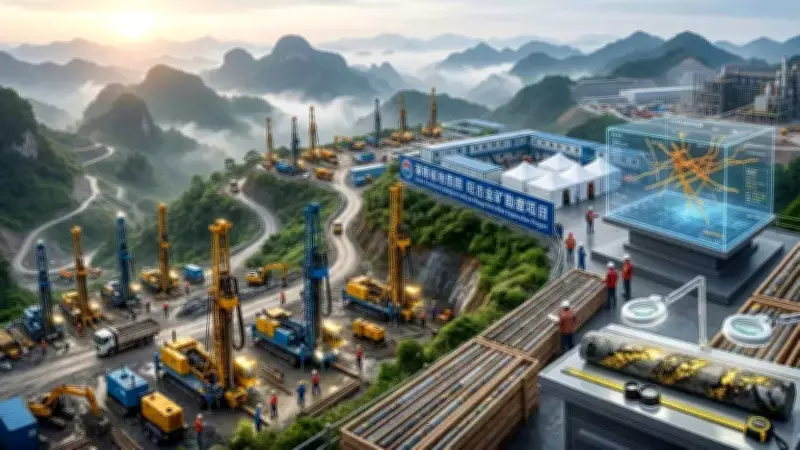
Historic Discovery of 'Supergiant' Gold Mine in China Valued at $83 Billion
Geologists have achieved a monumental breakthrough in mineral exploration with the discovery of a 'supergiant' high-grade gold resource in China. This extraordinary find, located in Hunan Province, is estimated to be worth an incredible $83 billion, marking a historic milestone in the field of economic geology.
Unveiling a Rare 'Supergiant' Gold Deposit
In economic geology, a 'supergiant' deposit is an exceptionally rare classification reserved for mineral systems containing over 1,000 metric tons of gold. The Wangu gold field discovery in Pingjiang County, Hunan Province, falls squarely into this elite category, placing it among the top 1 percent of the world's most significant terrestrial wealth finds. According to S&P Global Market Intelligence, the deposit's gold concentration per tonne of rock far exceeds industry standards, earning it the 'high-grade' designation that underscores its immense value and rarity.
Advanced Exploration Techniques Reveal Hidden Wealth
The discovery was not a matter of chance but the result of cutting-edge geological methods. Researchers employed advanced techniques such as seismic imaging, three-dimensional geological modeling, and deep-drilling technology to analyze the United States Geological Survey (USGS) data and define a major orogenic system. This approach allowed the exploration team to map 40 unique gold veins extending up to 2 kilometers underground, a depth where most gold mines are not typically found. Preliminary data suggests 300 tonnes of gold in the first 2,000 meters, with 3D modeling predicting a total of 1,000 tonnes at depths of 3,000 meters. If confirmed, this would make it the largest registered gold deposit globally, surpassing South Africa's deep mine with 900 tonnes.

The Seismic Origins of the Gold Treasure
Research published in scientific journals indicates that the concentration of gold at Wangu may have originated from ancient seismic activity. The process involves piezoelectric discharge, where stressed quartz during earthquakes acts as a natural battery, generating an electric voltage. This triggers an electrochemical reaction that 'flash-freezes' dissolved gold from hydrothermal fluids, depositing it into concentrated, high-grade veins. This natural mechanism explains the exceptional purity and quantity of gold found in this supergiant deposit.
Technological Innovations Driving the Discovery
The findings were facilitated by the integration of artificial intelligence (AI) with traditional geological expertise. AI algorithms were used to evaluate historic geochemical data, pinpointing precise locations where mineral deposits intersect with deep crust faults. This synergy of AI, 3D modeling, and deep-drilling tools enabled geologists to construct detailed underground maps of 'treasure threads' that were previously missed by shallower drilling methods. This technological prowess highlights how modern innovations are revolutionizing mineral exploration and unlocking hidden resources.
Global Implications and Future Prospects
This discovery has significant implications for the global gold hierarchy, potentially shifting reserves and influencing markets. The deposit's capacity to produce gold for decades to come represents one of the largest discoveries of terrestrial wealth in the 21st century. As geologists continue to refine their techniques, such supergiant finds could become more frequent, reshaping the landscape of mineral resources and economic geology worldwide.