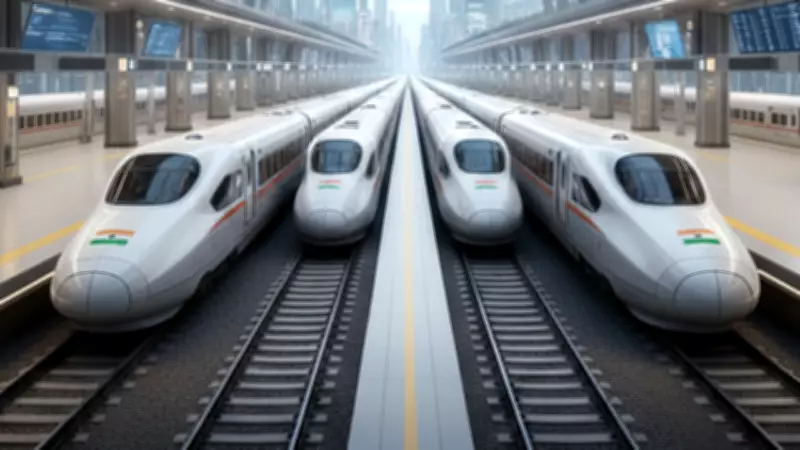
Bengaluru's High-Speed Rail Future: A Deep Dive into the Proposed Bullet Train Corridors
The city of Bengaluru is poised for a transportation revolution with the announcement of ambitious high-speed rail corridors that promise to reshape connectivity in southern India. A proposed bullet train network linking Bengaluru with Hyderabad and Chennai aims to drastically cut travel times, bringing these major metropolitan hubs closer than ever before.
Revolutionary Travel Time Reductions
The Bengaluru–Chennai corridor stands out as particularly transformative, with projected travel times reduced to just 1 hour and 13 minutes. This remarkable compression effectively merges the two cities in terms of accessibility, creating what many are calling a "virtual megacity" corridor. Similarly, the Bengaluru–Hyderabad route promises to slash journey durations to only 2 hours, providing unprecedented convenience for commuters, business travelers, and tourists alike.
Part of the High-Speed Diamond Project
These proposed corridors form integral components of the broader High-Speed Diamond Project, an ambitious infrastructure initiative that also incorporates Amaravati into its network. This strategic positioning aims to create a comprehensive high-speed rail network across multiple southern cities, potentially setting a new standard for intercity transportation in India.

Substantial Financial Commitments
The Karnataka government has demonstrated serious commitment to these projects through significant budgetary allocations. The state has been earmarked Rs 7,748 crore specifically for railway projects, underscoring the priority given to transport infrastructure modernization. Furthermore, existing railway initiatives in Karnataka already represent a combined investment of Rs 53,000 crore, indicating long-term dedication to infrastructure development and modernization across the state.
Mixed Public Reception and Regional Considerations
While enthusiasm for faster travel options runs high, the bullet train announcement has evoked a mixed response from various stakeholders. Many celebrate the potential for enhanced connectivity and economic growth, yet concerns persist about the broader regional impact on Karnataka. Questions remain regarding:
- Economic redistribution effects
- Social implications for communities along the routes
- Urban development consequences
- Environmental considerations
Transformative Potential for Intercity Travel
These high-speed rail projects are widely expected to fundamentally transform intercity travel dynamics. Beyond mere time savings, they promise:
- More reliable transportation options
- Reduced physical and economic distance between cities
- Enhanced business connectivity
- Boosted tourism potential
- Improved commuter efficiency
Game-Changing Connectivity Implications
The Bengaluru–Chennai and Bengaluru–Hyderabad corridors are being described as genuine game-changers for regional connectivity. By positioning Karnataka as a central hub in India's emerging high-speed rail network, these projects could catalyze economic growth, facilitate knowledge exchange, and create new opportunities for collaboration across southern India's most dynamic urban centers.
As planning progresses, stakeholders will continue to weigh the substantial benefits against legitimate concerns, shaping what could become one of India's most significant transportation infrastructure developments in decades.