Bengaluru's Food Industry Reels Under LPG Shortage, Reports 30% Business Decline
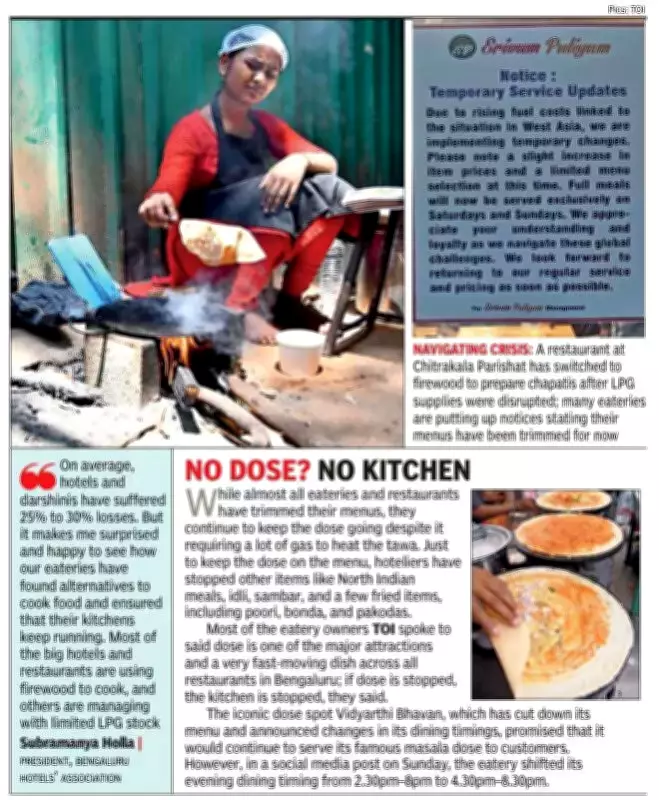
Nearly a week after a severe LPG shortage began impacting the food and beverages sector, hotels and restaurants across Bengaluru have reported a sharp drop in business, with losses averaging 25% to 30%. The inadequate supply of commercial LPG has forced eateries to implement drastic measures, including trimming menus, halting service of fried items like kebabs and snacks, and reducing operating hours to conserve resources.
Operational Challenges and Alternative Solutions
Subramanya Holla, president of the Bengaluru Hotels' Association, highlighted the operational strain, stating, "LPG shortage has badly hit our operations as we still continue with limited supply. But it makes me surprised and happy to see how our eateries have found alternatives to cook food and ensured that their kitchens keep running." Many larger establishments have resorted to using firewood for cooking, while others are managing with limited LPG stocks. However, space constraints prevent some smaller eateries from adopting firewood alternatives.
The crisis has led to a noticeable decline in customer footfall. A manager at IDC Tiffin Centre in JP Nagar 5th Phase explained, "We usually need four LPG cylinders a day for our branch, but now we have cut it down to three. We have no sambar and saagu as they require constant reheating and tend to spoil quickly in the heat." The branch reported a drop of at least 300 customers on a recent Sunday alone, with weekday and weekend footfall significantly reduced.

Price Hikes and Menu Adjustments
Supply issues have been compounded by price increases from local suppliers due to high demand. A Donne Biryani joint owner with three stores since 2020 noted, "Today is probably the last day we can manage with LPG as we are almost out of it. Our local supplier has also hiked prices due to high demand, so we are still figuring out what to do." To conserve gas, many eateries have stopped selling deep-fried items and are focusing on rice dishes and curries that can be easily reheated.
In response to rising costs, some darshinis have introduced additional charges. An owner from Jayanagar 4th Block said, "At present, we are charging Rs 10 for extra sambar and curry (saagu) to cope with the high LPG prices, as we cannot increase the price of the dishes." This strategy aims to manage limited resources while maintaining customer access to essential items.
Impact on Major Chains and Customer Perceptions
Even larger chains like KFC are feeling the pinch. A branch manager reported, "Our branch sees more than 300 transactions every day and we need at least four cylinders daily." While currently secure due to monthly purchases, the branch is considering shifting from fried to grilled items if the crisis persists. Footfall has already dropped by 10–20% as customers, influenced by spreading news, assume limited availability.
Preserving Iconic Dishes Amidst Cuts
Despite widespread menu reductions, many eateries are prioritizing the continuation of dosa service, a major attraction in Bengaluru. Hoteliers have stopped other items like North Indian meals, idli, sambar, and fried snacks to keep dosas on the menu. The iconic Vidyarthi Bhavan, which has adjusted its dining timings from 2.30pm–8pm to 4.30pm–8.30pm, assured customers it will continue serving its famous masala dosa, emphasizing its importance to the local culinary scene.
The LPG shortage has also affected residential areas, with paying guest accommodations, hostels, and apartment complexes issuing advisories about simpler meals or potential food disruptions. As the crisis continues, the food sector remains in a precarious position, with recovery dependent on improved LPG supply and innovative coping strategies.